
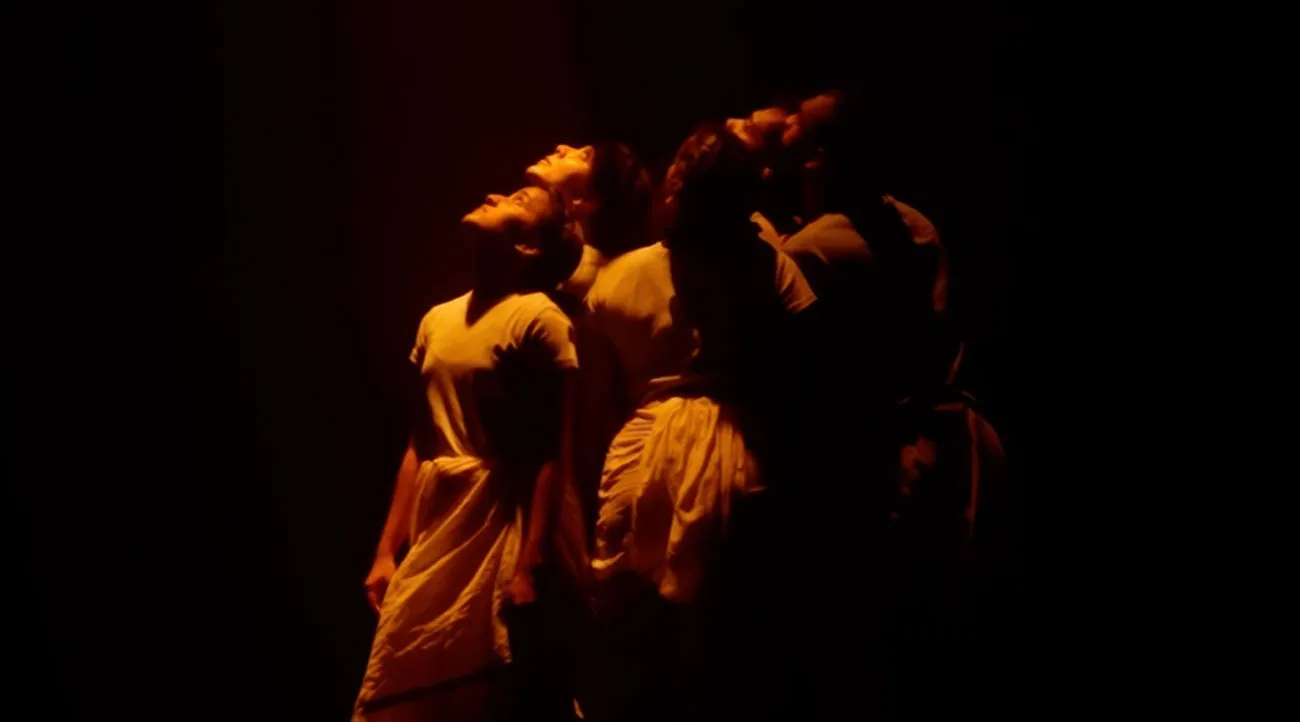
To enter the physical universe of VATTAM (The Circle), staged at the Prithvi Theatre Festival 2026, is to step into a sensory vacuum that demands immediate somatic calibration. The production does not seduce the audience with overture or ornamental flourish; it begins in a stark void of soundlessness, punctuated only by scattered vocal fragments and half-spoken lines that hang suspended in the dark. Crafted from a script by Vivek K, this calculated acoustic drought serves as an uncompromising palate cleanser.
From this silence, movement does not emerge as codified grace - it stirs as raw, instinctive life. The bodies crawl, lurch, and coil low to the earth in unbroken circles of repetition, shedding domestic gentility to inhabit a primal, animalesque grammar before the human hand has even begun to domesticate nature. Drawing upon the vadivus (animal stances) of Kalaripayattu, the ensemble moves with unmeasured quadrupedal weight shifts across hands and feet. Through sprawling spinal articulations and untamed collective breathing, space belongs strictly to sinew, bone, and instinct before any human codification intervenes.
Choreographed with complex kinetic rigor by Santhosh Madhav and directed by Rima Kallingal under the banner of Mamangam Dance Company, VATTAM stakes its claim in the liminal territory where dance disintegrates into visceral physical theatre. The ensemble comprising Anusree PS, Poojitha Menon K, Amrithasree Omanakuttan, Aloshy Amal, Anuraj R, Madhu Mohan, and Karthik Manikandan moves as a singular, undulating pack. Within minutes, their breathless, ground-bound surges, sudden percussive stomps, and the palpable dread of an impending collective sacrifice forcefully evoke Pina Bausch’s seminal THE RITE OF SPRING (Frühlingsopfer).
Yet what makes Madhav’s movement architecture truly modern is its androgyny. The dancing bodies exist outside of traditional gendered binaries. There is no calculated display of Lasya’s feminine deference or Tandava’s posturing bravado. Stripped of gendered performativity, these bodies become neutral kinetic instruments, capable of embodying raw sinew, mud, animal tension, or collective exhaustion purely on their own terms. Within this tight ensemble, Aloshy Amal emerges as a phenomenal kinetic force. His dancing carries an electric, razor-sharp somatic commitment; whether dropping his weight into the dust or navigating sudden, violent suspensions alongside fellow performers like Anuraj R and Karthik Manikandan, his presence galvanizes the collective pack, grounding the company's abstract explorations in visceral truth.
At the conceptual marrow of VATTAM lies an embodied allegory tracing the physical lifecycle of the Chenda drumhead the vattam cut from raw animal hide. The trajectory moves from the vitality of a living beast to the slaughter of the carcass, passing through the gruelling manual toil of the tanning yard, before being bound into a tensioned membrane that finally awakens as a sacred sonic vessel. Rather than offering a pantomimic illustration of craftsmanship, Madhav translates each stage of this conversion into demanding corporeal states.
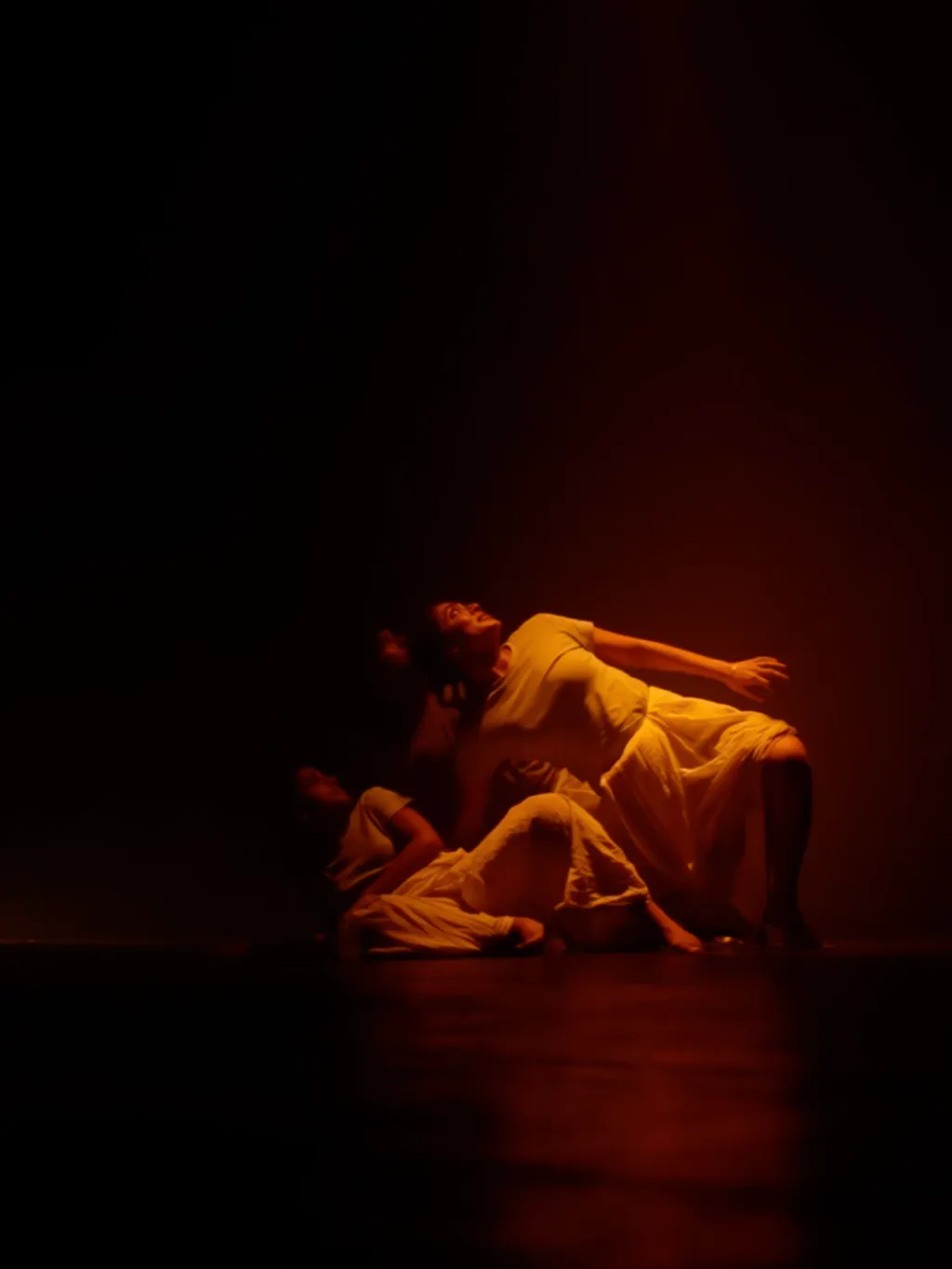
The transition from beast to harvested pelt is registered through sudden, violent gravity drops. Kinetic velocity abruptly yields to dead weight as dancers drop their centers of gravity into ragdoll collapses and limp spinal folds, simulating the lifeless flaccidity of felled carcasses. Through contact choreography, performers manipulate and drag one another’s inert limbs across the floor a visceral image of peeling and flaying skin from bone, where the body surrenders all agency as biological tissue turns into raw material.
To evoke the curing and scraping away of tallow and hair, the ensemble executes repetitive, angular sweeps of the arms and torso grounded in the dirt. As the hide dries, flaccidity hardens into extreme isometric tension. Dancers hyperextend limbs and lock joints against opposing forces, transforming the body into a living drumhead under immense stress, rigid and trembling with latent energy.
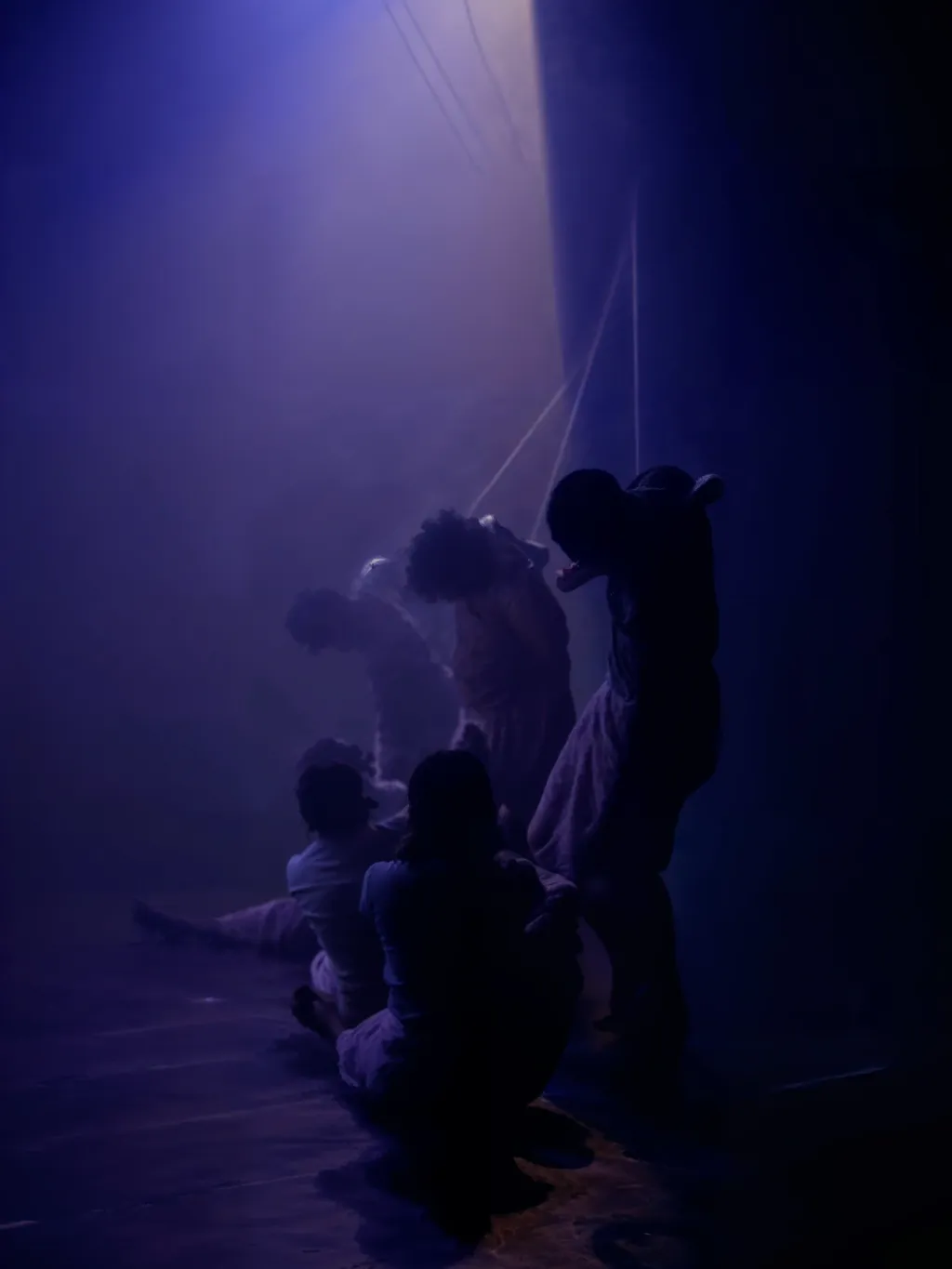
In a striking sequence that echoes the rope motifs of Kallingal’s earlier piece NETHYE, the ensemble physically constructs the drum's architecture. While NETHYE remained within the fluid parameters of lyrical choreography, VATTAM charges this motion with abrasive strain. Dancers pull and wrench invisible hemp ropes (Valampiri and Idampiri) across one another’s torsos, with human bodies becoming the wooden stays and tensioned braces of the jackfruit wood cylinder (Asani), registering every simulated torque as a sharp somatic blow.
Through this somatic evolution,Vattam mounts an unsparing sociopolitical interrogation of Kerala’s sacred sonic ecology. The production exposes the systemic hypocrisy embedded in temple culture: in its biological state as slaughtered carcass, animal hide is condemned as ashuddha (impure, defiling). It is pushed to the geographical margins of the village, abandoned to the disavowed labor of Dalit-Bahujan leatherworkers who scrape fat, cure hides in lime, and endure the brutal stench of the tanning yard. Yet, through an extraordinary theological sleight of hand, the moment this membrane is bound over wood and struck by upper-caste Marar and Poduval musicians in the temple courtyard, it is sanctified as an acoustic conduit of the divine.
This contradiction echoes the penetrating cultural enquiry launched by Carnatic vocalist and author T.M. Krishna in Sebastian & Sons. Krishna’s investigation into the Mridangam radically exposed how the classical performing arts systematically invisibilize the hereditary Dalit leatherworkers who touch blood, skin, and carcass to birth the divine resonance of classical rhythm—conveniently segregating the "polluting" slaughterhouse from the "pure" concert hall. VATTAM extends this vital discourse into Kerala's ritual arena, insisting that the Chenda’s thunder cannot be severed from the marginalized hands that cure its flesh.
In confronting this legacy, VATTAM enters into direct dialogue with contemporary Indian theatre’s history of staging Kerala’s sacred percussion. The piece inevitably recalls Roysten Abel’s celebrated THE KITCHEN, which mounted twelve Mizhavu players on a monumental tiered set alongside bubbling copper urulis of payasam. Yet Abel’s intervention, for all its sensory brilliance, remained an aestheticized spectacle; it operated comfortably within the established canon, employing traditional, hereditary Ambalavasi practitioners to generate acoustic ecstasy.
The political lineage of VATTAM aligns far more intimately with the radical dramaturgical ruptures of Abhilash Pillai, most notably in works like SAKETHAM. Pillai famously stripped the Mizhavu of its feudal Koothambalam sanctity by physically wresting the sacred urn out of exclusive temple-caste custody and placing it into Dalit and subaltern hands, transmuting an elite ritual vessel into an instrument of political defiance. VATTAM achieves a kindred demystification for the Chenda. It forces the spectator to look beneath the golden sheen of temple pageantry and reckon with the invisible hands, broken skin, and spilled blood upon which that sacred acoustic sphere rests.
This corporeal toil is framed by an intentional visual and acoustic architecture. Costume designer Sreejith Jeevan (Rouka) avoids ornate performance silks, outfitting the ensemble in understated, earthy grey drapes bordered with deep red. The textiles cling to sweat and accentuate the genderless lines of the spine while subtly echoing the ash, brine, and arterial blood of the curing yard. Lighting designer Sanesh sculpts the intimate arena with sharp precision, carving pools of stark downlight and casting skeletal shadows that emphasize the dancers' ribcages in dramatic chiaroscuro.
Where the scenography falters are in its treatment of the overhead circular hoops suspended above the playing space. Clearly intended as an architectural manifestation of the drumhead and the inescapable socio-spatial loop, these circles linger as an underutilized scenographic choice. Rather than remaining an inert, additional prop hanging passively over the action, the hoops could have been better integrated into the physical vocabulary—pulled down, inhabited, wrestled with, or weaponized as literal boundaries of containment. Because the ensemble constructs spatial tension so completely and organically through the floor and the charged air between their bodies, the hoops feel secondary, functioning as an appended design concept rather than a vital, necessary organ of the performance.

Underpinning this journey is a nuanced score composed by Shyamprasad and Lional Leeshoy, which moves from sparse, breath-heavy textures to dark, ambient frequencies that mirror the somatic strain of the dancers. The work culminates in an electric acoustic rupture when live percussionists Vivek Achu and Jithin Kallat step onto the wooden stage with their Chendas. The physical shockwave of stick meeting hide reverberates through the risers, collapsing theatrical metaphor into deafening reality. If one were to note a single dramaturgical longing, it is that this final sonic detonation arrives only to feel truncated; one wished for the live percussion to hold court longer, granting the dancers ample time to inhabit the physical frenzy of the instrument they spent an entire performance summoning into being.
Ultimately, much of VATTAM’s integrity stems from the artistic maturity of its director. In an ecosystem where film actors routinely position themselves as the luminous, inescapable center of the stage, Rima Kallingal demonstrates rare, generous restraint. Stepping back into the shadows of the directorial chair, she is barely visible in the piece. By relinquishing the spotlight, she gives her company the physical agency, oxygen, and spatial freedom to command the floor. It is a confident directorial statement: VATTAM does not belong to a celebrity soloist; it belongs to the ensemble, to the labor, and to the living, breathing skin that remembers where it came from.
Script by Vivek K
Choreography by Santhosh Madhav
Directed by Rima Kallingal
Cast: Rima Kallingal, Anusree PS, Poojitha Menon K, Amrithasree Omanakuttan, Aloshy Amal, Anuraj R, Madhu Mohan and Karthik Manikandan.