
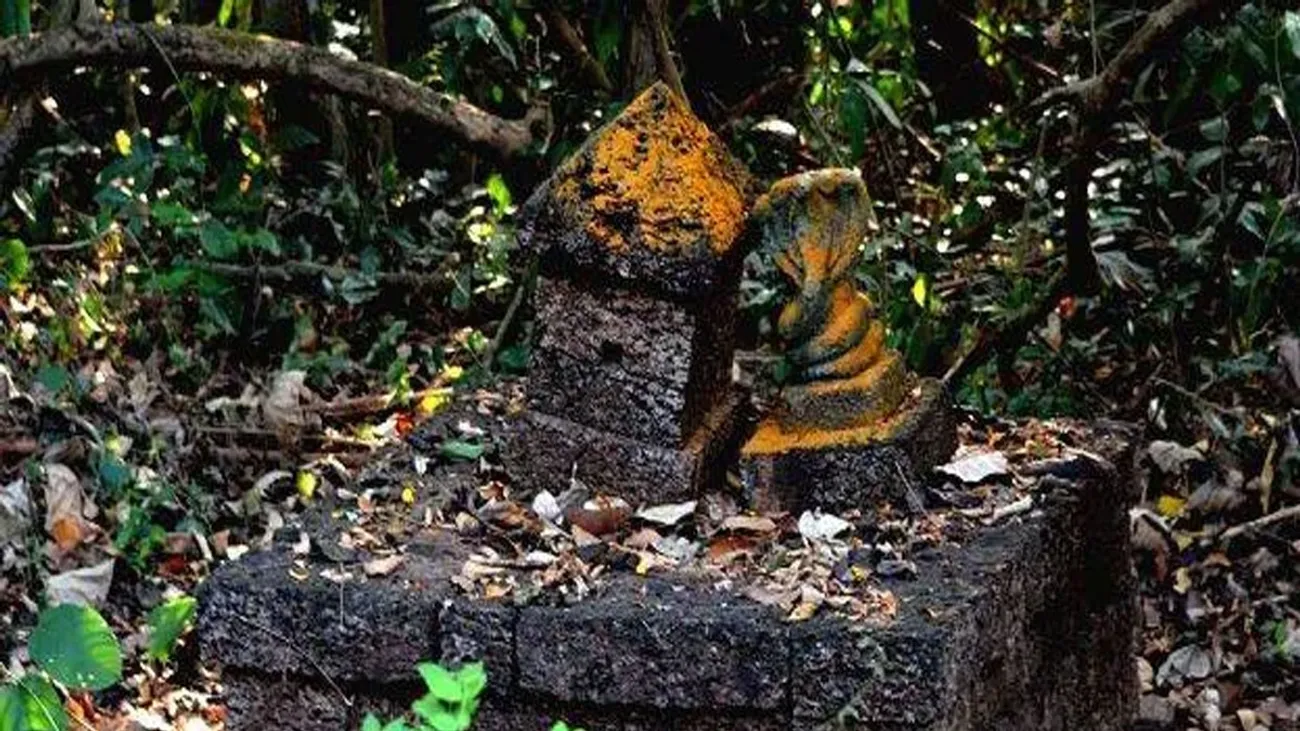
Human settlement could exist, but only if certain spaces were left undisturbed. In retrospect, I sometimes feel a similar compromise quietly shaped our own land.
In 2007, when my husband and I purchased a semi-wild property on the banks of the River Thootha, he wished to consecrate a Kaavu. I agreed, but with one condition: that a portion of the land attached to the Kaavu would be left untouched and allowed to run wild — not as a decorative green patch, but as a sacred grove in its truest ecological sense.
The identified patch was fenced to minimise human interference. In the first few years, the grove grew almost entirely on its own. The canopy slowly thickened. Leaf litter accumulated. Moisture lingered longer after rain. What initially appeared to many as “unused land” slowly began transforming into habitat.
Later, we introduced a few endemic riparian and moist deciduous species into the landscape. But increasingly, it became evident that the grove itself was making many of the decisions. Seeds arrived uninvited. Saplings emerged where none had been planted. Shade altered the microclimate. Bird movement changed.
The land, it seemed, was remembering itself.
In early May 2026, we began a formal ecological documentation of the Kaavu at Karalmanna — not merely as a cultural or sacred site, but as a living ecosystem. For a long time, I had wanted to understand whether the wild patch attached to the Kaavu was still ecologically alive: whether it continued to support biodiversity, regeneration, moisture cycles and interconnected life systems, or whether it had become merely a surviving green fragment in an increasingly fragmented landscape.
The survey was conducted with Dr. Preethi Vijay, an entomologist, and Dr. Pramod Kumar Namboodiri, consultant botanist and ecologist with the Kerala Forest Department. Both are faculty members at NSS College Ottapalam.
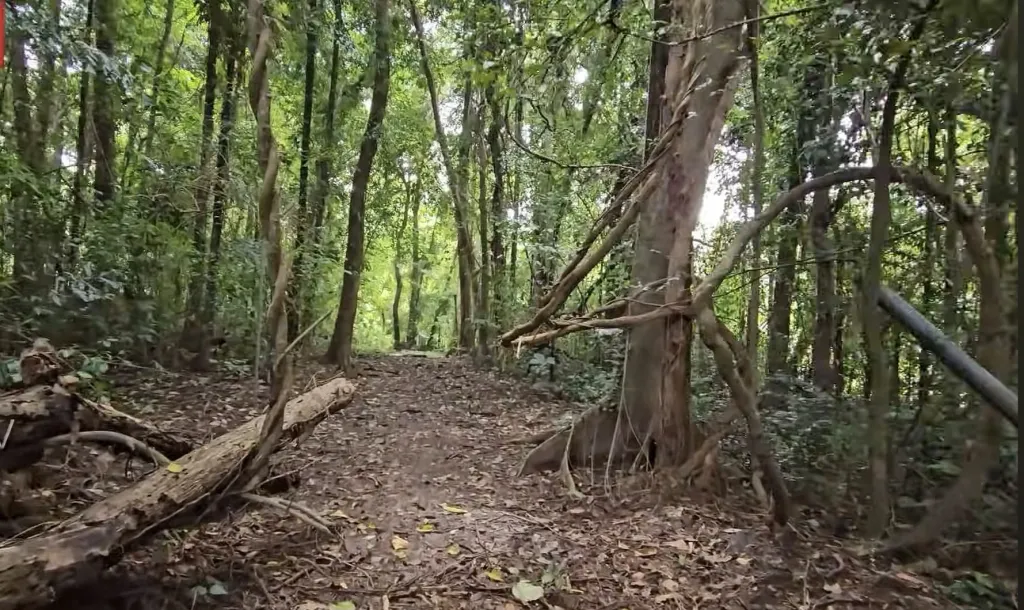
Preliminary observations focused primarily on floral diversity. The findings suggested that the Kaavu still retains characteristics of a sacred grove relic ecosystem, with moist deciduous and riparian-associated vegetation. The presence of seeds, seedlings, saplings and juvenile growth indicated that the ecosystem continues to regenerate naturally. Invasive presence appeared minimal.
One of the most illuminating conversations during the survey emerged around the ecological significance of canopy in sacred groves.
Dr. Pramod Kumar explained how dense canopy regulates temperature, filters harsh sunlight and allows soil to retain moisture and develop rich humus layers. Even during severe summers, this creates a cooler and more stable microclimate within the grove. But what stayed with me most was the way he bridged ecological science with the symbolic language of faith.
He remarked that even in traditional belief systems, the serpent of the Kaavu requires shade, coolness and moisture. A serpent cannot inhabit a barren, exposed landscape. In the language of faith too, the grove must remain ecologically alive for the serpent to dwell there.
What tradition encoded symbolically, ecology now explains scientifically.
Kaavus were never merely symbolic ritual spaces for mythical serpents. They functioned as shelter for innumerable life forms across the faunal spectrum — insects, amphibians, reptiles, birds and countless unseen organisms dependent on damp, shaded and minimally disturbed habitats.
At one point during the survey, Dr. Pramod Kumar pointed to Sterculia guttata, a native species whose fruits attract hornbills. Interestingly, we have a resident pair of grey hornbills on the property — a small but meaningful reminder of how deeply interconnected these ecosystems remain.
Over time, this intersection between ecological science and sacred imagination has drawn me toward what I have begun thinking of as sacred ecology.
I did not enter this space through ritual orthodoxy. In many ways, I arrived here through ecological observation and years of activist engagement. But I have also witnessed the limitations of two extremes that dominate contemporary discourse.
On one side lies ritual without ecological meaning — sacred groves reduced to tiled enclosures, concrete serpent shrines and annual ceremonies disconnected from the living ecosystem that once gave them significance.
On the other side lies a form of aggressive rationalism that dismisses all sacred traditions as superstition, often failing to recognise that many traditional systems encoded forms of ecological restraint, however imperfectly.
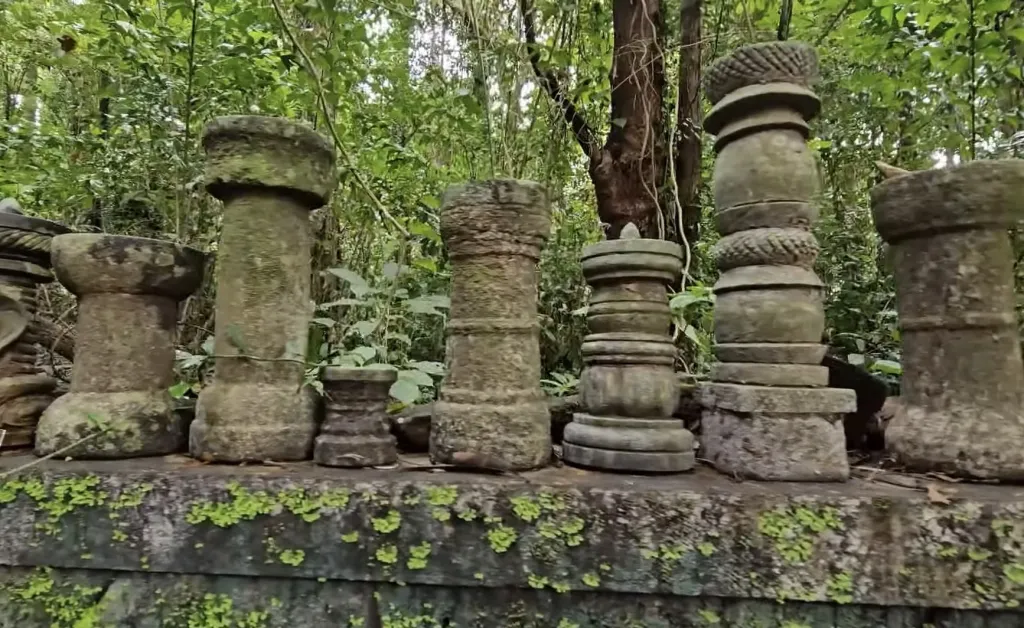
Somewhere between blind belief and total desacralisation, we seem to have lost an older ecological intelligence.
Sacred ecology, to me, is not about romanticising the past or rejecting science. It is about understanding how reverence, taboo and restraint once functioned as cultural mechanisms that slowed extraction and protected fragile ecosystems.
Fear of disturbing serpent groves, restrictions on cutting old trees and ritualised boundaries around sacred landscapes may not always have emerged from scientific reasoning. Yet ecologically, they often produced meaningful outcomes.
They protected canopy. They retained moisture. They created refuge.
In a time of accelerating ecological fragmentation, perhaps we need not choose between science and sacredness. Perhaps what we need is dialogue between them.
I increasingly believe that even restoring a few cents of ecologically functional Kaavu — with layered canopy, native vegetation and minimal disturbance — can begin rebuilding ecological sensitivity within communities. Not as empty ritual, but as living relationship.
What returns when a sacred grove begins healing is not merely biodiversity.
What returns is shade. Moisture. Birdsong. Restraint. Attention.
And perhaps, slowly, a different way of inhabiting the land itself.