
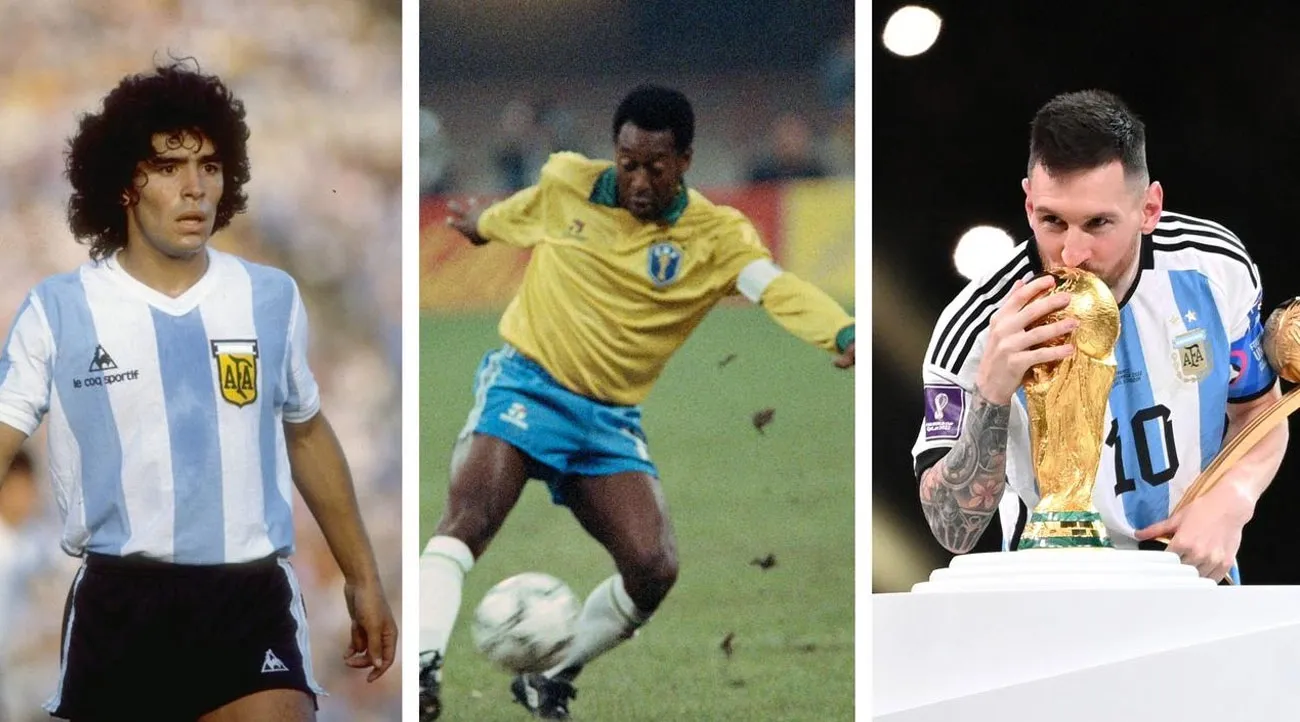
The bright lights of Doha's magnificent Lusail Stadium witnessed no better sight on that wonderful December night in 2022 -- Lionel Messi holding close the glittering FIFA World Cup trophy like a dad would cradle his beloved baby. The greatest player of our times had chased this prize across continents and against opponents of all shapes and sizes over many years, but frustration and disappointment were his only rewards. And then came the night when footballing gods finally cast a benevolent eye on their most faithful follower, bestowing an honour that his talent and genius truly deserved.
As another FIFA World Cup rolls in, this time in the United States, Mexico and Canada, memories of Messi and Argentina from Qatar 2022 come rushing forth. Sporting contests, regardless of their magnitude, tend to create images that linger long after the events themselves have passed into history. Messi's magical moment was one such, paving the way for him to join some of the game's legends in that gallery where the pictures tell their own story -- of desperate struggles, spectacular victories, damning failures, terrific triumphs and tears of joy.
The images are of men who have embellished the World Cup story as the sporting showpiece serenely marches towards a century of its existence. With their twists, feints, dribbles and daredevilry, they provided the defining moments in their country's World Cup conquests, the outpouring of emotions at the finale offering proof of the event's status as the ultimate touchstone of a player's greatness. For some, like the Brazilian giant Pelé, it arrives early. Others have to wait in line, trust their talent, keep trying and offer a prayer or two.
Pele was only 17 when he stormed centre stage at Sweden in 1958, creating goals out of nowhere and revealing skills that belied his tender age. Defenders who were at his mercy would have doubted his age. Still, the boy in the Brazilian emerged when he broke down inconsolably after the final whistle in the title decider, unable to comprehend the magnitude of his achievement. The teenager had scored two fabulous goals in a 5-2 verdict over the hosts, turning his father's dreams into reality. And over the next 12 years, he would stand tall as nobody before him had on the World Cup stage.
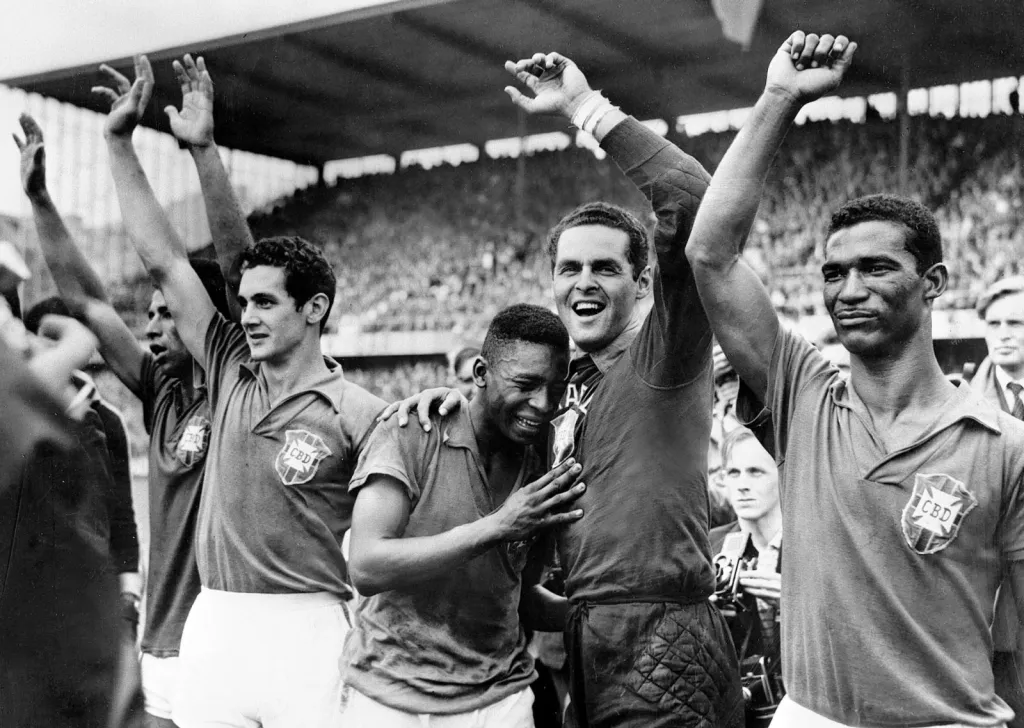
"Five feet eight inches tall, superbly muscled, he was a goalscorer par excellence, gymnastically agile and resilient, a tantalising juggler of the ball, a fine right-footed shot and ability to climb and head the ball like a Lawton," the late Brian Glanville, the doyen of football writers, penned about Pele's grand entry. "Above all, his temperament was extraordinary, his coolness in the thick of the battle, the most tense and dramatic situations, uncanny," he wrote.
Chroniclers of football's history tell us about the exploits of Argentinian Guillermo Stabile (1930), Italian Giuseppe Meazza (1934, 1938) Brazilian `Black Diamond' Leonidas (1938) and Magyar Magician Ferenc Puskas (1954) but no player did more to propel the game forward than Pele, who was also the champion with Brazil in 1962 and 1970, a feat no other player has ever achieved. Brazil had other sorcerers in their line-up -- Didi, Vava and Garrincha among them in 1958 and Tostao and Jairzinho in 1970 -- but Pele was the enforcer, the binding force, and the visionary all rolled into one in that glorious era. Their exploits turned millions into lifelong Brazilian fans who stayed true to the Samba beat even when success stalled in later years.
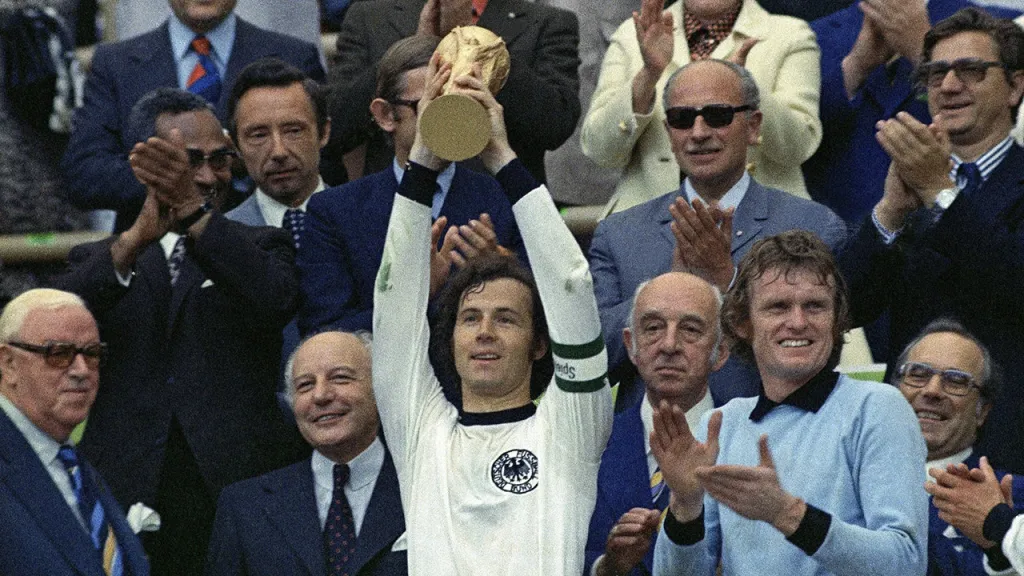
Football of another kind held sway then as the Dutchmen under Johan Cruyff and Germany, powered by Franz Beckenbauer, took over the World Cup stage. The total football of Cruyff's Netherlands met its match against Germany in 1974 as Beckenbauer towered over the championship, leaving one of the finest players and thinkers of the game without the world champion's tag. Cruyff's influence on the game went far beyond the World Cup, as his philosophy shaped Barcelona's style of play, with his students faithfully embracing the Dutch master's methods.
Individual flair took a back seat to defensive tactics as the game moved into a more modern era. Even then, someone like Paolo Rossi could define the fortunes of his team with his goal-poaching instincts, as he did in 1982 for Italy, but followers of the game knew that a storm of irresistible force was about to strike in four years. Diego Armando Maradona was a genius with a wicked touch, and he was at his peak on both counts in 1986, leading a team without many big names to the top of the podium. Has anyone played a more influential role in a World Cup than Maradona did with Argentina that year, scoring a goal and then netting one of breathtaking beauty along the way?
"In an era when individual talent was at a premium, defensive football more prevalent than ever, Maradona -- squat, muscular, explosive, endlessly adroit -- showed a footballer of genius could still prevail," wrote Glanville. Drugs and indiscipline eroded Maradona's genius, and there was a touch of inevitability about his downfall. The World Cup, though, found new heroes in Zinedine Zidane in 1998 and Ronaldo in 2002, who starred for France and Brazil. Still, a true successor to the legendary figures of the game was lurking in the shadows, biding his time, licking his wounds and preparing himself to bury the disappointments that seemed never-ending. That Messi did not have a World Cup to crown his career seemed a travesty, but he turned creator and destroyer at once in Qatar, earning a special place among the legends after years of dazzling successes in club football.
"Winning the World Cup is the ultimate achievement. There is nothing more to wish for after that. I've achieved everything at the club and individual levels, the World Cup victory was the final piece that completed my career," Messi had said, hinting Qatar was his World Cup swansong. But as Argentina prepares to defend its title, Messi is there yet again, playing in his sixth World Cup, even though he might not be at his peak, fitness-wise at least.
Will he be the winner for the second time, or will there be another individual snatching the spotlight and basking in the adulation? Among the 48 nations lining up in the biggest World Cup ever, there are a few who could seize the moment, a sprinkling of top talent worthy of being called the game changer. Messi's old foe, Portuguese great Cristiano Ronaldo, at 41, has to defy age to get into that list featuring names such as Frenchmen Kylian Mbappe and Ousmane Dembele, Englishman Harry Kane, Norwegian Erling Haaland, Brazilian Vinicius Junior and Spaniard Lamine Yamal.
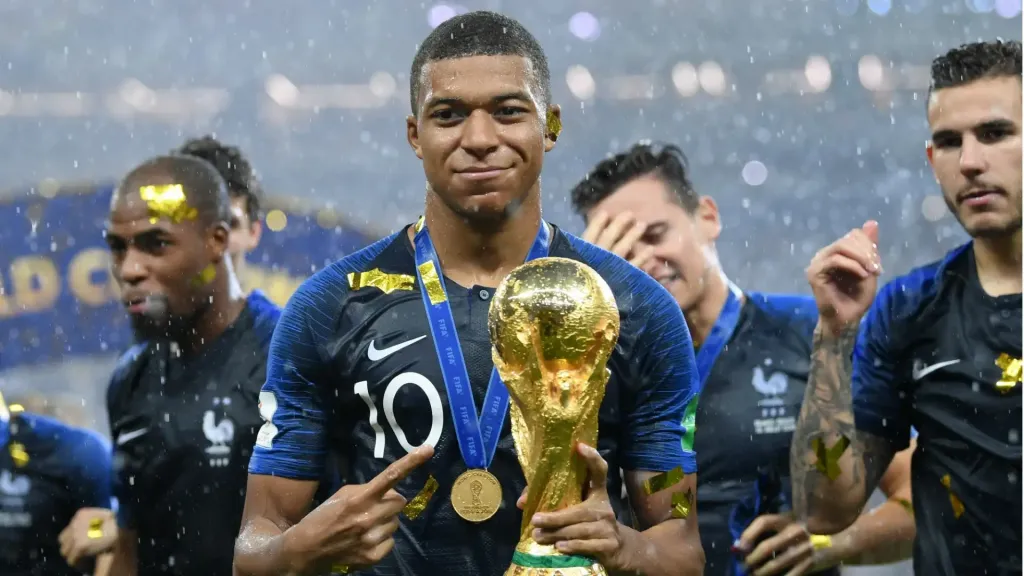
Mbappe, already a World Cup winner for France in 2018, has a point to prove, having coped with plenty of flak at his club, Real Madrid, this season. Pundits like Arsene Wenger have backed him to shine, and playing alongside Ballon d'Or winner Ousmane Dembele, the man with electric pace, could dream of leading France to another title triumph to redeem his reputation.
Kane and Haaland enjoyed brilliant club seasons with Bayern Munich and Manchester City, respectively. Still, for their individual skills to succeed, their teams have to raise their collective standards of play. Likewise, five-time winners Brazil expect a lot from Vinicius, especially with a huge question mark over Neymar's fitness. Can the Real Madrid man deliver in the biggest tournament of his career? Age is on his side, and history tends to favour Latin American nations when they play in the Americas.
Yamal had just turned 17 when he won Euro 2024 with Spain, and his eye-catching runs drew instant comparisons with Messi. He picked up a hamstring injury just before the club season concluded, raising doubts about his readiness for the World Cup. A fully fit Yamal will be quite a handful for the rival defences, a fact underlined by the Spanish coach, Luis de la Fuente. "There are geniuses, and then there are those touched by God's wand. There are very few of those -- Lamine, Messi, among them," he told the British newspaper The Guardian in a recent interview.
Even for those touched by God's wand, a prayer or a wish is never out of place. A fit Yamal could be the brightest star of the 2026 FIFA World Cup, and lovers of the beautiful game the world over would certainly embrace such a talent with a divine touch. Let the matches begin!