

Mr X went out to buy medicines.
He never came back.
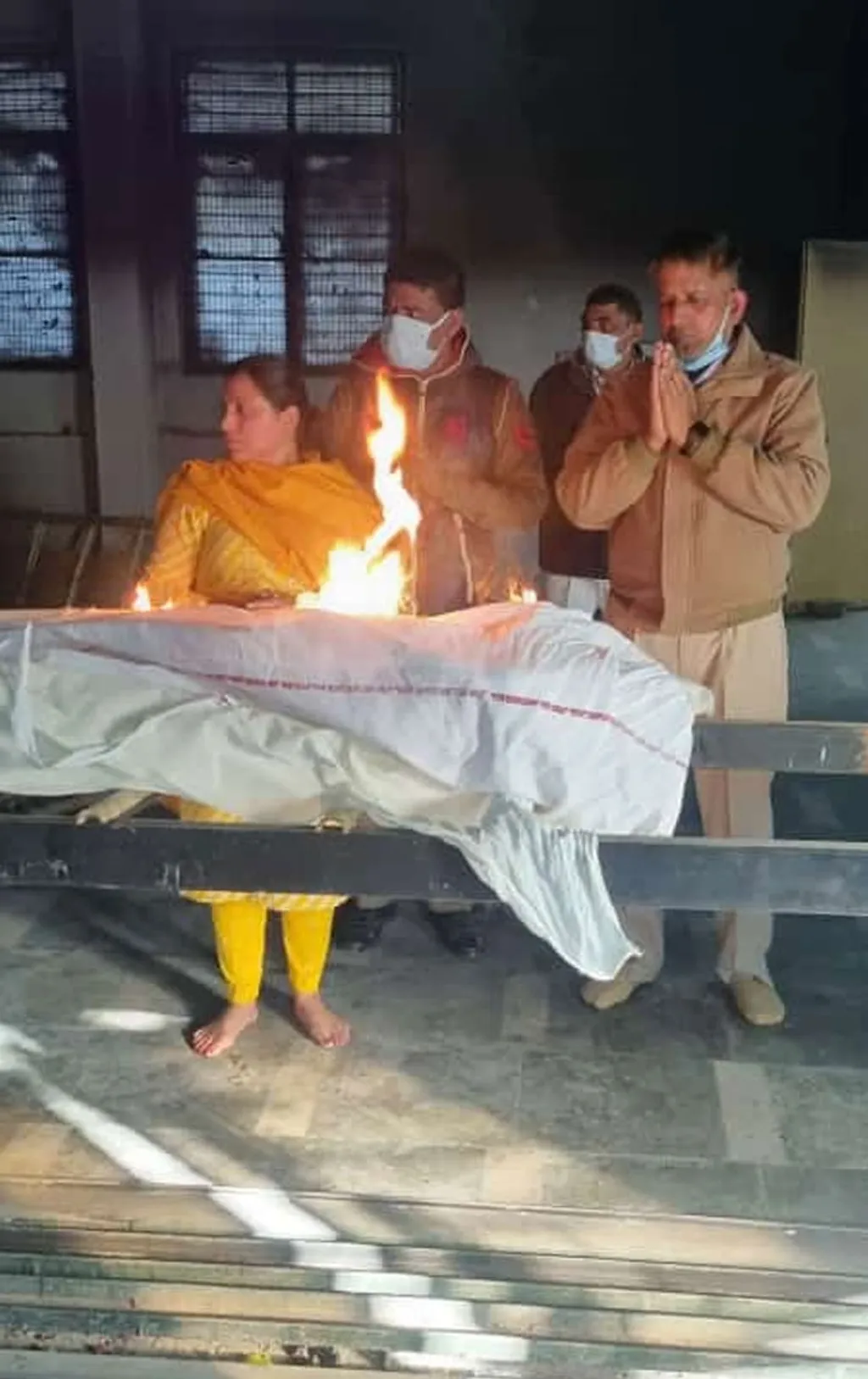
His family searched for him. They asked around, approached the authorities and contacted anyone who might know where he was. Then they waited. When information finally reached them, he had already been cremated. The people who performed his last rites knew him only as an unidentified body.
"Hamko woh lawaaris nahi lagte. Woh hi maa hain, bhai hain, behen hain hamari. Sab hamara parivaar hain." (To us, they are not unclaimed. They are our mothers, our brothers and sisters.)
The manager at Bright the Soul, an organisation that helps perform the last rites of unidentified bodies in Delhi, refuses the word lawaaris almost on principle. Since 15 May 2026, he said, the organisation has handled more than a thousand such cremations at Sansar Ghat in Sarai Kale Khan. By his estimate, around 95 percent remain unidentified even today. Sometimes a family arrives months later. Many times, no one arrives at all.
This raises two questions for urban governance. What happens to a person in Delhi after they disappear? And what happens when the person was never visible to the system in the first place?
A person can disappear twice. The first disappearance happens in life, when someone slips out of the networks that make most people legible to the state: a home, an address, a hospital file, a job, an identity document. The second happens after death, when that absence follows them into a system built, at least on paper, to return every body to its name.
How an unidentified death is processed
The first call can come from almost anywhere:
an ambulance driver, a passerby, or a member of the public who contacts an organisation such as Bright the Soul, which coordinates with the police to recover and transport remains, including from drains and other hard-to-reach places.
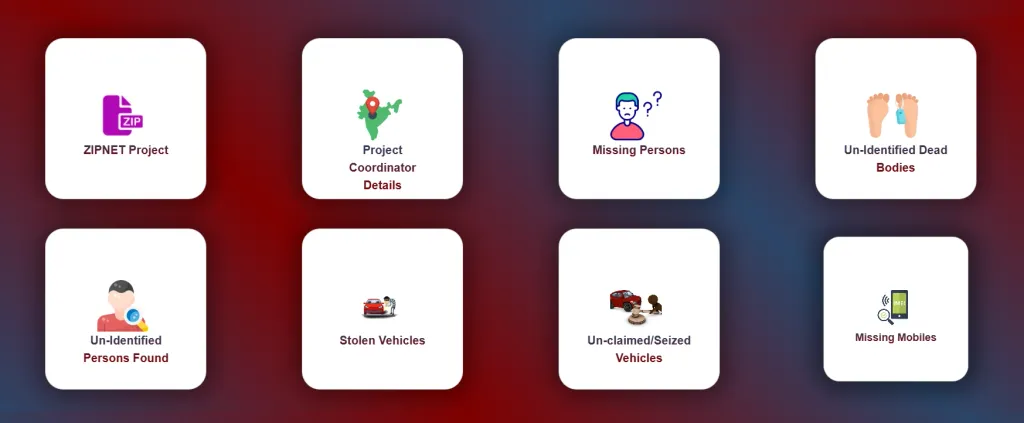
At the hospital casualty, the person's sex, approximate age, height, clothing, visible marks, photographs and belongings are entered into medico-legal records. Once registered as a Medico-Legal Case (MLC), the body moves to the mortuary. The investigating officer from the police station with jurisdiction then takes over: checking belongings, documents or a phone, cross-referencing missing-person records and updating police databases such as ZIPNET, which allows unidentified-body and missing-person records to be searched against each other.
On paper, the architecture for identification exists. Aadhaar links a number to demographic and biometric data. Hospitals generate medico-legal files. Forensic laboratories preserve evidence. But the existence of a record does not make a person identifiable. The record has to be accessible, relevant and connected to the person investigators are trying to identify. A photograph, a distinguishing mark, a phone, an employer or a family contact can turn a case around. Without such links, there may be little to work with except the body itself.
Who goes unidentified
The scale extends well beyond Delhi. A 2026 study from AIIMS Rishikesh found that of 4,132 medico-legal autopsies conducted between January 2019 and June 2025, 633 (15.3 percent) involved unidentified bodies, rising as high as 19 percent in 2021. For Delhi, the figure most often cited comes from the Centre for Holistic Development (CHD), which estimates that about 80 percent of unidentified dead bodies in the city are homeless people. The National Human Rights Commission's press release of 30 January 2025 attributes the estimate to CHD.
The profile of those who go unidentified follows the profile of those who are weakly documented. Delhi receives migrants constantly. Informal work, temporary housing and strained family ties make the links between a person and their record especially fragile. A migrant worker's family may be hundreds of kilometres away with no local address to trace. Someone moving between informal jobs leaves little administrative footprint. Someone estranged from relatives may have no one nearby to notice their absence.
A woman in her late 30s from a migrant family in a North Delhi settlement told me what she thinks is missing:
"Dilli mein kaam karne jo log aate hain, unme se kai kho jaate hain aur apne parivaar ko nahi mil paate. Aisa koi NGO ya community centre ho jahan wo apni pehchaan darj karva sakein, aur jahan parivaar ko soochna mil sake ki wo kis jagah, kis kaam ke liye aaye the." (Many people who come to Delhi for work get lost and their families cannot find them. There should be a place where they can register who they are, and where a family can find out where and for what work the person came.)
A migrant worker of about 40 from Assam, who has lived in Delhi NCR with his family for five years, described a quieter version of the same gap. He said he has not found a way to get the documents he needs, and that without them his family misses out on healthcare and other services. They came, he said, because many people from their village had started finding jobs here.
A race against two clocks
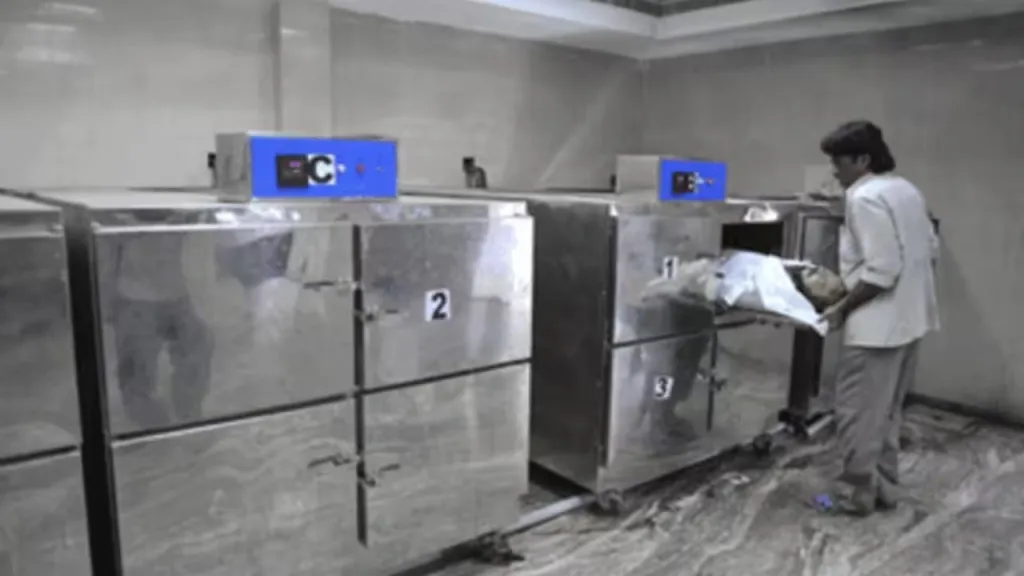
Under Delhi's State Health Mission SOP on mortuary management, 72 hours is the initial window for identification, with longer retention permitted in special cases. In practice, bodies are often kept for seven to ten days.
The mortuary is only one clock. The other runs at the police station, where investigating officers carry large caseloads. One officer, who asked not to be named, said unidentified cases are pending in large numbers and leads are rare. "Un logon ke relatives Assam, Bihar mein hote hain. Clues milne aur unhe inform karne ke liye bhi 72 ghante se zyada lag jaate hain," he said. (Their relatives are in Assam, Bihar. Even finding clues and informing them takes more than 72 hours.)
The timing matters because of the season. In Delhi's summer, decomposition can alter the features a relative might use to recognise the body. Meanwhile mortuaries face pressure as new cases keep arriving. A casualty staff member at a government hospital described three or four unidentified bodies arriving on a typical morning, often before noon. Shelter workers and organisations that work with people on the streets, including Ashray Adhikar Abhiyan and CHD, said summer brings more deaths among the homeless, including from dehydration among those affected by alcohol or other substance use. Winter brings its own danger: the cold itself can kill.
A senior resident in forensic medicine at the same hospital said the bodies often show severe malnourishment, little or no clothing, and injuries consistent with accidents or hanging. Only about one in nine of the cases they recalled involved a woman; where sexual assault is suspected, it is examined as part of the investigation. These findings say something about deprivation and risk. But when a person stays unidentified, such observations rarely travel beyond the individual case file and into policy.
The mortuary assistant, who has spent nearly 15 years handling the dead, was clear that the bodies are treated alike: "Ek jaise clean karte hain, ek jaisa treat karte hain. Lekin summer mein pressure bahut real hai." (Identified or not, they are cleaned and handled the same way. But in summer, the pressure is real.)
Preserving evidence is not the same as identifying a person
After autopsy, tissue or teeth can be sent by the investigating officer to the Central Forensic Science Laboratory (CFSL), creating a record that might help if a matching sample ever surfaces. In 2019, AIIMS New Delhi launched UMID, the Unidentified Bodies, Missing Persons Identification Portal and DNA Database. Samples collected at autopsy, with the investigating officer's consent, are sent for STR (short tandem repeat) DNA profiling. Physical details such as age, height and distinguishing marks are made searchable, while DNA profiles remain internal. The design follows the broad logic of INTERPOL's disaster victim identification protocol, which keeps post-mortem information separate from information about the missing person before comparing the two.
The limitation is structural. A DNA match depends on a corresponding reference profile being available. A profile can wait indefinitely for a match, but it cannot make someone, somewhere, realise there is a person they need to look for.
Aadhaar, often assumed to be the answer, is not designed for this problem. Mr X had no identity document on him, and none had been made for him. Even if one had, Aadhaar authentication is 1:1: a submitted biometric or other factor is checked against a specific Aadhaar number. It is not a 1:N search in which police submit an unknown fingerprint and receive a name by searching the entire database. UIDAI has maintained this position before several High Courts, including the Delhi, Madras and Karnataka High Courts. The system can confirm an identity that someone already claims. It cannot supply one for a person nobody has named.
The same gap, earlier in life
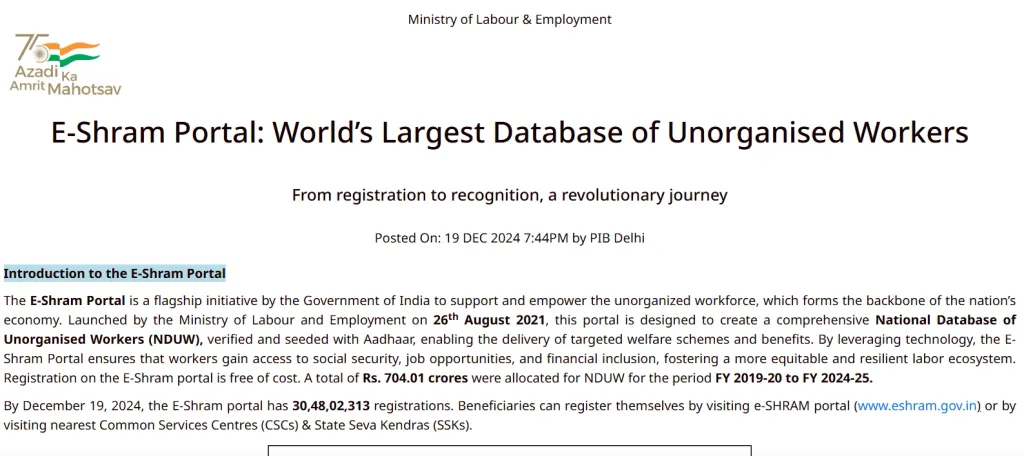
The gap is visible before death as well. For migrant workers, one existing repository is e-Shram, the national database of unorganised workers. Workers without an Aadhaar-linked mobile number can register through an assisted biometric process. But the existence of that route does not establish whether workers know about it, can reach a Common Service Centre or are able to complete registration.
More fundamentally, e-Shram was built to facilitate access to social security and welfare schemes, not to function as a missing-person or unidentified-body identification system. It offers no stated mechanism for investigators to connect an unidentified body to a worker simply because that person once registered. The accounts from the North Delhi settlement and from the migrant worker from Assam point to the same design question. The issue is not only whether a person holds an identity document. It is whether there is a reliable place where identity, location, work and other basic details stay connected enough for someone to find them when the usual links break.
Where the state already meets this population
There is something misleading in the phrase "unidentified body." It makes anonymity sound like a property of the dead. In practice, the state encounters this population constantly while people are alive. Delhi Police have run rescue drives moving over a thousand homeless people to shelters in a single sweep. The Delhi Urban Shelter Improvement Board (DUSIB) conducts its own surveys, sometimes recording family details of people at a single intersection ahead of a summit. But the record of this contact is often thin. A DUSIB inspection in June 2025 found poor attendance records, unauthorised staff and inconsistent documentation at the very night shelters meant to house this population.
The problem, then, is not that the state fails to encounter these people. It is that the information gathered at those encounters does not remain connected across institutions. Someone who moves through stable institutions leaves records almost as a byproduct of living. Someone living precariously has to produce a record each time one is needed, and often cannot. The first disappearance can happen slowly, over years. The second can happen in a week: a body enters a mortuary, a case number is assigned, a sample is preserved, a cremation takes place, the ashes receive a number. By the end, almost everything about the case may be recorded except the person's name.
The legal duty exists;
the data architecture does not
The legal position has been clear for years. In Ashray Adhikar Abhiyan v. Union of India (2002), the Supreme Court held that the right to life and dignity under Article 21 does not end at death. It extends to the body, which is entitled to respectful burial or cremation according to the person's faith.
Yet more than two decades later, the records remain fragmented. The hospital holds one file, the police another, the shelter a third, the forensic laboratory a fourth. The Abhiyan itself has shown what a record can do. In a joint effort with the Election Commission of Delhi, "Abhiyan Saathi" photo identity cards were issued to homeless people. Its documentation says the cards helped establish identity and became the basis on which some homeless people were enrolled in the electoral roll.
Dr Sanjay Kumar, co-director of Ashray Adhikar Abhiyan, described a case from a few months ago in which the only tangible information on a dead body was a card carrying the organisation's contact details. The Delhi Police's missing persons unit contacted the organisation, followed up manually, verified documents and identified the person. It is a small demonstration of what a connected record makes possible, and of how much currently depends on a lucky card.
Closing the Gap:
Three Reforms for Delhi
Three directions follow from the evidence.
A common identification trail:
People living precariously already appear in many public systems: government hospitals and TB clinics, shelters and night homes, outreach programmes, police records, bus terminals and railway stations. A searchable database drawing on these touchpoints could mean that a person seen at one point in the city is easier to trace when they appear elsewhere. Dr Kumar suggested that even an integrated website linking shelter-home records would give investigators a starting point rather than leaving them to make connections manually.
Strict safeguards:
Any such system would need clear limits on who can search it and why. A database of the city's most vulnerable people could as easily be used to police them as to find them. Purpose limitation, access logging and independent oversight would have to be part of the design from the start, not added later.
Dedicated funding:
Sunil Kumar Aleida, who has worked with homeless people since 2000 and founded CHD, said a separate budget allocation from the Delhi government and the Centre would make a difference. Dr Kumar pointed to the current arrangement: police are reimbursed roughly Rs 1,600-1,800 per body for all formal procedures and cremation, but only after months. A system that asks officers to spend time and money on an unidentified person, with reimbursement arriving late, depends heavily on individual effort. A dedicated allocation could reduce that constraint.
Mr X, and the next one
Mr X's family eventually had some closure, and relief that someone had performed his last rites with respect. Even after cremation, he was traced through a chain of places that already knew something about him. His family and the cremation authority told me that Mr X drank habitually, and the shelter homes that work with homeless people, including those who were intoxicated, were part of that network. Even without an identity document to start with, those connections gave the police a way back to his name.
It came late, but the closure stayed.
As this is being written, someone else arrives.
Name: unknown.
Name of father: unknown.
Age: 22.
Sex: male.
Face shape: square.
Wearing: no clothes.
UIDB no: xxxxxxxxxxx
▮
References:
Ashray Adhikar Abhiyan v. Union of India, (2002) 2 SCC 27 (Supreme Court of India, January 9, 2002). https://indiankanoon.org/doc/361011/
Bright the Soul Foundation. (n.d.). Home page. https://www.brightthesoulfoundation.com/
Daily Bhaskar. (n.d.). Great leap forward! Finally Delhi’s homeless find identity ahead of assembly elections. Internet Archive. https://web.archive.org/web/20150716124105/http:/daily.bhaskar.com/news/DEL-great-leap-forward-finally-delhis-homeless-find-identity-ahead-of-assembly-elect-4432399-NOR.html
Deccan Herald. (2025, November 18). Dead person’s fingerprint can’t be matched with Aadhaar database to prove identity: Karnataka High Court. https://www.deccanherald.com/amp/story/india/karnataka/bengaluru/dead-persons-fingerprint-cant-be-used-to-prove-identity-from-aadhaar-database-karnataka-high-court-3802283
Delhi Police. (n.d.). The ZIPNet project. ZIPNet. https://zipnet.delhipolice.gov.in/
Delhi State Health Mission. (n.d.). Standard operating procedures: Support services. Department of Health and Family Welfare, Government of NCT of Delhi. https://dshm.delhi.gov.in/pdf/QAC/SoPs/Support%20Services.pdf
INTERPOL. (2023). Disaster victim identification guide (Version 3). https://www.interpol.int/en/content/download/589/file/18Y1344
Ministry of Labour & Employment. (2024, December 19). E-Shram portal: World’s largest database of unorganised workers. Press Information Bureau, Government of India. https://www.pib.gov.in/PressReleasePage.aspx?PRID=2086193®=48&lang=2
National Human Rights Commission. (2025, January 30). NHRC, India takes suo motu cognisance of the reported death of 474 homeless persons within a span of 56 days during this winter season in Delhi. https://nhrc.nic.in/media/press-release/nhrc-india-takes-suo-motu-cognisance-the-reported-death-474-homeless-persons-within-a-span-56-days-during-this-winter-season-in-delhi
PTI. (2025, June 27). Delhi govt tightens monitoring of night shelters after surprise inspection reveals irregularities. The Week. https://www.theweek.in/wire-updates/national/2025/06/27/des95-dl-dusib-monitoring.html
Scroll Staff. (2018, November 12). UIDAI says it is not possible to match fingerprints of an unidentified body with Aadhaar biometrics. Scroll.in. https://scroll.in/latest/901870/uidai-says-it-is-not-possible-to-match-fingerprints-of-an-unidentified-body-with-aadhaar-biometrics
Sethi, M. (2025, May 20). UIDAI to Madras HC: “Impossible to compare deceased person’s fingerprints with Aadhaar database.” LawChakra. https://lawchakra.in/high-court/uidai-dead-fingerprint-aadhaar-database/
UMID. (n.d.). Current practices. Unidentified Bodies, Missing Persons Identification Portal and DNA Database, Department of Forensic Medicine and Toxicology, AIIMS New Delhi, with the Indian Council of Medical Research. https://umid-aiims.icmr.org.in/current-practices/