
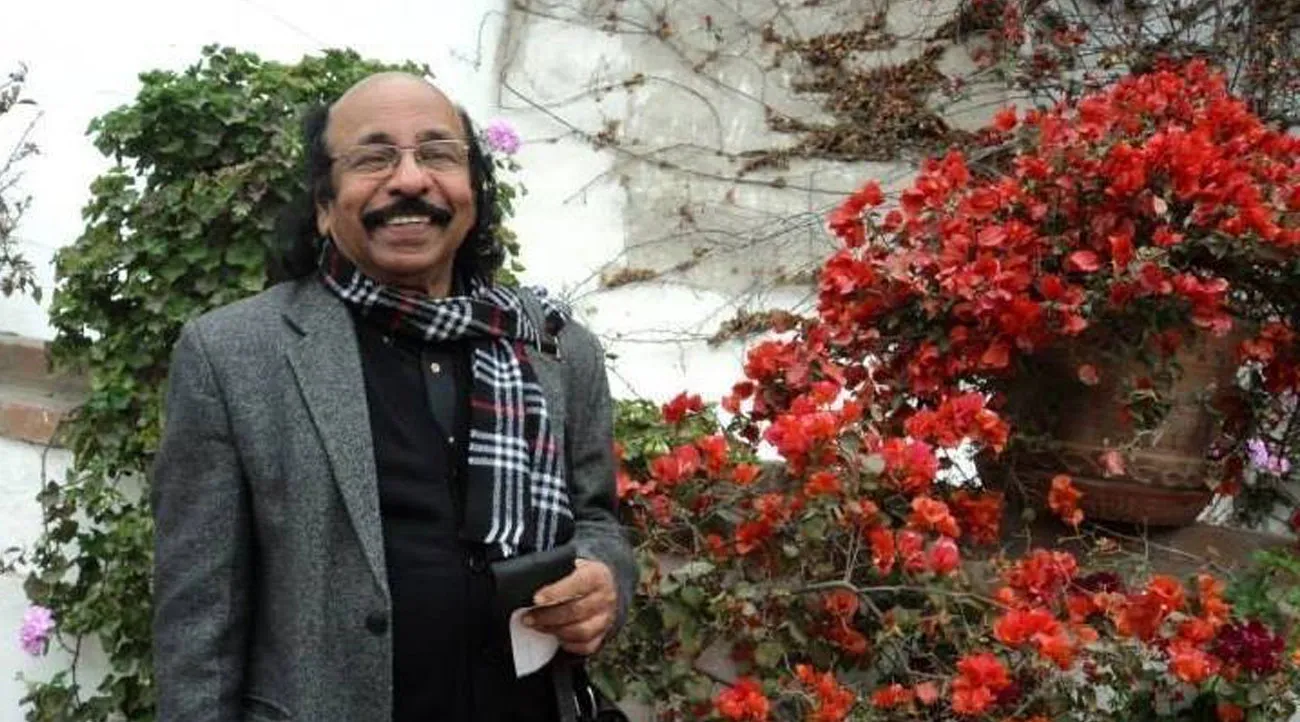
As a poet, Satchidanandan has reinvented himself at every stage through unsparing self-criticism and persistent exploration of the changing environment of poetry in relation to the existing social structures. He was quick to distance himself from the triumphant assertions of high modernism, as he sensed its inability to be socially inclusive. As the 1970s turned turbulent with several subaltern movements defying the centralisation of state power, his poetry questioned the authoritarian ruling class and its coercive politics. He was one of the first poets in Malayalam to recognize the ideological breakthrough achieved by the Dalit, Feminist and Environmental movements, against the gradual co-option of revolutionary movements by regressive forces. As globalisation empties out cultures of their capacity for resistance and oppositional thinking, we get alienated from the collective memories of the community as well as the creative potential of usable past. This was the context in which Satchidanandan returned to the secular-modern Indian traditions to emphasise the polyphony and plurality of Indian thought and belief systems. The poems of this volume have to be read against a constantly evolving transregional and translational poetic that locates the poet at its moving centre.
In a poem titled ‘The Indian Poet’, Satchidanandan describes the Indian poet as a three-faced God with six arms. The three faces look in the direction of the present, the past and future. As he sits down to write with his six pens, ‘one hand does not follow the language of another; one pen strikes off what another writes.’
Bats lay eggs in his similes;
cobwebs cover his symbols.
The gods of the legends
peep out of his nouns.
Archetypes get entangled
in his adjectives.
His metaphors of the future
carry the stench of Moghul tombs
(2016, 460).
The past hangs heavily on the Indian poet’s efforts to make sense of the present and shape a new poetic idiom. Waylaid by the myths of the past, he is haunted by the terrors of the present. Amidst all these conflicts and contradictions, Indian poetry keeps asking questions, like Betaal hanging upside down from a tree. The sceptic’s gaze is what animates Satchidanandan’s own poems on the Bhakti poets. He identifies himself with the dissenting traditions of Indian poetry from Bhakti poets to modernists, from Kabir, Lal Ded and Basavanna to Dhoomil, Pash and Jibanananda, in an attempt to reinterpret tradition in contemporary terms. His move to Delhi in 1992, coincided with a phase in Indian history where majoritarian discourses gained greater legitimacy. He responded through poetry, essays and creation of cultural forums where reactionary viewpoints can be countered intellectually. He has not wavered from his belief in the ethical principles embodied in the idea of a secular and democratic India.
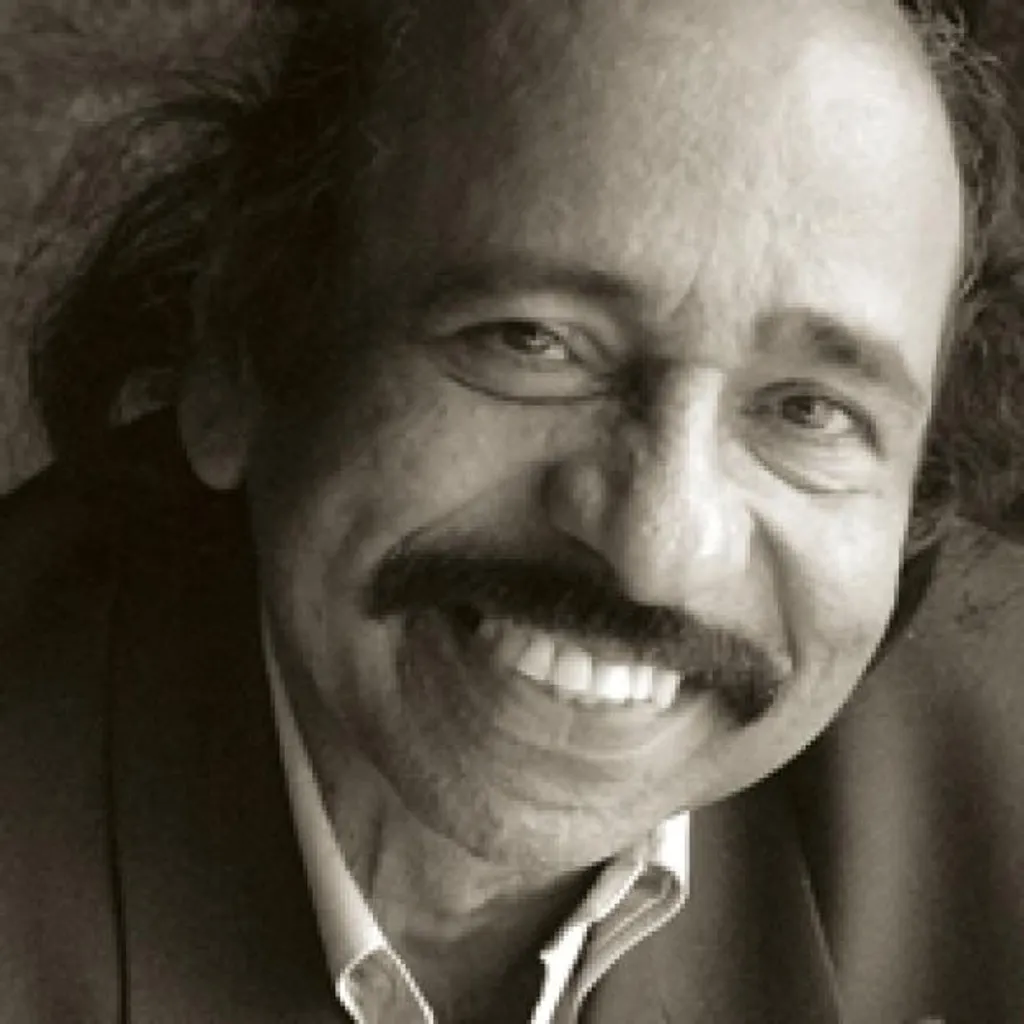
His poetry remains an echo chamber of poetic voices and visions from all over the world, which share a radical vision of social change and a strong commitment for social justice and environmental ethics. Among the international poets he has translated into Malayalam are Pablo Neruda, Bertolt Brecht, Mayakovsky, Evtushenko, Akhmatova, Octavia Paz, Cesar Vallejo and Black poets from three continents, Leopold Senghor, Aime Cesaire, Langston Hughes, Wole Soyinka and Leroi Jones. The primary function of poetry, Satchidanandan would say, is to contest the received notions and prevailing assumptions. In our times, the process of co-option by the state or the market, their institutions and ideologies, has become intractable, marked by subterfuges. He recognizes that poetry has ‘to speak a sharp, piercing, parallel language’, to escape from being domesticated (‘Cactus’, 2016, 13). In the poem, ‘The Poet’ he writes: ‘Leaders, critics, judges of men, / trust him not:/ he says what he sees, / he breaks the cage/ when you revel in his capture.’ (450).
His sustained interest in painting, sculpture, music, theatre, cinema and their intertextual relations with poetry invests his works with an added creative dimension. He has observed that it was while assembling his poems of the last forty years in 2006 that he realised that the central theme of his poetry is poetry itself (Suresh, 2016, 269). The creative process of poetry fascinates him. The poem, ‘Line’ is inspired by Paul Klee’s famous observation that ‘drawing is like taking a line for a walk’. Clee had in mind the subversive potential of the Cubist-Expressionist aesthetic. When the poet took the line for a walk it ‘bent down/ and straightened up/ but it never barked/ nor wagged its tail’ (2016, 503). The poem celebrates the infinite possibilities offered by the poetic lines which always exceed the poet. The line cannot be tamed and tied to a fixed concept or meaning. Cubist and expressionist paintings question our desire for certainties and definitive answers. A poem shares a similar aesthetic as the image in the poem multiplies into a series of abstractions, releasing the reader from the obligation to be tethered to a given meaning. In the poem, “Salvador Dali Meets God,” Dali reaches the gates of heaven with a Swastika sign to see that here words have no fixed meanings: ‘The tree of death bore the sign, ‘Tree of life’,/ the bottles of blood were labelled wine, / tear-filled pots ‘drinking water’/ and poison vials ‘honey’ (501). Dali finds God a greater surreal artist, turning the heaven into hell.
The foundational experiences and encounters of the 1970s have gone into the making of Satchidanandan’s creative and critical sensibility which distrusts prescriptive and propagandist statements in matters of art and poetry. Those were the years of social ferment and political turmoil, the Emergency casting its dark shadow across the creative imagination of writers and artists. The encounter with the absolute authority of the state awakened in him the need for an alternative aesthetic rooted in resistance and disavowal. Along with the prominent modernist poets of the period such as Ayyappa Paniker, Attoor Ravivarma, N.N.Kakkad, K.G.Sankara Pillai, and Kadammanitta Ramakrishnan, Satchidanandan was in the forefront of the struggle to shape a self-critical poetic discourse that questioned the legitimacy of the prevailing literary conventions. Reflecting on the early influences on his poetry, he has said: ‘It is deprivation, doubt, disease, solitude, injustice and unfreedom more than their opposites which have urged me to write… I had begun to write at a time when our poetry was dominated by a sense of the tragic and the irony it engendered’ (2014, 193). The melancholic environment of his lower middle-class upbringing, combined with a sense of loss of faith and simultaneous exposure to the winds of radical politics that was gaining ground in Kerala among the youth, contributed towards the politicisation of his sensibility, transforming him into a poet of disquiet, rage and resistance.
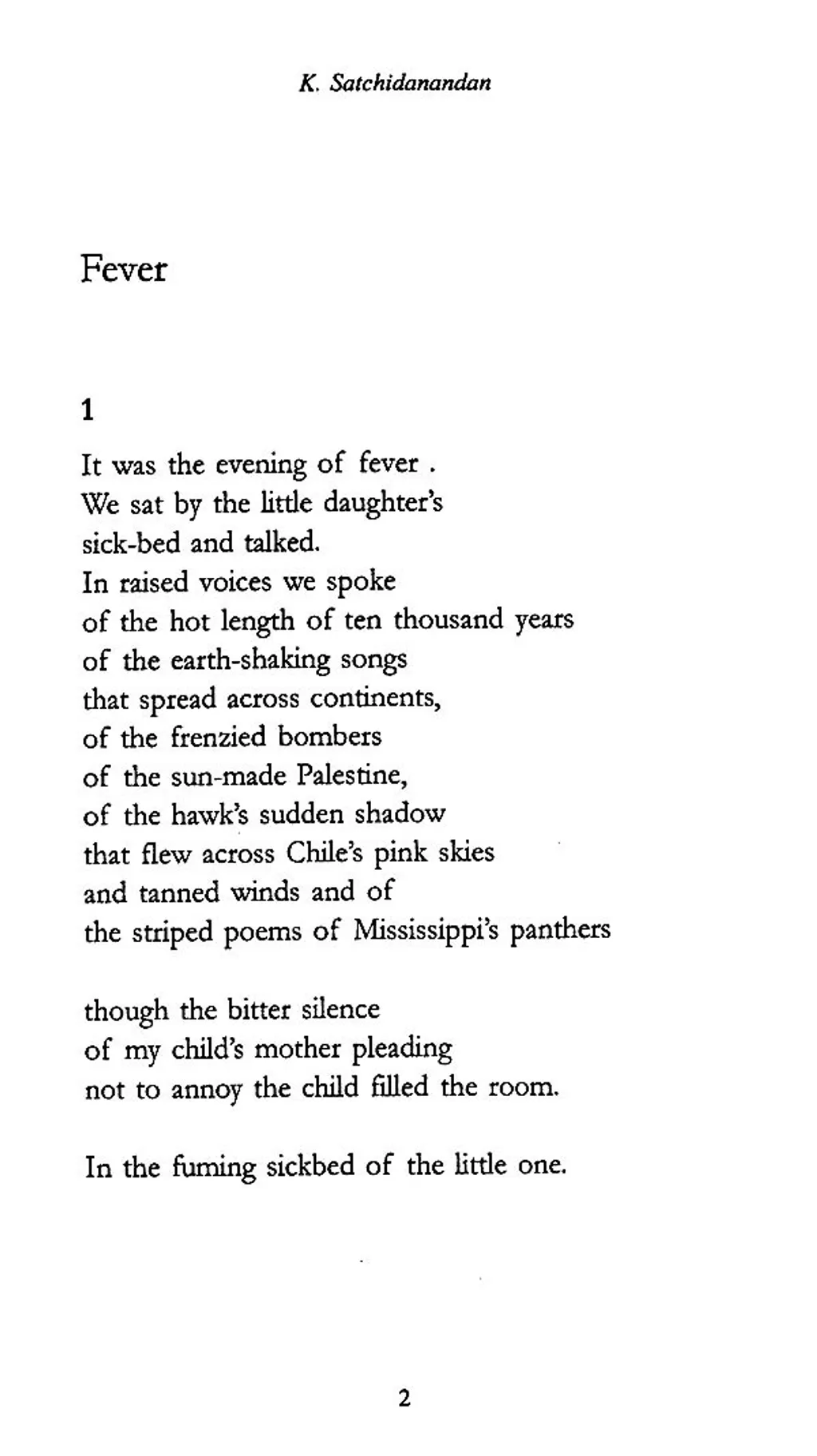
The poem, ‘Fever’ written in 1973, may be read as a paradigmatic poem that embodies the shift towards a radical, transformative aesthetic. The juxtaposition of the daughter’s hospital bed and the anguished youths discussing the political crisis enveloping the world, brings the domestic and the public face to face. References to Palestine, Chile and Mississippi invoke a world in the throes of political turbulence. To the question, ‘Do you still love this land?’ the poet replies: ‘But not this India, not this valley of skeletons’ (2014, 4). The incommensurable nature of life and art demands a redefining of the function of art in society. Irony becomes an attribute of a new-found vision that views one’s own poem critically from outside. A poem is a part of the poet’s dialogue with the world, not a well-crafted artefact. The image of the Buddha in the concluding lines of the poem, brings out the limitations of the rhetoric of the revolutionary idealism into the open. His answers may not guide us out of our crisis, as each period demands a different set of solutions. Should he fail, he may leave behind a corrupt legacy which will endanger the society, instead of saving it: “If he fails to shoot down/ sorrow with an arrow, let him/ shoot himself down and/ save the world from shaving its head’ (2014, 5). The double-voiced quality of this tone brings out into the open the irreconcilable inconsistencies between the angst-ridden world of personal suffering and the austere world of rejection and renunciation. The inconclusive, tentative nature of this ending fractures the organic unity of the poem, adding a political subtext to the dynamics of the poem. A shift towards a more earthly, less imagistic idiom in his poetry, begins here.
In his preface to the volume titled, Kavibuddhan (1992), he addressed this deepening schism between the private and the public as well as the materialist and the spiritual: ‘Poems which exclude private experiences become sweeping statements or orations; poems which leave out social experiences end up being solipsist and narcissistic’ (1992, 5). To escape falling into the trap of such binaries, poetry has to cultivate a high degree of self-awareness. Such a state is not a terminus, but a constant state of movement where the poem takes on a performative quality of dialogue. In the poem, ‘Two Poets’ (2014, 149) the poet imagines a conversation between Euginio Monatale, a public poet and Quasimodo, a hermetic poet. Monatale tells Quasimodo that his poetry is all bones, it can do with a little more flesh. Quasimodo replies that it is easy to catch a tame bird. Monatale’s strong rejoinder carries the poet’s own conviction regarding the nature and function of poetry:
Poetry is not something to be fed
with milk and brought up in a cage;
let it feed on lightning
and burst into stars in everyone’s sky,
rain music and wash away blood.
Even mercy without beauty
Is better than beauty without mercy (149).
Neither public poetry nor hermetic poetry has to be understood as absolute states of irrevocable beliefs, but as the extreme ends of a continuum along which poetry moves. Poetry loses its communicative power when it takes on an absolute view of the living reality.
There has always been a centrifugal impulse in Indian literary culture that sought sustenance from the local and the peripheral traditions as well as from the cosmopolitan and the world-visionary systems of thought. When poetry leans towards the flux of life and its contingencies, it will move away from the parochial and the insular idiom rooted in an essentialist view of the world. As D. R. Nagaraj observed, when poets retreat into ‘the bunkers of individualism’ poetry distances itself from its public role (1992: 108). This diminishes the critical function of poetry as a source of self-reflection. In talking of the vernacular or desi component of poetry, D. R. Nagaraj suggests that it has an inwardness that resists cultural appropriation. A language like Malayalam always turns towards the regional resources of desi when it has to carnivalize authoritarian discourse and project an alternative vision of the reality. This radically oppositional dynamics in the vernacular considers no text as sacred. It is from the centre of such a world of dissenting culture that Basavnna describes the living body as a temple and adds:
Listen, O Lord of the meeting rivers,
Things standing shall fall,
But the moving ever shall stay (1979, 88)
This vision erases binaries such as scepticism and belief, sexuality and morality, the transient and the transcendental and the everyday and the otherworldly. Satchidanandan has incorporated into his poetic vision elements of critical humanism, dialogism and experiential radicalism derived from such vernacular traditions of dissent including Bhakti poetry.
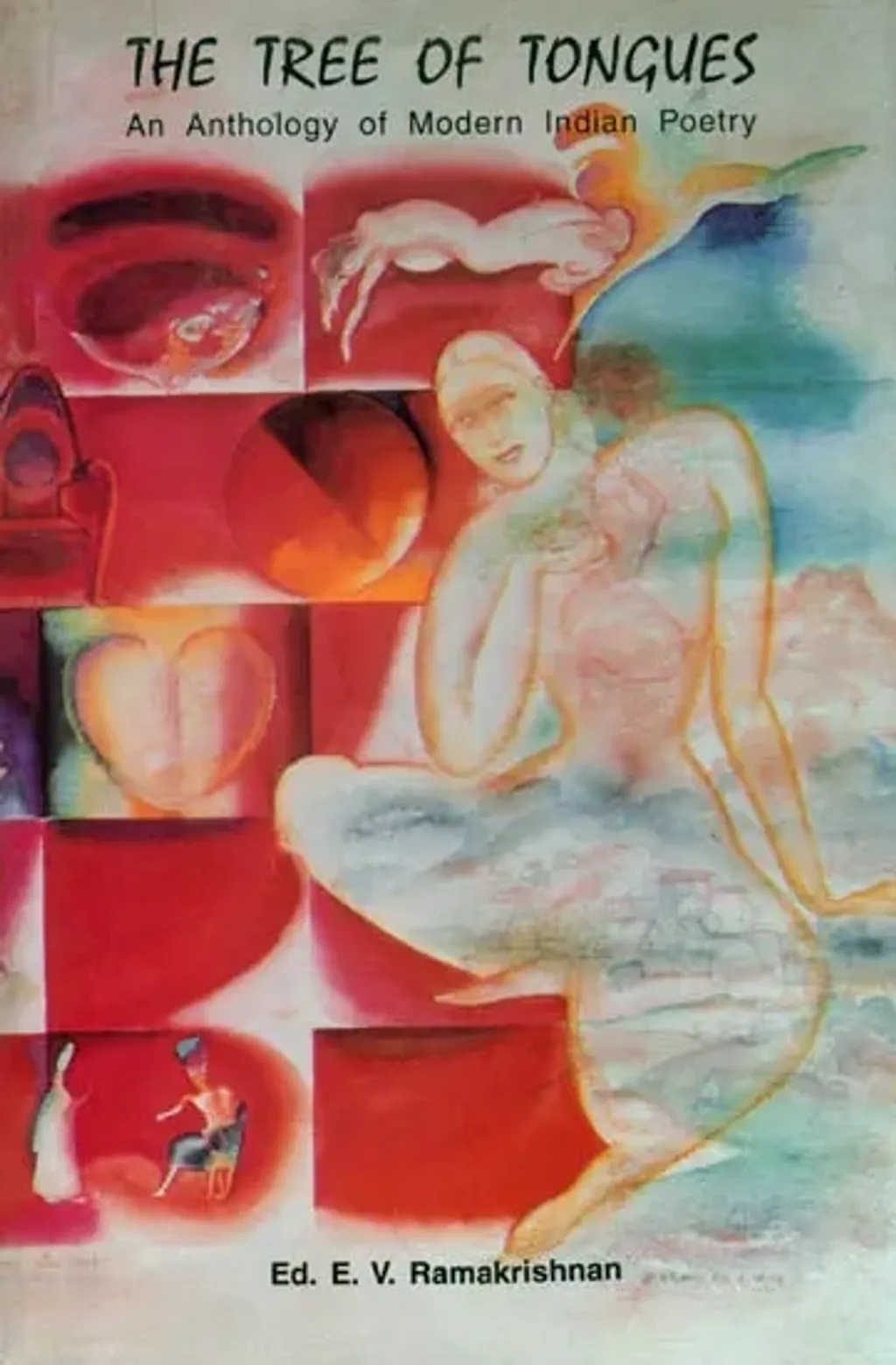
The poem, ‘The tree of tongues’ was composed during the Emergency when the common people had no choice but to keep quiet. It invokes the memory of Thiruvarangan, the folk-bard who roams the countryside, awakening people from their stupor. A gash in the root of the tongue-tree sprouts thousands of leaves in the form of tongues. This is a reminder that the rage of the suppressed subaltern sections would invade the public sphere and awaken the people’s consciousness. The poem, ‘Gandhi and Poetry’, reminds us of the inclusive vision the poet always advocated. Gandhi wants to know if the poetry which has come to meet him, has ever spun thread, pulled a scavenger’s cart, or stood the smoke of an early morning kitchen? When poetry replies that she is on the street now, half-starving, Gandhi advises poetry to give up the habit of speaking in Sanskrit at times and listen to the peasant’s speech (2014, 32). In one of the poems from The Northern Cantoes, the poet addresses the Chinese poet, Ai-Ching, and says: ‘No ruler ever understands poets, Ai-Ching/ they fear poetry’s ever open eyes, / its thousand rebirths. / Honesty and loyalty no longer go together; / the cup still has some poison.’ The cup of poison is a reminder of the repressive nature of the social structures of exclusion that determine the access to power. Slavoj Zizek in his essay, ‘The Lesson of Ranciere’ comments: ‘Political struggle proper is therefore not a rational debate between multiple interests, but, simultaneously, the struggle for one’s voice to be heard and recognized as an equal partner in the debate’ (emphasis added, 2022, 66). Satchidanandan has prioritised the creation of a reciprocal and responsive space of culture rooted in a shared sense of humanity. He believes in the subversive function of poetry in the prevailing social environment of fetishised appearances and false consciousness.
In the poem, ‘Pieta’, Christ rejects his role as a prophet and the martyrdom thrust upon him, in favour of an ordinary existence. He says:
I shouldn’t have donned
this prophet’s robe.
I would have found my God
in the carpenter’s job. I never
wanted to say or do anything
you wouldn’t understand (2014, 64)
Christ rejects his heroic status and the aura that goes with it. This return to everyday world of human interactions and connected living, rejecting the sublime heights of divinity, helps us reinvent the human. In a later poem, “Noah looks back”, Noah doubts whether the voice he heard was really God’s. He recognizes that ‘My mockers’ laugh haunts me/ like a prophecy I ignored’. The poem ends with the lines: “Believers have not saved mankind; only doubters have” (2016, 73).
Aesthetics has a central role to play in the political process of reclaiming one’s voice and social space. This is how the limits that are set by the hegemonic power structures to what can be said, thought or done are altered. The roles and modes of participation in the public domain determine what is visible and invisible, sayable and unsayable, audible or inaudible (Ranciere 2022, 72-74). Avant-garde art has always challenged these boundaries. We have seen above how the Cubist-Expressionist art deconstructed the stable order of images and their meanings, problematising the ideology of representation. When those who are rendered invisible by social order can force a redistribution of power in society, they acquire a language and a voice. In a lecture on his life and poetry, Satchidanandan has said: ‘Poetry rises from the deep ocean of the inarticulate. It attempts to name the nameless, and gives voice to the voiceless. It does not reproduce the existing value-system, nor is it a repetition of the already known (2012, 138).
The evolution of Satchidanandan’s poetic language reflects this awareness of aesthetics as politics. It is the ethical burden that poetry carries that makes it politically responsive. In the poem, ‘A Reply’, he says: ‘Maybe poetry makes nothing happen/ But it is a mouth, regulations cannot gag/ It is an eye that remains vigilant/ When everyone sleeps’ (313). The oppositional role of poetry is not in what it says, but how it says what it says. Satchidanandan’s diction and tone become a measure of his moral alertness. The angst-ridden personal voice of ‘Fever’ is radically different from the brisk pace of the folk tone used in ‘The tree of tongues.’ Folk idiom easily accommodates an ironical perception of the world. He has used tonal variations in his prose poems, ranging from those of fables and parables to the journalistic and declamatory. The language of lovers or prayers invests the poem with a tone of intimacy, altering the relation between the poet and the listener. A poem like ‘How to go to a Tao Temple’ is a triumph of the tone and texture of the poem which holds in balance a strong sense of the sacred and a deep mistrust of religion as an institution. It demystifies the metaphysical by deflating the discourse of blind devotion. Few poets in Malayalam have used the resources of diverse traditions of poetic discourse as Satchidanandan has done, with such telling effect to communicate nuances of political perceptions and emotional resonance.
The complexity of the expressive language reinforces the centrifugal thrust that propels art towards innovation and invention. It is the outward-bound language that opens up the form and widens its communicative potential. As Satchidanandan says in the poem, ‘Suddham’ (Pure), contact and contamination are essential to enrich art: ‘Pure music? Not at all, please/add a touch of folk/ even at the cost of improvisation/ Pure poetry? Again, no/ Let there be a little stain/ of tears, blood or semen’ (2019, 76). Water, love, patriotism, religion do lot of damage, in their pristine ‘pure’ forms. In a world where purity kills millions, the impure die to purify the world. Similarly, it is the mad who bring sanity to the world: ‘The mad have no caste/ or religion. / They transcend gender, live outside/ ideologies.’ (2016, 48). Like poets, they can be Christ or Buddha in a matter of seconds. The well-known poem, ‘Stammer’ describes it as a mode of speech. Fluency of idiom falsifies what is said. Truth can be uttered only through the broken syllables of stammer. He questions the idea of a normative which renders the marginal as outcast and deviant: ‘Stammer is the silence that falls/ Between the word and its meaning, / just as lameness is the silence /that falls between the word and the deed’ (2016, 444). The world is not meant to be perfect, as God must have stammered when He created man. Language owes its creativity to its verbal polysemy and polyphony. Globalisation breeds homogeneity and uniformity, invading the creative potential of society. Language has become a site of struggle and conflict in the globalised world of the market where stammering is a way of asserting our difference and dissent.
In his article, ‘Turning Devi into Goddess: On some hazards of translation’ Dilip Chitre speaks of the many ‘specific non-languages or sign-systems that are speechless’ which inform a poetic composition (1977, 25). As he says, language is always more than language. Not all of Satchidanandan’s poems are translatable to the same degree as the poems included here. Some of the poems he is known for in Malayalam, are deeply informed by ‘cross or inter-semiotic relationships between language and its surrounding sign-systems’ (26) as Dilip Chitre puts it in the above essay. One of his best-known poems in Malayalam, ‘Ivanekkooti’ (Receive this one too), is a case in point (1987, 9-13). It demonstrates how poems deeply embedded in the vernacular imaginaries are less hospitable to another linguistic medium. In this poem, an elegy written on the death of Vyloppilli Sreedhara Menon, an eminent poet of the second half of the twentieth century, Satchidanandan uses traditional metre and classical diction which are resonant with images, rhythms and intertextual associations. Vyloppilli was a poet’s poet, and his death marked the end of an era. The poem exceeds its context by communicating an apocalyptic sense of doom which blends with the tragic temper of the decade as reflected in the deepening ecological crisis, waning of radical politics, dissolution of language as a creative force and resurgence of communal forces. Local as well as pan-Indin mythical references invoke an ecosystem of culture that has evolved from its roots in the remote Sangam period. The ritualistic structure of the poem is born of mourning as well as a desire for transcendence. Poetry here becomes an act of self-sacrifice, to recover the imaginative resources of language. The poem can definitely be translated into another language, but ‘the surrounding sign-systems’ that create a semiotic order of associations for the native reader will remain outside the reach of the non-native reader of translation. For instance, the last section of the poem is replete with echoes from the poems of Vyloppilli, which will need careful decoding to decipher their significance. The elegiac tone deepens into a piercing lament as it bids farewell to the dead poet suggesting his identification with his language, people, land and his times. The spectacular performative elements of the poem are made possible by its deep immersion in the subliminal histories and cultural sub-texts of Kerala.
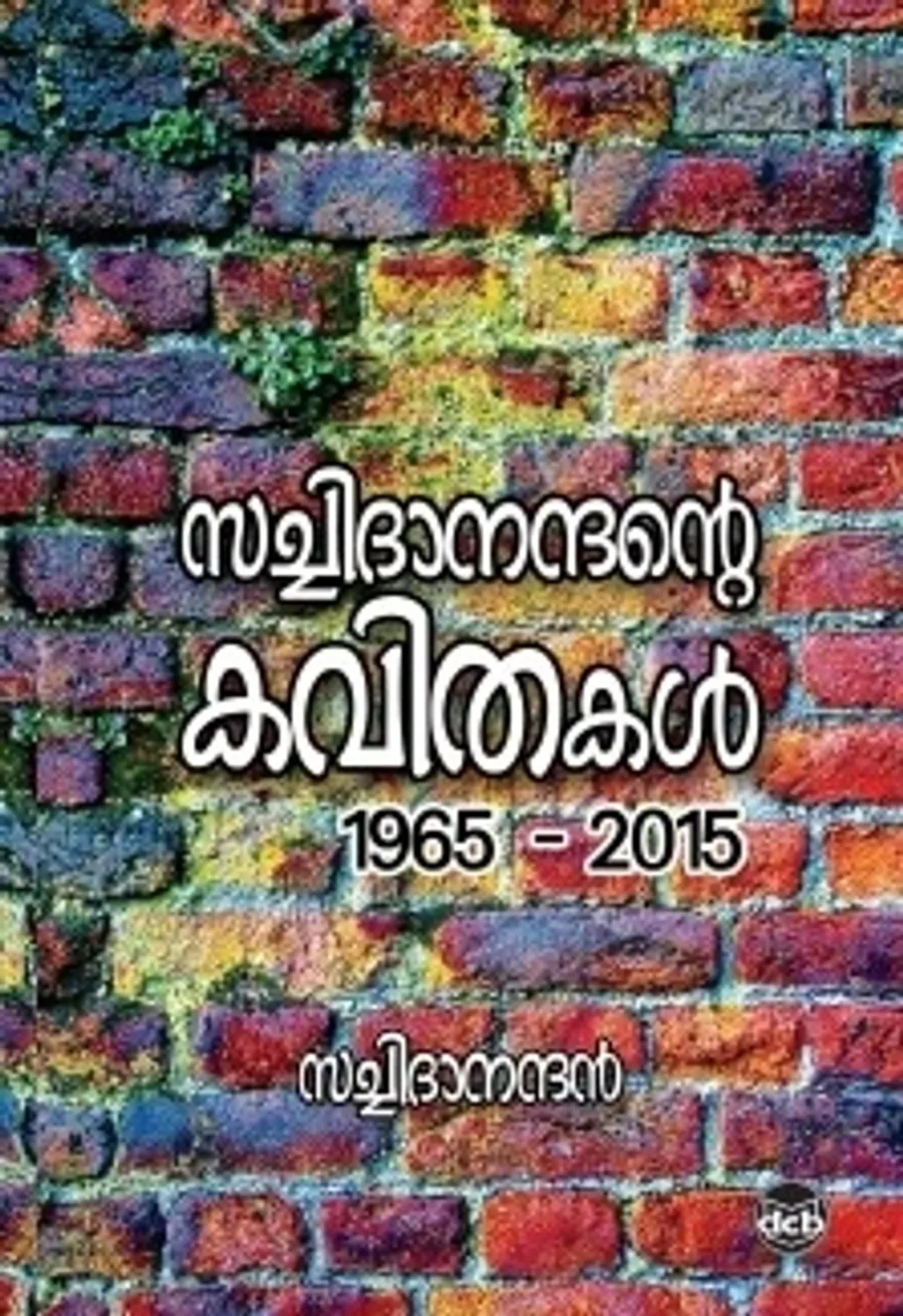
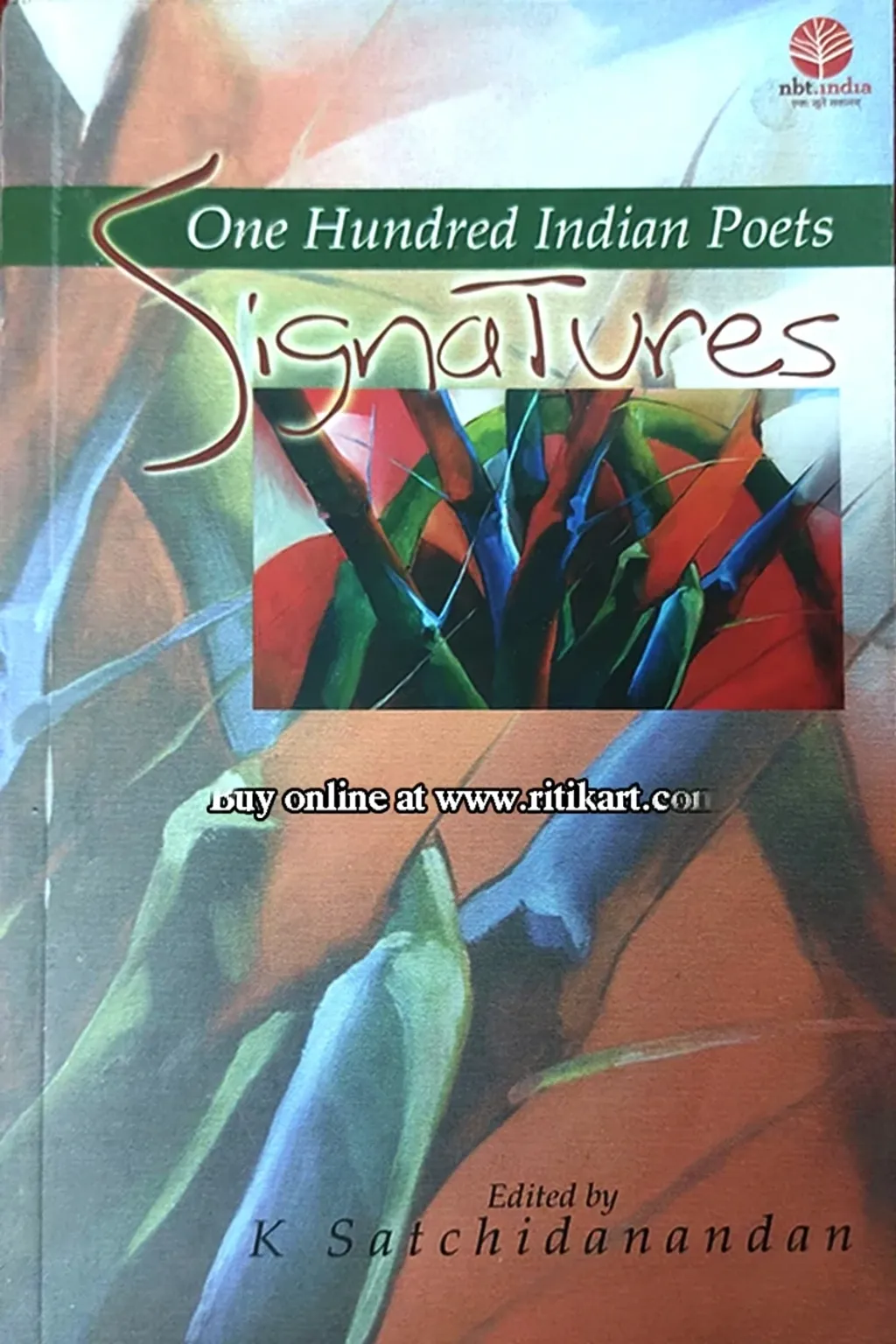
This is not to lessen the significance of the present volume which is vintage Satchidanandan representing his entire poetic oeuvre. The volume presents Malayali imagination at its inventive best, with accent on how the poetic word inhabits difference and diversity as part of a cultural eco-system. For Satchidanandan, translation has always meant an ethical act as it crosses borders set by the official state apparatus, particularly in a globalised world. It questions the canonical and the normative in literature. He seems to echo the revisionary role of translators when he comments that, as a translator, he ‘was a stalker and a cannibal, a transposer of heads, a transmigrant’ (2014, 219). In his poem, ‘Translating Poetry’ he says: ‘As a fish moves through water/ the translator moves through/ minds. On the bank of / each word, in the thick sand, / he kneels, studying/ the colour of each shell, / blowing each conch’ (2014, 6). The translator has to confront each word with utmost care to unravel its mystery. In the process, he offers ‘linguistic hospitality’ to the foreign text. For Satchidanandan, the creation of a reciprocal, responsive space of interaction and dialogue between languages and cultures answered some deeply felt ethical disposition within him. Translation enabled him to be in dialogue with a part of himself which was unavailable in Malayalam. This is also true of his translations of world poetry into Malayalam. This sustained effort to make Malayalam poetry contemporary, has meant continuous engagement with creative possibilities of Malayalam language and the exploration of diverse streams of vital traditions of world poetry. Through translations, he placed Malayalam poetry on the map of world poetry, its multi-voiced imaginaries rooted in resistance and resilience, breaching the provincial and parochial tendencies of Malayalam. In the poem, ‘The Standing Man’, he speaks of the protest staged by Erdum Gumduz, a performance artist, by standing alone motionless, at Taksim Square in Istanbul. Though single, he becomes a multitude, ‘a nation that stands, /stands up against injustice, / a glimpse of future, / seen in lightning flash.’ Poetry as well as translation are acts of standing against and standing for, in times of crisis. In some of the most evocative lines in his poetry, Satchidanandan defines poetry here (which is also applicable to translated poetry):
A man stands
in the park,
still, silent,
The sun goes round him.
Poetry is a man
standing alone
in a forbidden space.
▮
References:
Ananthamurthy, U.R. et al, 1992. Vibhava: Modernism in Indian Writing. Bangalore: Panther Publications.
Chitre, Dilip, 1977. ‘Turning Devi into Goddess: On some hazards of self-translation’, Modern Poetry in Translation, No. 31 (Summer, 1977), 24-26.
_ , 2024. Life on a Bridge: On Bhakti, Self and Translation. Paperwall publishing, Mumbai.
Ramanujan, A.K., Trans. & Ed. 1979 (1973). Speaking of Siva. Penguin Classics.
Ranciere, Jacques, 2022 (2002). The Politics of Aesthetics. Edited by Gabriel Rockhill. Bloomsbury Academic, London.
Ramakrishnan, E.V., 1995. Making It New: Modernism in Malayalam, Marathi and Hindi Poetry. IIAS, Shimla.
_ , 1999. The Tree of Tongues: An Anthology of Modern Indian Poetry. IIAS, Shimla.
Satchidanandan, K. 1987. Ivanekkooti. D.C. Books, Kottayam.
_ . 1992. Kavibuddhan. D.C. Books, Kottayam.
_ , 1995. Summer Rain: Three Decades of Poetry. Nirala Publications, New Delhi.
_ , 2011. While I Write: New and Selected Poems. Harper Collins, Noida.
_, 2012. Marannu Vecha Vastukkal (Misplaced Objects). D.C. Books, Kottayam.
_ , 2014. Misplaced Objects and Other Poems. Sahitya Akademi, New Delhi.
_ , 2016. The Missing Rib: Collected Poems 1973- 2015. Poetrywala, Paperwall publishing, Mumbai.
_ , 2017. Samudrangalkku Maathramalla (Not for Oceans Alone). D.C.Books, Kottayam.
_ , 2019. Pakshikal Ente Pirake Varunnu (Birds Pursue Me), D.C. Books, Kottayam.
Suresh, P., Ed., 2016. Aalilayum Nelkkathirum: Satchidanandante Sancharapadhangal. Progress Books, Kozhikode.
Zizek, Slavoj, 2022 (2004). ‘The Lesson of Ranciere’ in The Politics of Aesthetics. Bloomsbury Academic, London.