
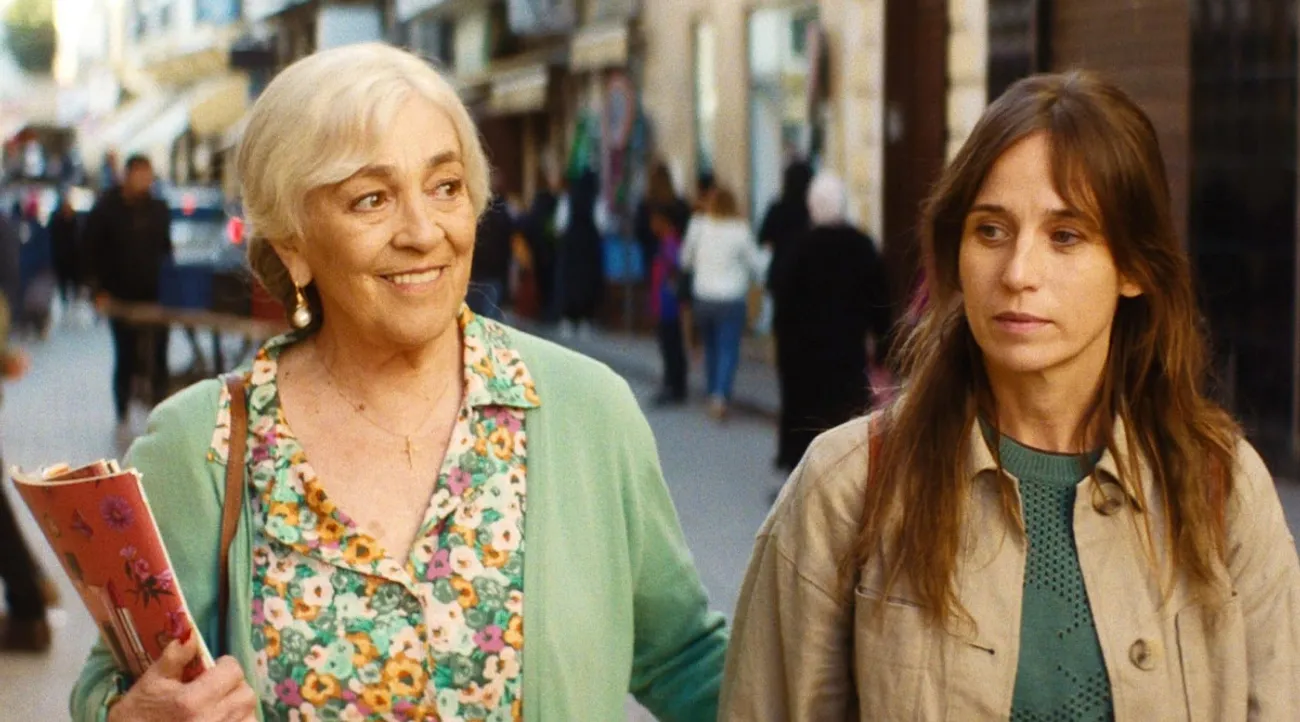
Calle Malaga has received significant international recognition, underscoring its broad emotional and artistic appeal. The film was selected as Morocco's submission for the Best International Feature Film category at the 98th Academy Awards. Its key accolades include the Venice International Film Festival's Audience Award (Venice Spotlight) and the Mar del Plata International Film Festival's Best Film award in the International Competition. Many viewers don’t find it an arthouse film for its domesticity. On a surface level, the Moroccan-Spanish film ‘Calle Málaga’ may come across as a simple domestic drama, but the film transcends these boundaries; it is a profound sociological study of belonging, where the physical space of Tangier operates as a character, a sanctuary, and the very embodiment of the protagonist's identity. Maryam Touzani’s cinematic vision allows the narrative to unfurl like the slow, sun-drenched blossoming of a memory, expertly weaving together the city’s complex diasporic history with the intimate, tactile experience of space, aligning with core theories of urban sociology and the overwhelming emotional weight of a life intensely lived.
Introductory title cards, like inscriptions on a forgotten monument, tenderly explain the deep strata of Tangier’s history. The city is defined by its liminality - a position "in-between," a hinge between continents and cultures, and a 20th-century "melting pot."1 The specific diaspora relevant to María Ángeles’s story is the influx of Spanish refugees in the 1930s, fleeing the political terror and fascism of Francisco Franco's merciless regime. They sought refuge here, a place whose linguistic proximity offered a non-negotiable harbour.

Belonging in Diaspora: Appadurai, Safran, and Cohen: Thinkers in diaspora studies affirm that belonging is tied to a shared memory rooted in a specific locale. William Safran emphasised the retention of a collective memory of the homeland. Robin Cohen focused on the group's ongoing group consciousness in the host country. Crucially, Arjun Appadurai introduced the idea of "scapes." María Ángeles lives within the ethnoscapes of Tangier, where people are interconnected through history. Her daughter, Clara, however, is guided by the imagined landscape (or ideoscapes) centred on Madrid, valuing its economic opportunities over the deep, inherited rootedness of Tangier. For María Ángeles (Carmen Maura), her identity is Tangerine. Her existence affirms the life of a specific, dwindling diasporic community.
The film's vision of Tangier as a lived experience aligns with the work of Georg Simmel, a pioneer in the "sociology of space." Simmel argues that physical space is not a passive container, but is actively shaped by social forms.
The Power of Fixity and Boundaries: Simmel emphasises the power of fixity the localising of social interaction. For María Ángeles, older people, her apartment and her local bazaar are fixed points, the physical markers for her "social geometry" the unique configuration of her relationships. The destruction of her home is the destruction of her world.
The Bazaar as a Social Form: The bazaar and its surrounding streets are a social form characterised by high-intensity, face-to-face interaction and mutual familiarity. The early scenes of her exuberantly strolling the cobbled streets confirm her spatial mastery and social fluency. She thrives on the vibrant cross-cultural energy precisely because she is known by name and is an integral part of the daily flux. The film establishes her worldview as the bazaar: a place of human warmth, negotiation, and continuity, which gives her life its meaning.
The film's pulse is the indefatigable screen presence of Carmen Maura. The veteran Spanish star, whose expressive, saucer-eyed features helped define the cinema of Pedro Almodóvar, here embodies a character both earthily practical and capable of magnificent irrationality, always, utterly, sympathetically true to herself.
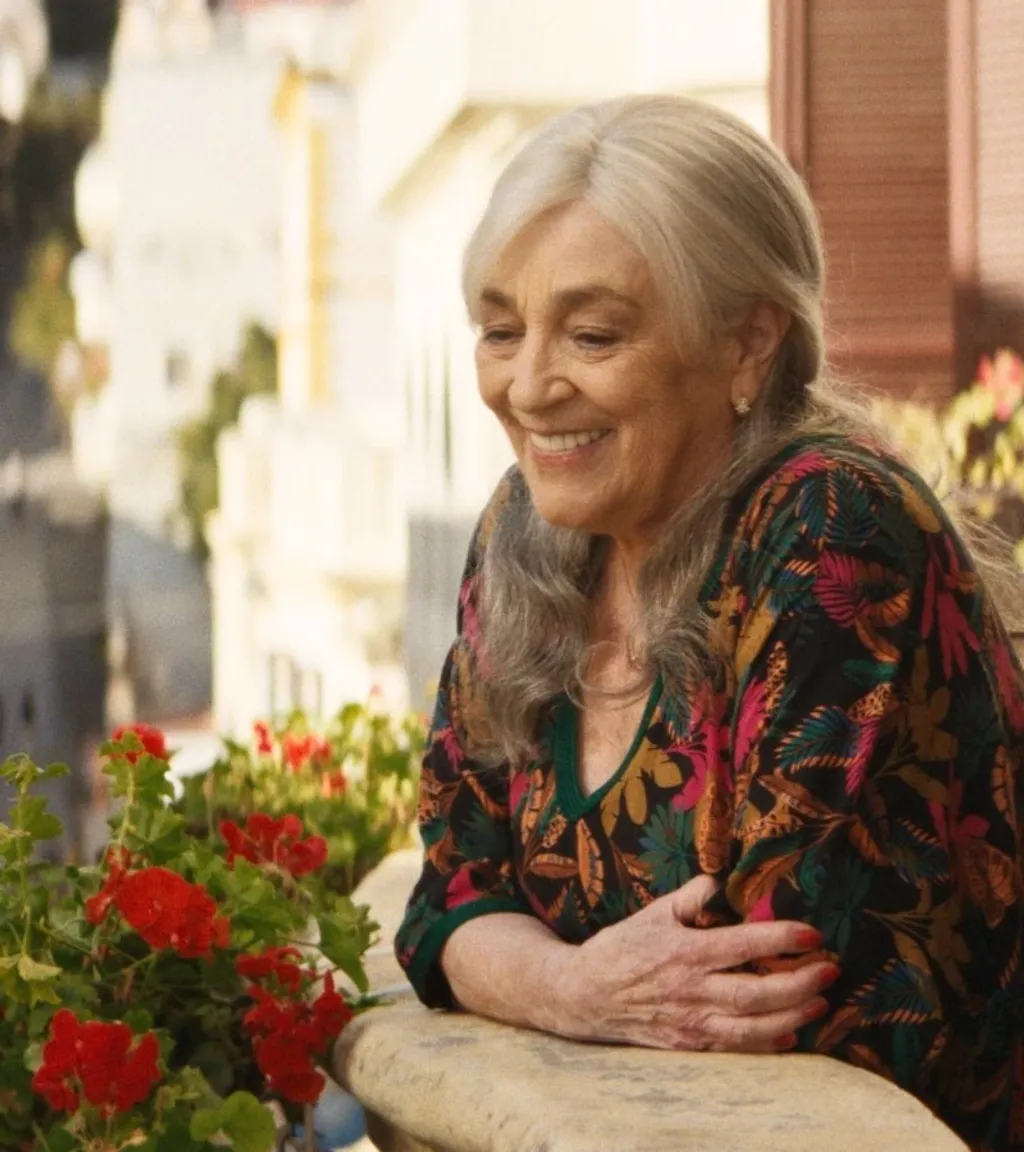
María Ángeles’s life her cooking to the sound of Latin jazz bubbling away on her vintage record player, her small, daily acts of attending to the fragrances and the taste of churros and warm roasted almonds is shattered by the arrival of her sole child, Clara (Marta Etura). Clara, needing money after a bitter divorce, intends to sell the apartment that her late father left in her name. The mother's choices are brutal: surrender her spatial identity for Madrid, or move to a local, subsidised facility. This generational chasm between the mother’s deep-rooted community ties and the daughter’s pressing economic need is established as a conflict that resists simple reconciliation.
Clara’s conviction that her widowed mother is alone and friendless in Tangier is the film's central irony. Clara judges belonging by the cold measure of kinship, failing to see the community of choice that sustains her mother. This conflict is the film’s quiet, devastating treatise on ageing and the tenacity of memory in the face of inevitable loss.
The Cemetery and the Almodóvarian Echo: In poignant scenes at intervals throughout, María Ángeles visits the cemetery, tending lovingly to the graves of her husband and friends. As she lovingly tends the graves and, at one point, assembles the pieces of a broken tombstone like a jigsaw puzzle, it is impossible not to think of the exquisite opening of Pedro Almodóvar’s Volver, in which women from the pueblo gather to wash their ancestors’ burial sites in an annual tradition. This ritual of care for the dead links María Ángeles directly to a powerful legacy of preservation and remembrance.
She encounters the graveyard keeper, who hasn’t repaired the grave, who remarks that "no one has come in forty years," to which María Ángeles replies, "I come." This exchange, juxtaposed with her lively relationship with her young neighbour and the market vendors, powerfully illustrates that with ageing, how little remains of our original friends and relatives; slowly, how everything is dying. Yet, it is precisely what was there that provides her present existence a dense, historical presence that transcends mere living company. The act of tending the graves and remembering the faces on her walls is a daily ritual that affirms her continuity.
The Silent Confession: María Ángeles’s dearest friend is Sister Josefa (María Alfonsa Rosso), a nun living under a vow of silence. María Ángeles describes every detail of her life to her, even her unexpected sexual reawakening with the dealer Abslam. The director intelligently reverses the idea of confession; it is the presence of the devoted friend, whose only response is a gentle, chiding glance, that comforts. The silence and presence of the nun are so profoundly comforting. The film delivers one of its most devastating emotional blows when María Ángeles later finds Josefa on her deathbed. This scene lays bare the pain of loneliness and ageing, and the devastation of watching the scaffolding of one’s life crumble as, one by one, everyone we know passes on.
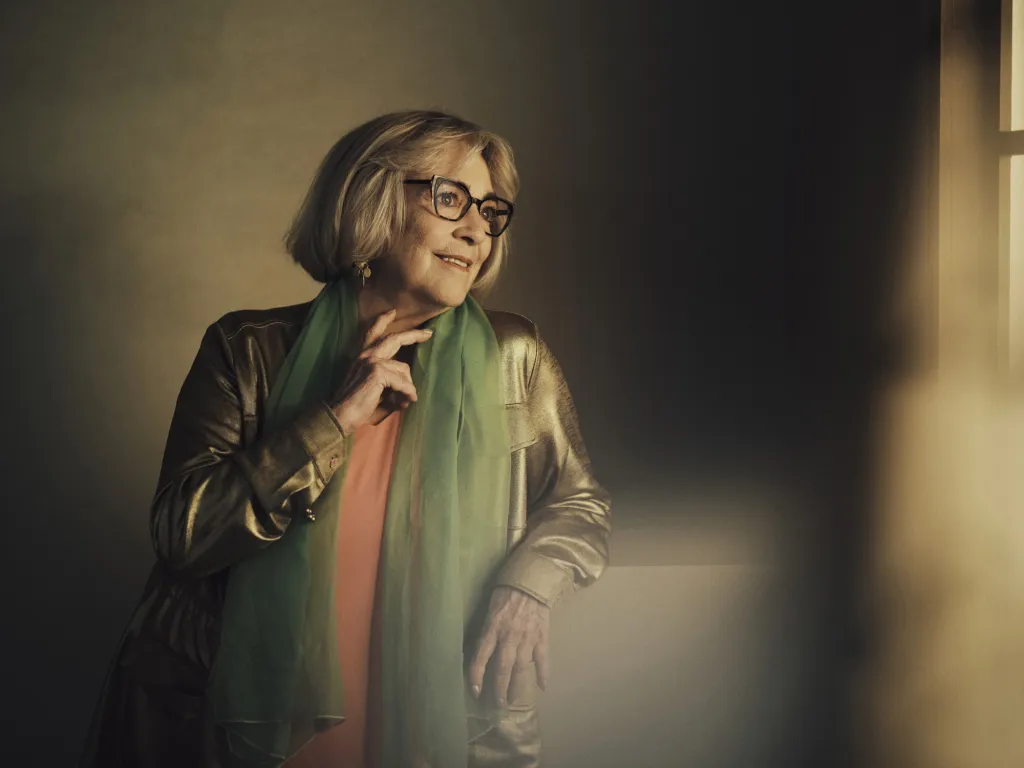
When Clara proceeds with the sale, the film’s mise-en-scène becomes a powerful counter-statement. The assisted living facility is depicted as a place of sanitised, sterile grey, its corridors claustrophobic.
Colour and Confinement: María Ángeles’s attire is typically a celebration of life, often featuring bright, floral prints and shades of scarlet, echoing her effusive scarlet geraniums on the balcony. She is rarely seen without her small luxuries: pearls or pretty earrings. It is only when she visits the dying nun that she appears in a black cardigan. The film’s visual philosophy is revealed in the moment of her escape from the nursing home: when she walks away from the claustrophobic corridor, the next cut shows her in a wide-lens shot under a vast sky, having opened a door to light. The visual effect is instantaneous and cathartic.
The Vintage Soul: Even after the furniture is sold, leaving the apartment chillingly bare, she places an embroidered cloth on a packing box and arranges small frames and paraphernalia. This act is a definitive rejection of minimalism; Calle Málaga celebrates the old idea of vintage memories, where objects are not mere things, but vessels imbued with memories.
Almodóvarian Wit: The visual vocabulary of pale green walls in the hospital and the red floral prints of her attire, combined with her comic confrontation with the pushy hairdresser, provides a clear Almodóvarian echo. The sequence where she uses her wit and a hint of blackmail to manage the police and the real estate agent is akin to the style where complex issues are resolved through the shrewdness and resilience of women.
The tragedy evolves into a caper as María Ángeles begins the slow, deliberate process of reclaiming her life, piece by piece, from the antiques dealer, Abslam (Ahmed Boulane), eventually developing a joyful romance with him. She finances this with a clever community-building scheme: hosting soccer viewing parties in her apartment.
The visual beauty of this reawakening is due mainly to the sustained collaboration with cinematographer Virginie Surdej. The partnership between Touzani and Surdej is a significant artistic force. Surdej was the Director of Photography on both Touzani's debut feature, Adam, and her internationally lauded follow-up, The Blue Caftan (2022). Surdej’s cinematography makes the environment feel emotionally present. Her cinematography is olfactory.
The film's conclusion elevates it above the expected rhythms of a genre piece. The director chose ambiguity over direct reconciliation, refusing to provide the formulaic, tidy closure often demanded by domestic dramas. This unpredictable conclusion is a powerful artistic choice, affirming that belonging is a perpetual, active choice, not a guaranteed, permanent state; sometimes, the child can’t fathom the parent’s choices and ways of being. This is a film that asks us what matters, what gives us a sense of being. Its enduring answer iss found not in blood or wealth, but in the vibrant, fragrant soil of a place we have claimed, and the quiet, persistent presence of those who bear witness to our life.