
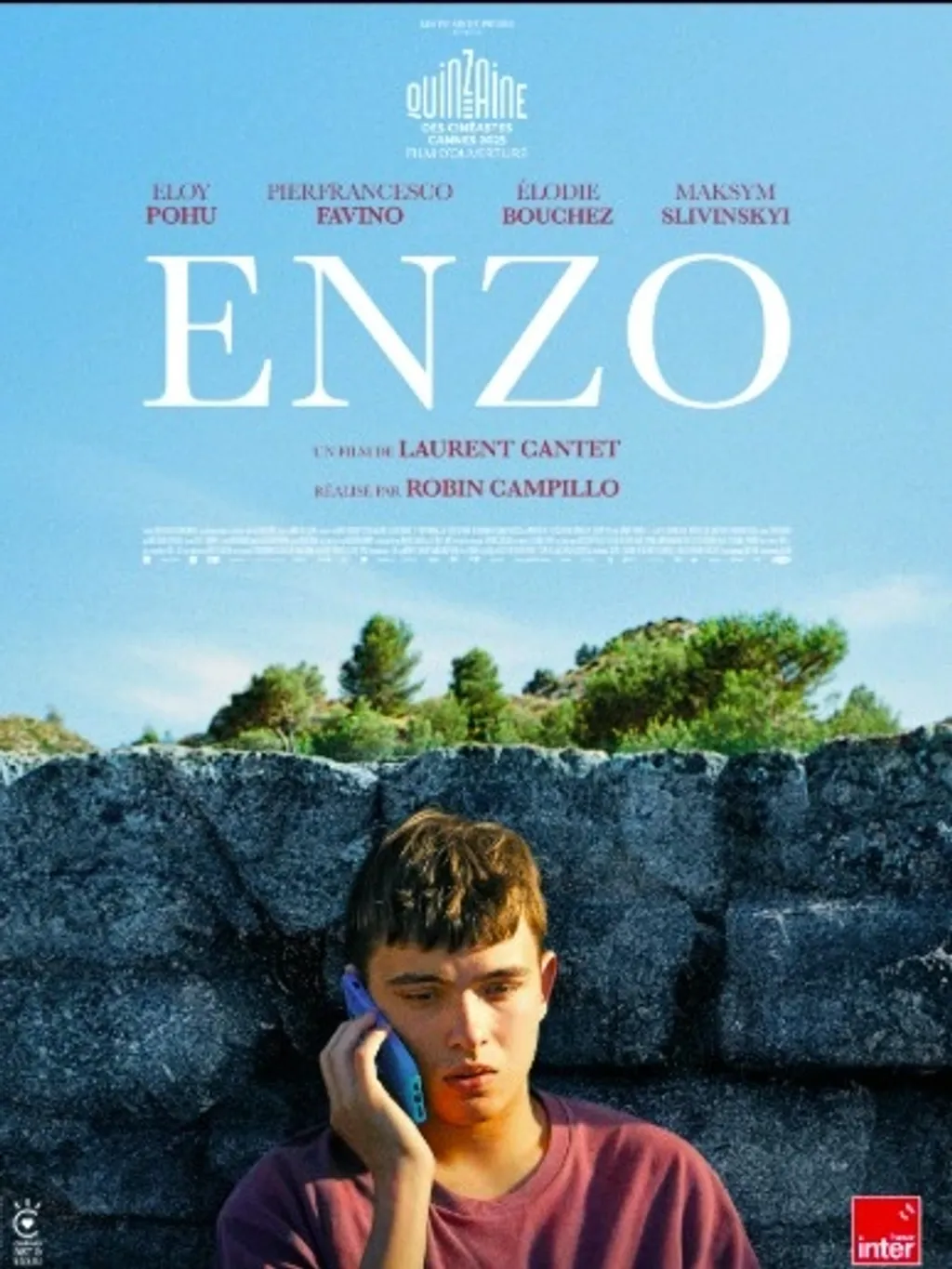
Few individuals truly possess a defined identity at the precipice of adulthood. It is a chasm, a sheer drop between the known geography of childhood and the unseen coast of self. In a contemporary landscape where platforms like social media compel the codification and validation of selfhood, the journey of self-discovery is more formidable than ever before. This turbulent search for belonging is the volatile heart of Enzo, screened at the IFFI 2025 under the category' Cinema of the World'.
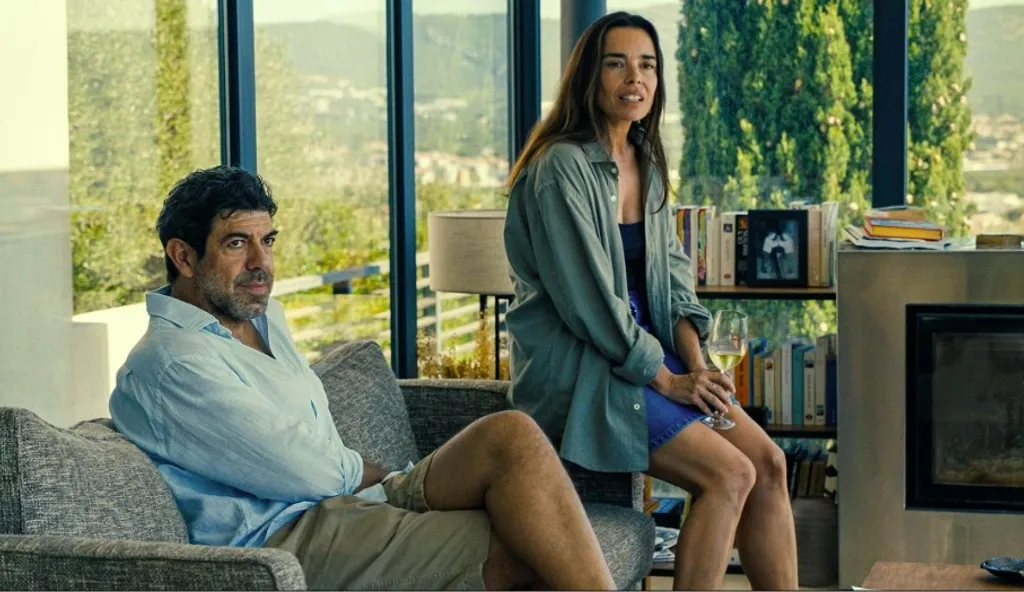
The film introduces Enzo (Eloy Pohu), a privileged sixteen-year-old living in a magnificent, sun-drenched villa with a swimming pool and an ocean view. Defying his parents his father, Paolo (Pierfrancesco Favino), a mathematics teacher, and his mother, Marion (Élodie Bouchez), an engineer he chooses to abandon his studies. This decision, which stands in stark contrast to his older brother's university trajectory, is not just defiance but a quest for something lasting. When questioned by his father, Enzo simply states that he wants to be a bricklayer to "make something that lasts," believing that honest manual work buildings and houses that stand up to natural disasters will outlast the results of traditional academia, thus validating his very existence. He seeks the coarse, undeniable truth of mortar and stone, a truth that academic results cannot mimic.
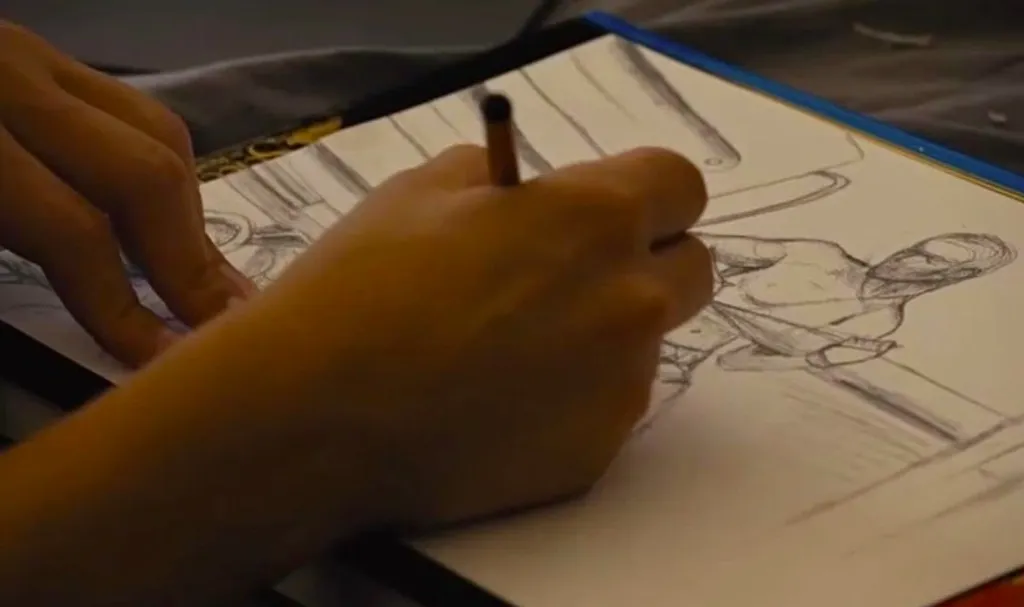
This pursuit is seen by his father, Paolo, as a self-destructive affectation that could compromise his future; a parental perspective steeped in the bourgeoisie gaze. Paolo repeatedly argues for an art school application, a more acceptable upper-middle-class career path. Paolo's friends describe his son's choice of work as unique and akin to architecture. The true-to-life family arguments over Enzo's future are a central dramatic tension, with Paolo lamenting, in a powerful sequence amongst his friends, that he is doing manual labour, which is self-destructive, that "A 16-year-old drowning before our very eyes and we let him!" The father's voice, a tight, thin wire of anxiety, threatens to snap under the weight of his son's unconventional yearning.
It is worth noting the nuanced parental approaches: while Paolo exhibits the bourgeoisie gaze and is constantly tense about Enzo's path, his mother, Marion, adopts a more patient, "wait-and-see" approach. Even as she provides him with cooling drinks by the pool, she attempts to maintain a gentler presence amid the escalating family tension. Her silence is a vast, shimmering pool, absorbing the sharp edges of the arguments, a temporary, cool refuge.
Teenage rebellion takes many forms, but rarely does it involve wanting to actually work. Instead of getting into trouble with friends or idling in the luxury of his parents' glass-walled villa, 16-year-old Enzo chooses to spend his days mixing concrete and laying tile alongside men much older than himself. He may be a clumsy, shamefully mediocre apprentice, struggling at the site and kept only by the unspoken debt owed to his name, yet he loves the work. He finds his construction friends to be real, doing real things in the world, and, unlike his parents, they treat him as a person, not a child. Enzo's desire for this rough, authentic camaraderie, in contrast to the masked existence he associates with his family, is key to his rebellion. He trades the transparent cage of his affluent home for the beautiful, blinding dust of labour, a dust that coats and legitimises.
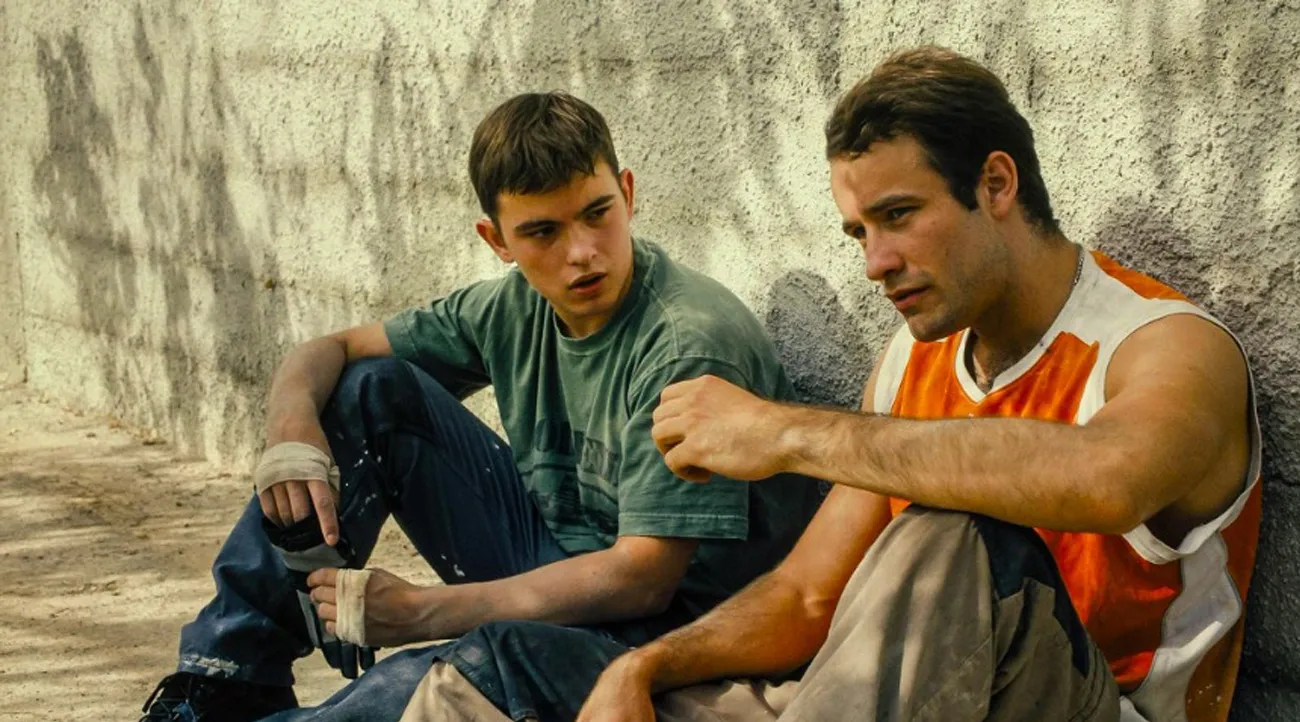
On the construction site, Enzo tentatively makes friends with a pair of older Ukrainian men, Miroslav (Vladislav Holyk) and especially Vlad (Maksym Slivinskyi), a handsome, charismatic man in his mid-twenties. Vlad came to France to avoid conscription, yet he remains deeply conflicted about not returning home to join the struggle against Russia. Vlad becomes an idealised figure for Enzo, a man who possesses a clear identity and a dramatic, life-altering choice: manual labour and safety in France or heroic engagement in the fight back home. Vlad is a geography of purpose, a stark, powerful silhouette against Enzo's own hazy, soft landscape of privilege.
Enzo's fascination centres on the profound reality of Vlad's existence how much grander, more concrete, and more real his life is compared to Enzo's muddled, spoiled, and seemingly dreary existence. While Enzo watches soldier videos on his phone by the pool, he tries to understand Vlad's choice, yet simultaneously desires to share in that authentic struggle.
This dynamic speaks directly to a core theme of the film: Gen Z's awareness and openness in discussing matters that really concern them. Still, there's something universal and incredibly timely in this aspect of his fight, as young people all over the world are grappling with the moral dimensions of conflicts in Ukraine, Gaza, and Syria. At the same time, their parents and peers don't necessarily share their passion. While Enzo's own family never discusses the ongoing war, Enzo listens to stories from Vlad and Miroslav. His concern for the war, initially sparked by his infatuation with Vlad, drives him to make an extraordinary declaration: he would prefer to be in Ukraine with Vlad than in his comfortable home. When Vlad asks him, "Don't you fear death?" Enzo tenderly answers, "As long as Vlad is next to him, he doesn't fear that." This beautifully captures the volcano of emotions in an adolescent's mind. But is Vlad prepared to listen to something so tender, and does he have the capacity to reach it? Enzo is a sensitive portrayal of growing up that poses a crucial question: do adults respond to such vulnerabilities with concern and responsibility, or simply brush them aside and pretend to be tough? The film suggests that adults often fail to behave sensitively to the emotional, vulnerable needs of a growing adolescent, exacerbating the raging storm in Enzo's head. The chasm between the adolescent heart, exposed and beating, and the adult's fearful, armoured response is the film's silent scream.
The film delicately traces the slow, tidal shift of Enzo's admiration into desire. As the narrative unfolds, Enzo initially desires to be Vlad. Still, the admiration turns romantic in almost every sense, awakening a quiet, desperate desire within Enzo, as if a hidden nerve were beginning to fire. It is the awakening of a tectonic plate, slow and deep, shifting the boy's entire inner world toward a single, magnetic north.
This narrative, while exploring a young man's sexual awakening, starkly contrasts with other films in the genre. Also, being a recent film, it is often compared to the cult film Call Me By Your Name for the weight of its theme. Unlike the unconflicted, "super understanding bourgeoisie family" setting of Call Me By Your Name, Enzo presents "the cracks of the affluent facade" and the resulting tension. Furthermore, the intimacy is handled with a stark, affecting distance: comparing the "sun-drenched Italian summer" where Luca Guadagnino's Call Me By Your Name actors "swam naked," Enzo offers social realism in the South of France. The key moment of contact is the highly sensitive, non-sexualised, boundary-setting moment where Enzo wakes up in the night and watches over Vlad's body, moves to his bed and places his hand on Vlad's chest as if pulled by an invisible desire of nascent feelings, difficult to label and even impossible for him to reckon. Vlad gently wakes to say, "Let's stop it here." The two return to work the next morning without lingering resentment a powerful depiction of unspoken awareness and restraint. The touch is a whisper, a question asked in the profound dark, and the response is a quiet, necessary closure, neither cruel nor indifferent, but etched with the awareness of two different, unbridgeable lives.
Enzo carries the poignant legacy of its origins, opening with the unusual screen credit: "A film by Laurent Cantet" and ending with "Directed by Robin Campillo." Co-writer Laurent Cantet tragically passed away in April 2024, prompting his longtime friend, Robin Campillo, to realise his vision. The resulting feature is a delicate blending of Cantet's cold eye for class walls and Campillo's tender humanism. The film is a palimpsest, bearing the ghostly trace of one vision overlaid by the sensitive hand of another, resulting in a work that is both structurally sharp and emotionally soft.
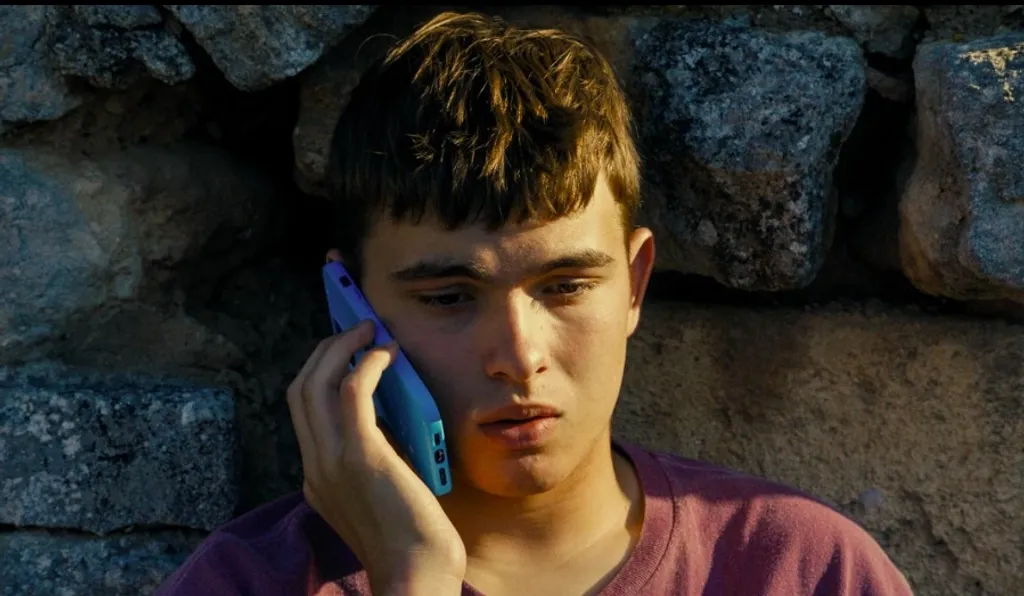
The absence of a musical score ensures our emotions are never unduly guided. The most explicit parallel to Call Me By Your Name is the climax: Enzo's end with a phone call from the older figure to the younger. Enzo, walking alone amidst the ruins of an archaeological site in Italy, receives a call from Vlad, who is now in the warzone, with the terrifying sound of bombs exploding nearby punctuating their exchange. Enzo leans on the walls in ruins as they talk. This use of the crumbling ancient structure provides a powerful metaphor, suggesting that the foundations of the boy's old life are collapsing, and he is simultaneously witnessing the literal destruction of war through Vlad's experience. The static-laced distance of the phone line carries the unbearable weight of a world on fire, connecting the boy's ruined internal landscape to the man's literal external war. The conversation here is poignant and, in just a few lines, reveals something so delicate connecting Enzo's internal emotional turmoil with the visceral, life-and-death reality of the man he admires. It is a moment of profound, quiet honesty that encapsulates the film's sensitive portrayal of adolescent connection and the harsh realities that ultimately separate them. While Vlad and Miroslav's immense struggles are, in the end, mere footnotes in the main character's plot, their impact on Enzo is forever etched. Their survival, their sorrow, becomes a permanent, dark ink stain on the bright, unwritten page of Enzo's future.
Enzo is a beautifully shot character study that captures the fragile yet volatile moment of finding one's authentic self amidst the wreckage of class expectations and the fierce development of desire. The film's quiet, potent depths reveal that the search for identity is an act of construction, built painfully brick by brick, and cemented only by the real, lasting connections we choose to make. Ultimately, the film poses a crucial question to the viewer: Will adults react to such profound adolescent vulnerability with the responsibility, patience, and unconventional understanding it demands, or will they simply dismiss it with a pretence of toughness? It asks if the adult world has forgotten the language of the nascent heart, or if it simply refuses to speak it.