

The sophomore feature, "I Only Rest in the Storm," is not just a film; it's an audacious, 210-minute visual discourse on the long, evolving shadow of colonialism cast over Guinea-Bissau. The cinema, in the hands of Pedro Pinho, ceases to be a mere container for story and becomes, instead, a restless, living membrane. It is a work of such immense patience and thematic density that it unfolds less like a traditional narrative and more like a vast, impressively novelistic diary, where no detail is too small to be denied rumination and every emotion is given room to breathe.
The film's architecture is deliberately fractured, its core story - that of the Portuguese engineer Sérgio, serving merely as a thread upon which disparate, glittering vignettes are strung. This collection of tales is an uneven sea, where the voice shifts constantly: from the stripped-bone directness of a ledger to the whispering labyrinth of a metaphor.
Each scene breathes as a singular organism, a self-contained unit capable of surviving, briefly, as a short film. This diary-like structure, where everything comes on screen, grants the film an unhurried, lived-in quality, allowing Pinho to present not just the static scar of colonisation, but the terrible, evolving morphology of the wound itself. The film's vastness tests the very sinews of the watching soul. Yet, it is this almost uncontainable runtime that is necessary, demanding space to stretch across the sprawling landscapes like a shadow that refuses to retreat.
The camera itself operates under a philosophy of movement that mirrors the difficulty of accessing the emotional geographies of a post-colonial society. The film often feels like a road ride, traversing the visible political and social terrain. Yet, where the car cannot reach the rural wetlands, the complex interiority of the local psyche the camera takes the canoe. The visual transition from the desert road to the slow, humid movement of the water is a direct metaphor for the camera's shift from surface observation to inaccessible, more profound truths. This dual mobility allows Pinho to explore the inner lives of those bearing the brunt of colonialism, proving that the vastness of life always exceeds the frame of the story.
Pinho refuses to offer the audience easy closure. Instead, he inserts stark, confrontational moments in which figures peripheral to Sérgio's plight turn to address the camera, spilling historical facts and truths like sand from a cupped hand. His camera is not a lens of comfort but an accusation, a mirror held up to the prejudices the audience carries. The sheer weight of the themes - racism, identity, the geopolitical chill sometimes overwhelms the plot, yet the ambition itself makes the film so compelling.
Sérgio, the bearded engineer, arrives in this chimerical geography a blend of Guinea-Bissau and surrounding French-speaking regions to complete an environmental report, taking over a task abandoned by a mysteriously vanished predecessor. He is a white NGO worker, well-meaning but unignorably privileged and ignorant of it.
This choice of protagonist, the "white person adrift" seeking self-discovery is a narrative trope Pinho immediately begins to interrogate. As the camera perches on Sérgio's shoulder like a good observational documentarian, we witness a drama of aid and post-colonial diplomacy. While some viewers may see the relationship seemingly "working" despite operational growing pains, the screenplay firmly frames this post-independence arrangement as a neo-colonial pact between a master and its former subject.
Drawing on thinkers like Frantz Fanon and Edward Said, Pinho uses Sérgio not as a hero but as a vehicle for others' narratives. The film illustrates how, even after formal independence, the structure of global power remains a hegemony of European influence. This is exemplified by the everyday theatres of absurdity where Sérgio and a local, unable to communicate, resort to broken Spanish. This linguistic no man's land highlights the perverse irony that the lingua franca remains a product of the "Old Continent," revealing how the influence and hegemony of European power persistently circle back to the centre of every power dynamic. The film suggests this truth carries the weight of historical trauma.
The film is profoundly concerned with the gaze who looks, and why. Sérgio's central flaw is that he is, first and foremost, a voyeur.

The Mystery of the Missing Man
The film unfolds with a novelistic structure, allowing the mystery of the predecessor's disappearance to act as a profound source of dread and tension. Sérgio, the soft European, is haunted by the silent question of the missing man a question that acts as a continuous, low-frequency hum of dread.
The local rumour that the man ran off with a Bissau-Guinean woman is too clean, too simple. Sérgio guesses at something much more sinister, constantly wondering what 'faux pas,' what fatal, unknowing mistake, the man made in a country whose unspoken rules he cannot read. The narrative ensures that the question, "Will he end up like his vanished colleague?" is written not in ink, but in the sweat on Sérgio's brow, lending the entire feature its unsettling, precarious suspense.
Ambiguous Desire
Sérgio's romantic desires become the film's central moral knot, pushing the narrative into fraught grey-area territory. He is drawn, with the force of an elemental hunger, to Diára (the fierce bar owner whose Cannes-winning performance projects undeniable power) and to Gui (the femme nonbinary Brazilian expat who acts as the film's critical conscience). Gui confronts Sérgio's motives with the clarity of a living question mark, stating plainly: "He colonised, I was colonised."
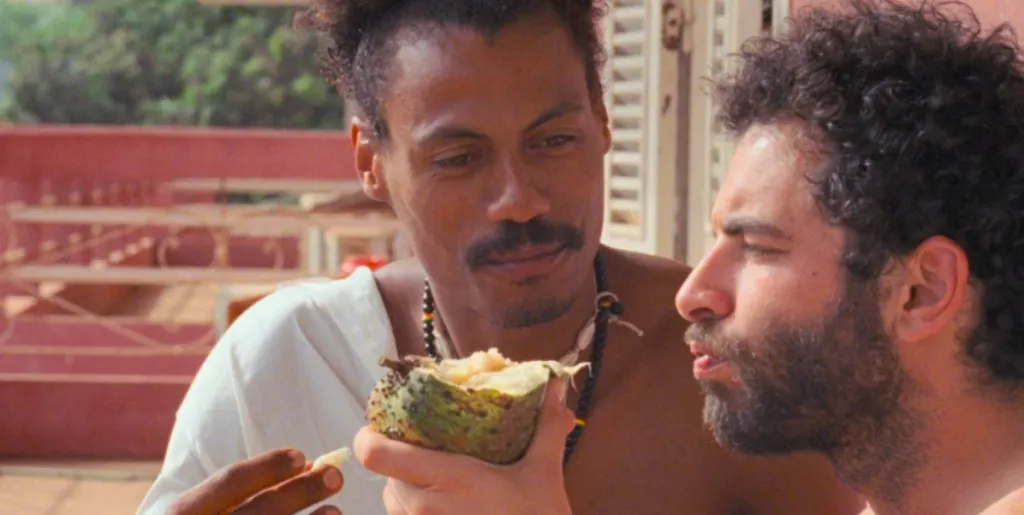
Sérgio's desire for Gui who identifies as Black is an act of profound ambiguity. Is the kiss he initiates simple attraction, or a resounding, unconscious echo of conquest, a subtle attempt to possess the wound of the colonised? The film refuses a simple answer, using explicit sex scenes as complicated, opaque performances of power and submission that defy easy political reading. The camera refuses to yield a clear parallel between the bedsheet and the balance sheet, forcing the audience to live uncomfortably in the grey area where the ghosts of history truly reside.
The film's technical brilliance is undeniable. Ivo Lopes Araújo's cinematography provides a lucid and graceful vision, with its striking imagery achieved through a fluid, observant style that never becomes intrusive. Pinho employs subtle yet impactful stylistic effects to intensify emotions: a heated workplace argument is made starker by the desert's crushing barrenness. At the same time, a tetchy political debate gains vibrancy from the bustle of a colourfully lit bar.
The film's raw look extends to the city and the villages unpolished, authentic, and essential to the narrative's verisimilitude. The cast, composed almost entirely of non-professionals or actors in their most substantial roles, is uniformly magnificent, lending every aspect a sense of truth, naturalism, and complete plausibility.
The effect is richly compelling, achieved through the intermingling of contradictory emotions: good humour and bad tempers, hope and disappointment. The film's greatest strength lies in its mystery, meandering off in surprising directions like life with uncertain outcomes.
This mystery is most vividly captured in the shocking incident on a rural road, instantly absorbed and then forgotten by the narrative, its ambiguity adding profound, unsettling depth to Sérgio's story.
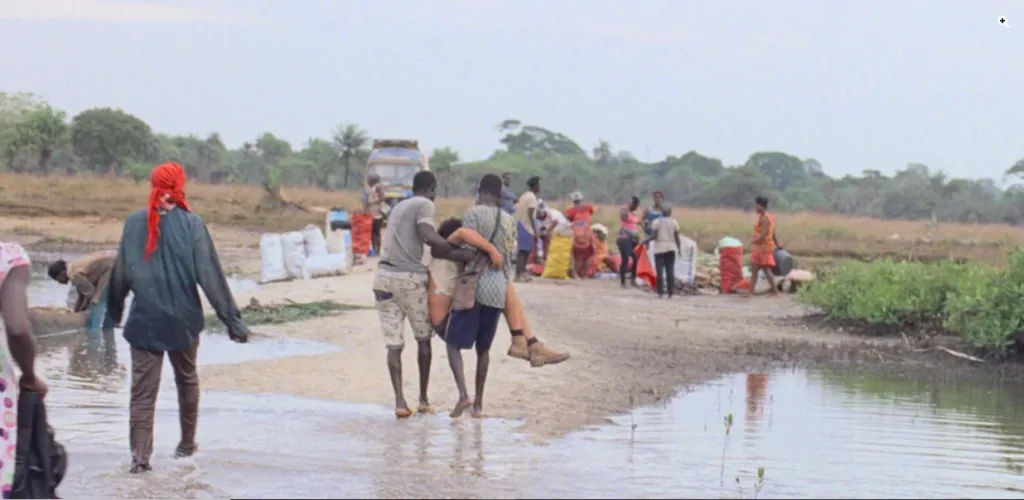
This moment occurs as Sérgio is being driven by his colleagues: a sudden, horrifying tableau appears the body of a man lying directly on the road. Sérgio, the outsider, reacts instantly and instinctively, screaming in the car for them to stop, stop, stop. Yet his local companions ignore his panicked pleas and continue driving, the vehicle bypassing the prone figure. They proceed to engage in mundane conversation, their voices steady and calm, while the image of the man's still, ambiguous presence (we remain clueless as to whether he is alive or dead) unfolds, and is then instantly left behind in the dust.
For Sérgio, the shock is absolute; he is horrified, unable to reconcile the potential human tragedy with his colleagues' chilling indifference. The scene is not given resolution, nor is it explained as an ambush or any other definite occurrence. By denying both Sérgio and the viewer any context, Pinho powerfully illustrates a key theme: the local community's desensitisation to violence or instability a sign of a life lived perpetually on the edge contrasting sharply with the newcomer's sheltered, privileged alarm.
In contrast, the canoe ride through the rural wetlands is perhaps the most profound rupture. It is a slow, languid movement across the water, where the air is thick with the scent of mud and salt.
This journey, so visually rich in its presentation, is the stage for a conversation of magnificent anti-climax. We are introduced to figures who are utterly ephemeral: we have neither seen them before, nor shall we see them again. And what do they discuss? Not the politics of aid, but the price of oysters.
This mundane commerce is a profound act of narrative defiance. It is Pinho's way of asserting that the life of the place the unadorned, necessary life is infinitely more compelling than the anxieties of the white protagonist. The director refuses to use these local figures as mere expository tools; he grants them the full dignity of their own immediate concerns. The simple discussion about the oyster's market value is the film's heart beating outside of its chest: a refusal to simplify African life into a backdrop of trauma, insisting that life here is filled with the practical poetry of procurement and price.
The film's use of music is both sparse and profoundly effective. The soundtrack is furnished by occasional, lively West African music, which accents the scenes without ever becoming an overwhelming presence. The source of this music is vital: it primarily features contemporary and traditional sounds from Guinea-Bissau and West Africa, often utilising styles like the local Gumbe rhythm or highlife-influenced grooves. This choice roots the film's sonic landscape in the local culture, creating an authentic atmospheric counterpoint to Sérgio's Eurocentric journey. It is a score that breathes with the life of the place, rather than simply underscoring the drama, and its presence, like the narrative, is dense in conceptual concerns yet blessed with a sweet sense of humour.
In its final reckoning, "I Only Rest in the Storm" is an awe-inspiring film. Though it tackles the tired trope of the white man lost in the "exotic" land, Pinho's supreme conviction and technical skills ensure that his ambitious project, for all its structural deviations and thematic density, never seems less than sure in its course. It is a necessary, difficult film that forces the audience to confront their own place in the endless geography of power.
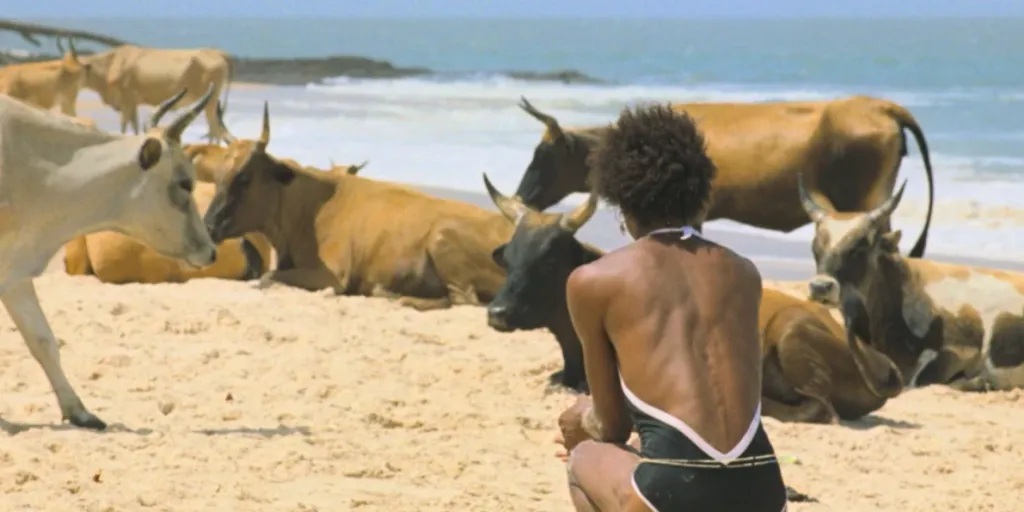
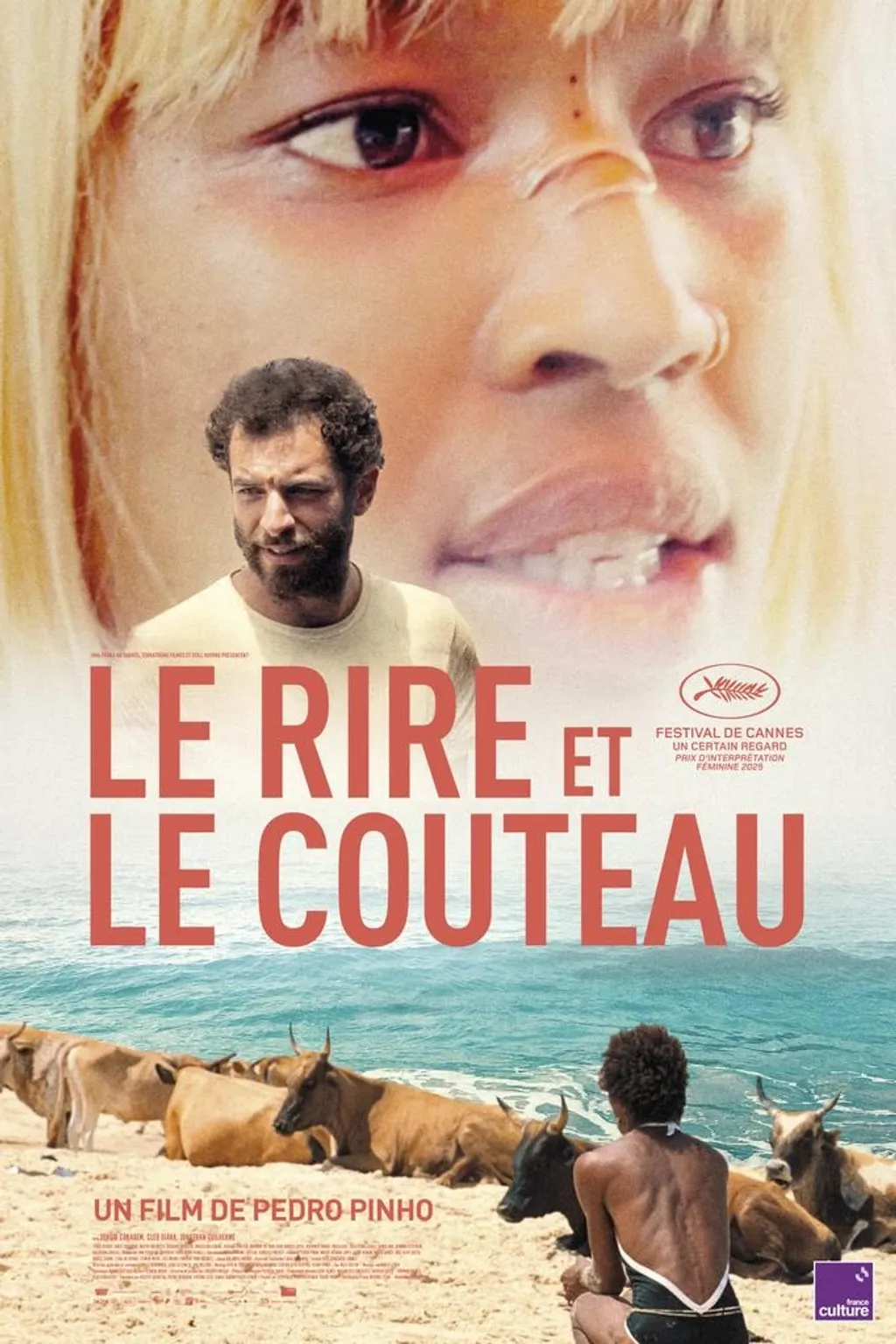
"I Only Rest in the Storm" has received significant international recognition, including a premiere in the Un Certain Regard section of the 2025 Cannes Film Festival. It achieved a major accolade there, with Cleo Diára winning the Best Performance/Best Actress prize for her role as Diára. Following its world premiere, the film had its India Premiere at the 56th International Film Festival of India (IFFI) in Goa in November 2025.