
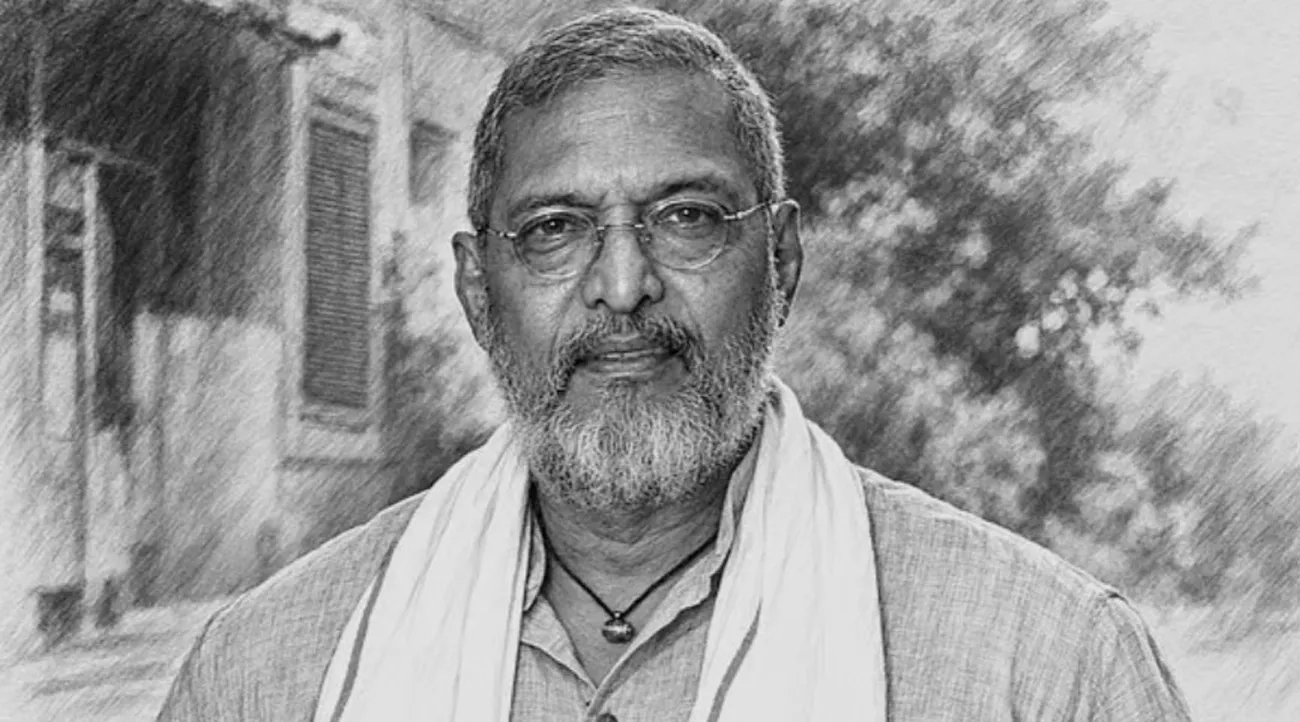
A cinematic moment featuring a phone exchange where a single utterance - "Anna" - delivered in a voice that is simultaneously gentle and melodious, deeply unnerving and sinister, brilliantly demonstrated Nana Patekar's exceptional acting prowess and cemented his perennial legacy in Hindi cinema. In a career spanning five decades that traversed multiple languages and cultures, Nana Patekar carved for himself a distinct niche with his unique acting style. Being millennials we have often wondered when did we see this actor for the first time and what made him etched in our memory after all these years? We don’t have a definite answer for these questions. It could have been the Friday/Saturday night screenings in the Doordarshan that might have introduced to us this charismatic actor. The rough and no-nonsense commoner in Taxi No 9211, the ruthless gangster in Parinda and the quirky underworld don in Welcome performed with elan and profound intensity indistinguishably made him a treat to watch and endeared him to the Indian film audience for over five long decades. Beyond the tinsel town, he actively participated and contributed to the theatre as well.
The national television network played an important role in introducing Nana Patekar to many millennials like us through the clips and episodes of films like Krantiveer and Prahar. He had a peculiar style of acting which seamlessly integrated raw aggression and explosiveness and deep stillness and restraint that made sure that he had an unchallenged place in the panorama of Indian cinema. With his rugged appearance, bearded face, raspy baritone, physique atypical of usual Bollywood heroes, his boisterous acting style, distinct mannerisms, and masterful use of voice and body language earned him a unique place in the hearts of the audience.
EARLY LIFE AND ENTRY INTO THE HINDI CINEMA INDUSTRY
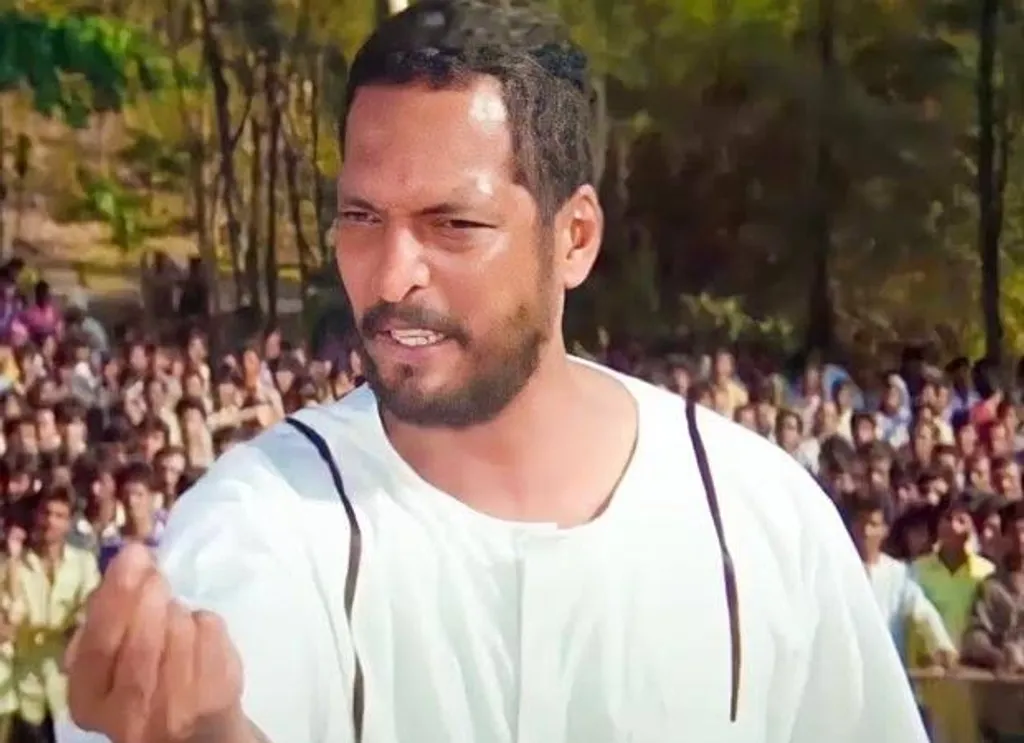
Nana Patekar was born as Vishwanath Gajanan Patekar in Murud-Janjira (located in the Raigad district of Maharashtra, India) and grew up in a modest Marathi family in Maharashtra and Mumbai. When his family fell into financial peril he started to work at a very young age. He painted movie posters for a meagre salary and had walk long distances after school to his work place. He has talked extensively about how these grave experiences played a crucial role in moulding the exceptional actor that he later became. Patekar was groomed by the Marathi theatre and later entered the Hindi film industry through Gaman (1978). He then went onto act in the critically acclaimed role in Mira Nair’s Salaam Bombay! (1988). Later, through the reprisal of a slew of roles of the common man and the vigilante avenging the wrongs and humiliations meted out to him in commercial Hindi movies, he gave voice to the angst, frustrations, and aspirations of the lay man of the time. Attacking corrupt politicians and condemning the sorry state of the country’s affairs he was the quintessential angry young man of the 1980s and the early 1990s. Anger was an emotion that he constantly carried effortlessly throughout his roles. A large number of characters that Patekar portrayed were of grey shades who are immensely internally flawed and morally ambiguous which makes it difficult for him to be contained under the singular categorical bracket of a typical ‘Hero’.
THE RISE OF THE ANGRY YOUNG MAN
When critics panned him for his loud acting, he silenced them through the role of the hearing and speech impaired person in Khamoshi: The Musical (1996). But the 2000-s proved to be a lacklustre decade for Patekar as he was stereotyped as villain and relegated to insignificant side roles. Even when time and context changed the fight against the system continued to colour his characters. Akin to the Angry young man roles which he portrayed earlier in his career, the latter characters like Hanumant Singh (Shagird), Sadhu Agashe (Ab Tak Chhappan), JCP Rakesh Maria IPS (The Attacks of 26/11) also were rebels with the key difference being that now they have authority invested with them and are integrally part of the system that they are trying to change.
CEMENTING OF A VERSATILE ACTOR
Nana Patekar’s “common man” persona is defined by his uninhibited authenticity and intense screen presence. This is why he must have been the choice for Narasimha, a ruthless and powerful feudal patriarch in Shakti the Power and a newly-wed farm labourer from a drought-stricken, impoverished village in Disha (1990). I specifically remember the scene where food is served to Patekar’s character in Shakti the Power, where a mutton head is being served, he deliciously munches on it without paying attention to others. The mannerisms, accent, dialogues etc bring out a prototypical man from Central Bihar. It is this intimate and authentic delineation of characters that connected him with the ordinary Indian. Nana Patekar related to the Bihari audience through the characters Narasimha and Tabrez Alam (Apaharan) and Marathi in Dr. Prakash Baba Amte – The Real Hero (2014). This way he forged a rapport with people from different parts of the country.
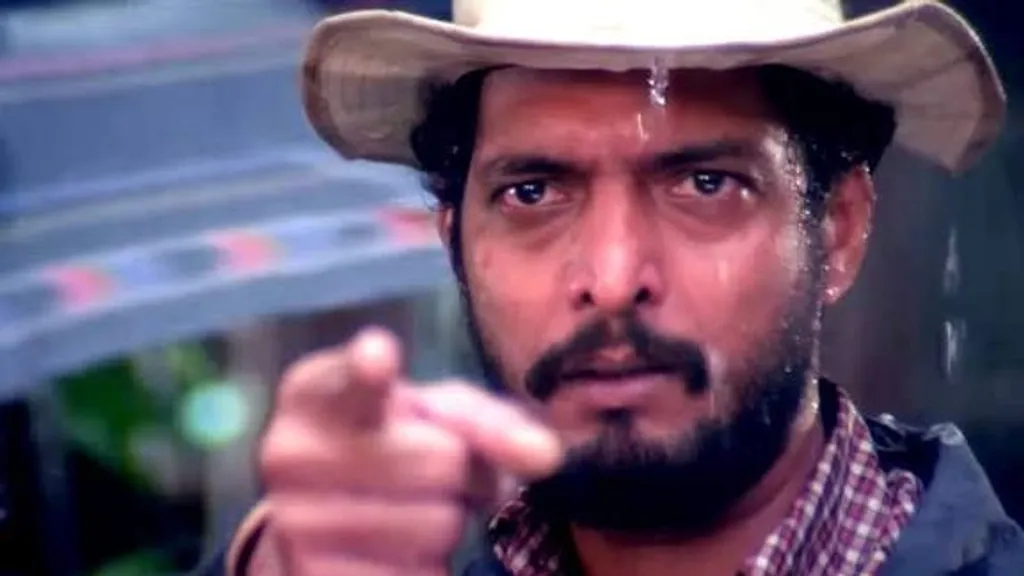
With the coming of YouTube and similar platforms, the audience got acquainted with many more of his movies. He was introduced to us in the 2000s through two schools of cinema – one by Prakash Jha and the other by Ram Gopal Varma. Prakash Jha known for his socially relevant movies and Ram Gopal Varma movies for its innovatory styles and storytelling. Ram Gopal movies like Bhoot, Ab tak Chappan, Darna Mana Hai and The Attacks of 26/11 showcased the versatility of the actor. Prakash Jha’s movies Apaharan and Rajneeti presented characters with Negative traits – A crooked gangster in Apaharan and a manipulative politician in Rajneeti.
Nana Patekar was not only an actor but has also written and directed the Hindi movie Prahaar: The Final Attack (1991). He was active in Marathi theatre. His prominent Marathi films include Deool (2011), Dr. Prakash Baba Amte – The Real Hero (Hemalkasa) (2014), and the highly appreciated Natsamrat (2016) in which he plays a celebrated stage actor facing tragic loneliness and struggles after retirement.
The audience of the new generation must be knowing him as the much-loved Uday bhai in Welcome (2007) and Welcome Back (2015) where he plays a soft-hearted and fiercely earnest underworld don. The memes and dialogues of Uday bhai are still popular on the social media.
FORAY INTO THE SOUTH INDIAN CINEMA INDUSTRY
He made an outing to South Indian Cinema with the movies Bommalattam by Bharatiraja and Kaala by Pa Ranjith. In Kaala he plays a powerful politician who is also a cunning caste patriarch who plots against the lower caste slumdwellers. Especially we remember the scene where his character is offered water to drink by the slum people. He politely touches the tumbler and with folded hands respectfully declines the offer. At first sight we are convinced that it is a gentle gesture but later it is revealed that it is the untouchability that is manifested through the action.
ACCOLADES AND NATIONAL RECOGNITION
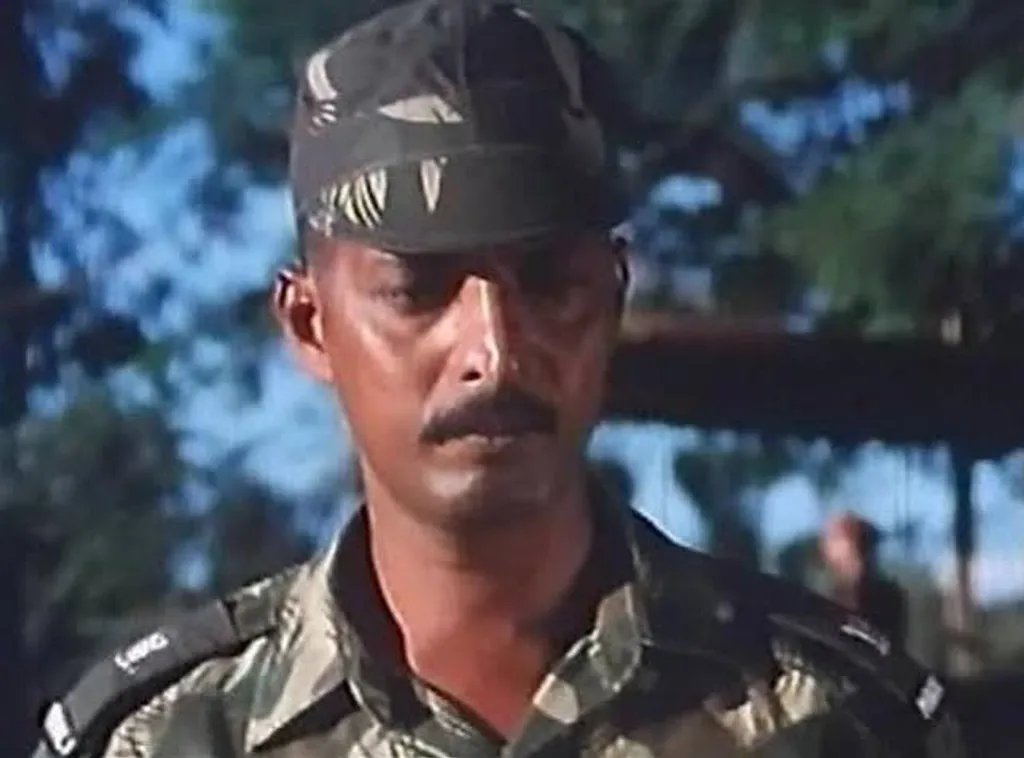
The nation honoured him with Best Supporting Actor twice, - For the Hindi film Parinda in 1989 and Agni Sakshi in 1996. He won the Best Actor award in (1994): For the Hindi film Krantiveer. He was awarded with the Padma Shri in (2013) for his contributions to the arts and Indian cinema. Patekar’s contributions to our country transcend the boundaries of the silver screen and theatre stages. He fought for our country during the Kargil War for two months making use of the intense military training that he underwent for the movie Prahaar.
TRANSCENDING THE SILVER SCREEN: MILITARY SERVICE AND SOCIAL SERVICE
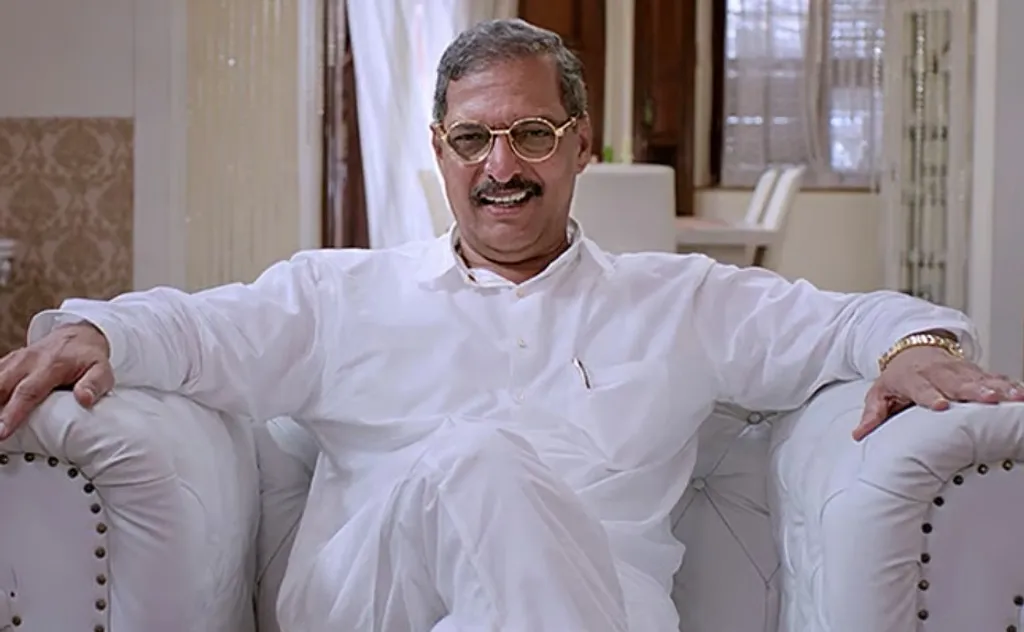
Patekar fought for our country during the Kargil War for two months making use of the intense military training that he underwent for the movie Prahaar. He fostered relationships with politicians from various parties, but he never sought or held an elected office. He maintained relationships with political figures such as Bal Thackeray, Sharad Pawar, and Narendra Modi. He rejected chances to run for elections, including overtures noted from the BJP in 2014 and political talks related to the 2024 Lok Sabha election.
Nana Patekar's work with the Naam Foundation is one of the most prominent examples of an artist stepping up to address a deep-seated humanitarian crisis. Co-founded in September 2015 along with fellow actor Makarand Anaspure, the foundation was born out of an urgent need to tackle the severe agrarian distress and drought affecting rural Maharashtra, particularly in regions like Marathwada and Vidarbha.
A LIFE TAINTED: CONTROVERSIES AND THE #ME TOO ALLEGATIONS
Nana Patekar’ s life was not away from controversies. In 2018, as the #MeToo movement swept the world, Patekar was accused by actress Tanushree Dutta of sexual harassment during the making of a film in 2008. Dutta alleges that Patekar touched her inappropriately during a dance rehearsal and continued his advances despite her repeated pleas and finally she was forced to leave the filming location. This was a defining moment in the Indian #MeToo movement. The actress accused him of intimidation as well as thwarting of efforts for a fair investigation. Though actors and technicians from the industry like Priyanka Chopra, Richa Chadda, Hansal Mehta, Farhan Akhtar, Sonam Kapoor and Swara Bhaskar rallied in support of the actress and sought for strict punishment of the perpetrators, Ms. Dutta claimed that she faced severe backlash from the industry and the public alike and faced considerable pressure to withdraw the complaint. The fact that Dutta’s career ended after raising the allegation is a pointer towards the grim reality of the predicament of women who raises sexual misconduct allegations against powerful men. Though Patekar took a hiatus immediately after the allegation, he gradually returned and resumed his career. Patekar has always denied the allegation and maintained his innocence. A court in Mumbai dismissed the case last year citing lack of evidence and time lapse in reporting the incidence. Dutta still accuses the investigation team of not probing the incidence properly and not talking to key witnesses and taking their statements. Dutta faced severe cyber bullying in the event of Patekar’s demise and she was compelled to revisit and talk about her harrowing experience. Singer Sona Mohapatra came out in support of Tanushree Dutta, stating that both the living and the dead have an equal right to dignity. She emphasized that singing a panegyric in praise of one person should not necessarily become a platform to denigrate another.
CONCLUSION: LEGACY AND ENDURING POPULARITY
Nana Patekar has enthralled generations of audience with his extraordinary acting capabilities. An artist keeps on living through the characters they gave life to. Through the extraordinary oeuvre of characters that he delineated Nana Patekar will remain alive in the minds and hearts of cinema lovers. His life journey from humble beginnings to becoming one of the prominent actors in Indian cinema could a source of inspiration for many. The videos now going viral of Patekar laughing his heart out at people mimicking his acting styles shows us an unassuming actor who is capable of appreciating talent and laugh at his own expense. The void that Nana Patekar created with his departure will remain irreparable.
Nana Patekar will be recalled not only for his exceptional artistry but also for the complexities, flaws, and controversies that have influenced his life, serving as a reminder that appreciation for an artist can coexist with a critical perspective on the individual behind the art.