
An arc of shadow first marks the screen, quick and obsidian - the black cat streaking down a sun-dappled, forgotten road. It is a fleeting omen in this coastal village, quiet on the surface, yet already vibrating with unseen tensions. The salt-laced air, thick with the scent of the sea, also carries the whispers of secrets. This place acts as a curious magnet, drawing to its shores a motley crew of whimsical artists - each one bearing the brittle weight of their creative yearnings or their mundane discontents.
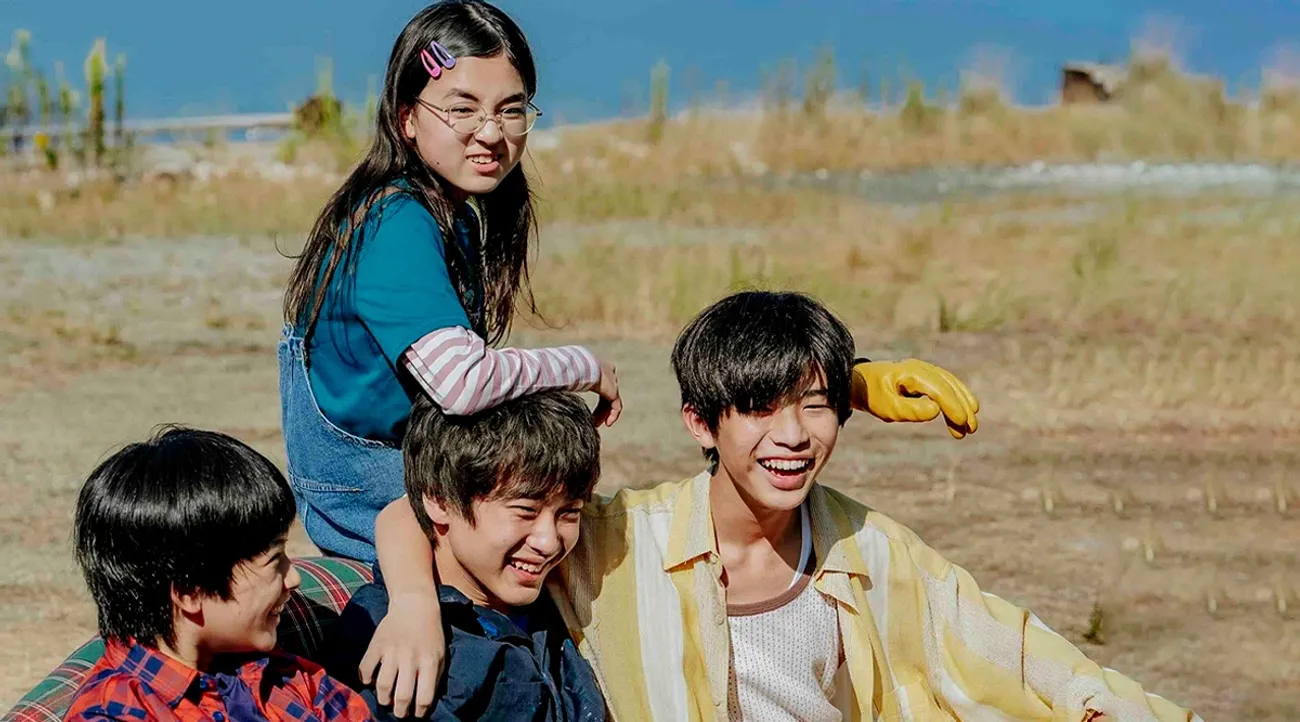
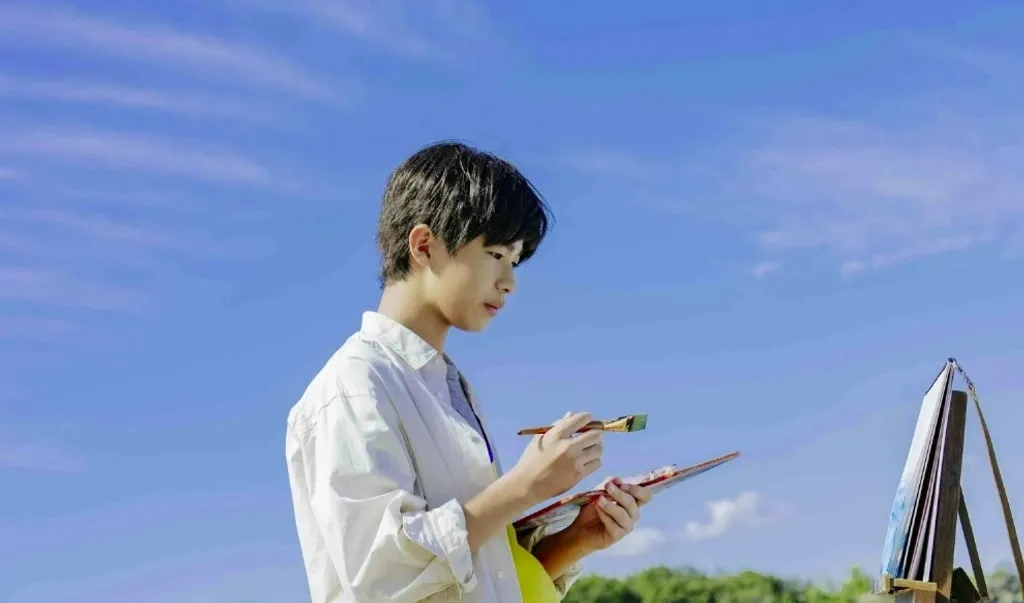
Set against this picturesque backdrop, Satoko Yokohama's Seaside Serendipity - an adaptation of Gin Miyoshi'sMiyoshi's manga - traces the languid, unforgettable arc of a summer break. The narrative orbits around 14-year-old Sosuke and his small constellation of friends, whose days are consecrated not to teenage idleness, but to the demanding, exhilarating labours of their art club activities. Seaside Serendipity is a season of uninhibited artistry.
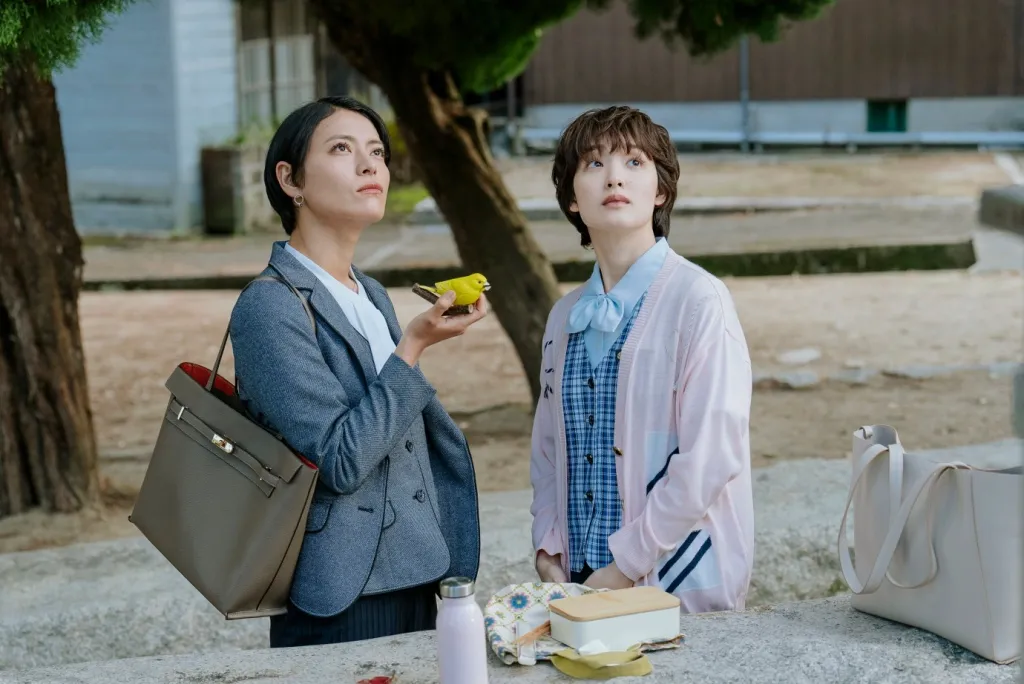
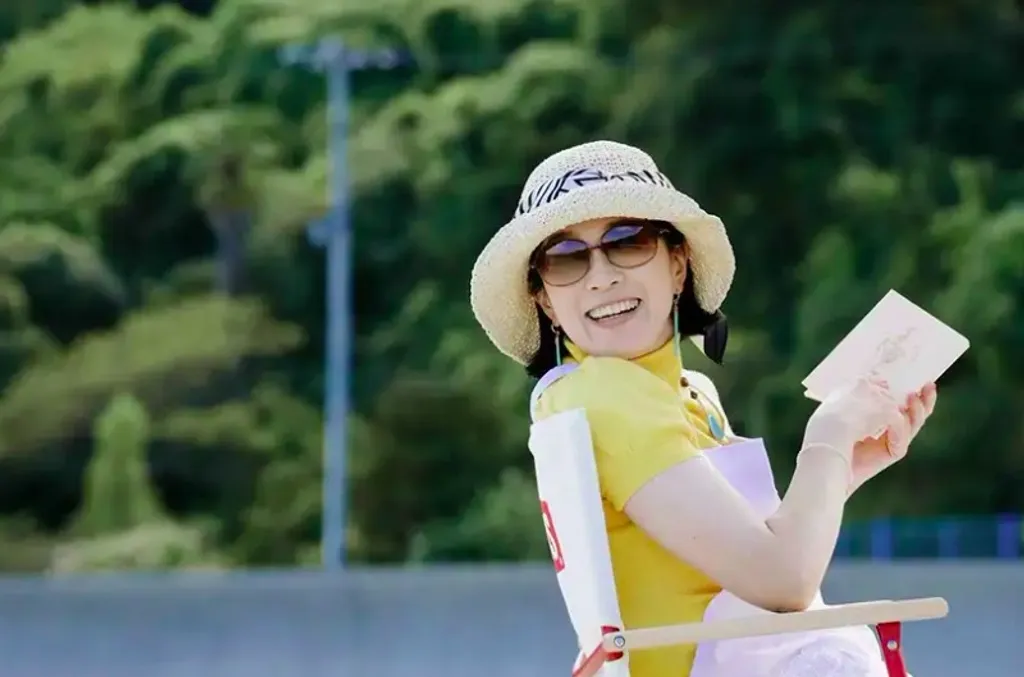
The town itself serves as a passive accomplice to these dramas, its reputation as an artist-friendly place acting as a beacon for wanderers. Its quaint seaside villas are leased out by a real estate agent, Ayame Goriki, whose cheerfulness seems to vibrate with a deliberate, forced optimism. These tenants are a continuous, shifting gallery of the marginalised: individuals who are either bohemian in spirit or broken by circumstance. Among them, one finds a glib, manipulative scammer (Kengo Kora) operating with the assistance of his elusive, free-spirited partner-in-crime (Erika Karata). Later, the shadow of a morose sculptor (Jun Murakami) descends upon the village, a man frozen in the icy grip of an artistic slump and bearing the suffocating burden of a heavy, undisclosed secret. The village is thus less a community and more a temporary harbour, attracting those who seek to sculpt their lives anew, or perhaps, hide.
Meanwhile, Teruo, whose soul is calibrated to the frequency of sorrow, is consumed by a private, desperate project of consolation. He devotes himself to an older woman, senile and confined to her bed, whose consciousness is slowly being reclaimed by silence. His gesture of comfort is steeped in a breathtaking melancholy: he crafts a life-like mask of her deceased husband. He harbours the fervent wish that he will come alive for her one day. This act is a dangerous trespass across the line where selfless empathy descends into the slightly unnerving and macabre, a visceral attempt to cheat the finality of grief through the eerie precision of art.
As the free-spirited children inadvertently tread into the world of grown-ups, they are left baffled by the adults' erratic behaviour and cunningness. Yet, they navigate these murky currents with the apparent, unwavering innocence of childhood. They are not merely observers, but active participants, guided in and out of conflicts by their idealism and boundless imagination. At the same time, the children embrace challenges with the resilience of young saplings, while the adults - a gallery of transient figures fumble on the periphery, desperately pursuing selfish motives.
The film sets up a stark and sorrowful delineation between these two spheres. It is a profound depiction of how the young are often revealed to be more responsible, more accurate to heart, and guided by instinct and innocence, a purity utterly lacking in their adult counterparts.
We witness, for example, the chilling necessity of a child intervening in a scene of domestic violence, where a father's persistent, predatory demands for sexual favours from the mother ultimately force the child to take the scene into his own hands. The moment of crisis does not resolve in simple realism. Still, it erupts into a magical-realistic tableau, powerfully reminiscent of Pedro Almodóvar'sAlmodóvar's exploration of desperate domesticity in ¿Qué he hecho yo para merecer esto? (What Have I Done to Deserve This?), where the girl Vanessa has telekinetic powers and helps the suffering Gloria (Carmen Maura). Here, too, a child uses an unexplained power to deal with an adult who cannot observe basic human decency, transforming abuse into a surreal, reprieve.
In another instance, when the gentle Teruo Nashimoto is unjustly accused of stealing, the family's reaction lays bare the adults' selfishness and narrow-mindedness, coupled with a striking and shameful lack of care for older people.
This essential dichotomy - the wise child versus the morally bankrupt adult - echoes the potent, bittersweet cynicism of films like Wes Anderson'sAnderson's Moonrise Kingdom. Just as Anderson's protagonists elope to a seaside sanctuary to escape the perceived stupidity of adults, Yokohama, through the lens of her work, asks profound questions about the deficit of responsibility, understanding, and empathy that plagues the adult world.
The dynamic between the wise child versus the morally bankrupt adult echoes the potent, bittersweet cynicism of films like Wes Anderson'sAnderson's Moonrise Kingdom. Yokohama is gentler in her depiction of the flawed adult world, preferring collaboration over complete cynicism. The children here do not escape the adults; instead, they engage with them in a subtle, progressive manner, often through the language of art. The film, in this sense, is less about running away and more about the slow, necessary convergence of innocence and experience. This gentle perspective stems from the film's true thematic core: a profound affirmation of love, friendship, hope, and togetherness. Watching it is like reading a storybook on the shore, where even the darkest shadows are softened by the bright, honest light of youthful conviction.
The structure of the film demands a different kind of viewing patience. It is an experience akin to sitting perfectly still on the seashore, watching the ceaseless, hypnotic rhythm of the waves. The characters and their private tragedies or fleeting joys are allowed to come and go without the tyranny of conventional plot demands - they are merely rising and falling tides of human form. Their presence often feels stripped of history and future, existing only in the intense, shimmering ''now'' of the coastal moment. The narrative offers few exhaustive conclusions; instead, it provides moments of striking clarity that immediately retreat, leaving behind only a memory, a subtle texture. The water in this village, one suspects, tastes not of brine, but of art - a metallic, vivid flavour where creation and emotion are perpetually dissolved and re-formed.
This film is a family drama that masterfully intertwines profound musings on the transience of life - how moments, like sand through fingers, are gone before they are wholly grasped with a light-hearted, free-wheeling tone. Crucially, the seaside town functions as its central character, a vast, breathing entity. The true protagonist is therefore the town itself, which is in perpetual flux, absorbing and reflecting the lives of those within it.
• What is Art? Is it confined to the refined commission for Mr A, or is it something that springs from within, an act of creation beloved simply because it exists?
• Who can be called an artist? Is it the struggling, morose sculptor, or the child whose hand has not yet learned the meaning of failure? In a scene where three children discuss who can be called an artist, the eldest answers, "An artist is the one who wants to be called one."
• How often must one create art? Can one go through a natural phase of being uninspired, a necessary period of fallowness, or even a simple laziness, as exemplified by Jun Murakami'sMurakami's character in the film?
• Why do we make art? Does it serve an intrinsic, spiritual need, or is its purpose merely transactional?
• Is art always made by the Artists? The narrative darkly exposes the underbelly: art is procured at a lower cost from young people or unknown labourers, then sold in the art world at a higher price by simply changing the artist's name. This is seen when Jun Murakami hires children to make artwork for him and, more chillingly, when Mr A sells the mermaid created by the young boy, Sosuke.
• Can art fill our bellies, and can we afford a good life if we become artists? This crucial, cynical question hangs heavy, haunting the periphery of the children's idealism.
• Is there a device that could measure artistry and determine with scientific certainty who is an artist and who is not? This is given a literal, whimsical form in the film, which centres on a whistle that produces a melodious chirp only when blown by a true artist.
The narrative further grapples with the opaque complexities of the art world: it subtly exposes the inner workings of art funding and how grants are awarded and to whom, revealing a world often governed by networking and politics rather than pure talent. The film illuminates the stark process of how artists create art, and what happens when the fragile, often spontaneous impulse of creativity clashes with rigid, contractual expectations - the betrayal felt when an artist fails to follow the MOU and instead creates an entirely different, perhaps more authentic, artwork than the one promised in the concept note. The screenplay is laced with a quick, genuine wit that skillfully keeps the overall tone light, buoyant, and genuinely entertaining.
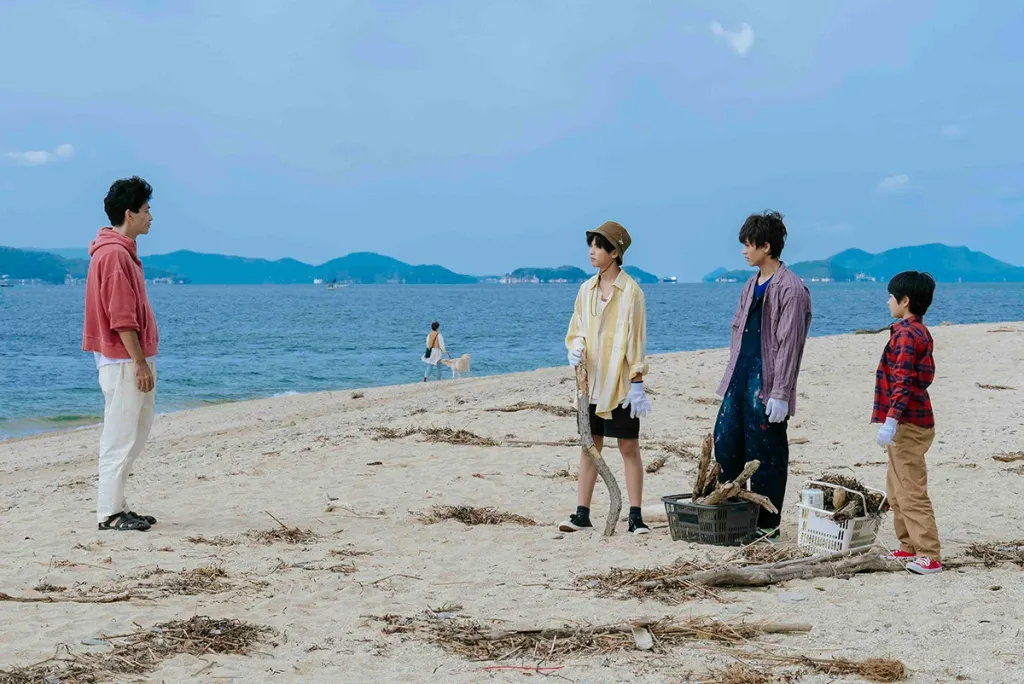
Visually, Seaside Serendipity is the latest exemplar in a rising trend, reminding one of the simulacrums of the pastel-colored, artfully stylised worlds of Wes Anderson that have begun appearing in contemporary Japanese cinema. The film's picaresque, summertime ramble gives it a distinctly whimsical vibe and a relaxed, almost meditative pace. This quality allows the 2-hour and 30-minute running time to dissolve easily, passing like a lazy afternoon spent munching multicoloured snow cones under a beach umbrella while reading a short storybook.
Ultimately, Seaside Serendipity delivers on the deep, quiet promise of its title with discoveries both big and small, rendering its moments in ways that are gently funny and stirringly life-affirming. Thanks to the cheerful, often orchestral music, the audience is cued from the first frame on what kind of film this is: a pleasing, amusing, and profoundly childlike experience at times. Despite focusing on energetic, creative kids, the narrative daringly raises weighty, adult themes.
The feature benefits from a notable creative team, including cinematographer Akiko Ashizawa (Tokyo Sonata), editor Soo Mun Thye, and sound designer Corrine de San Jose. The film is produced by Lorna Tee, Dan Villegas, and Masumi Soga, with executive producers Shozo Ichiyama, Ho Yuhang, Sylvia Sanchez, and Jim Baltazar.
Seaside Serendipity was screened as part of the 56th IFFI, Goa, in the section ''Country of Focus: Japan''. It has been to the Berlin International Film Festival (2025): Recipient of a Special Mention by the International Jury in the Generation Kplus Competition.