
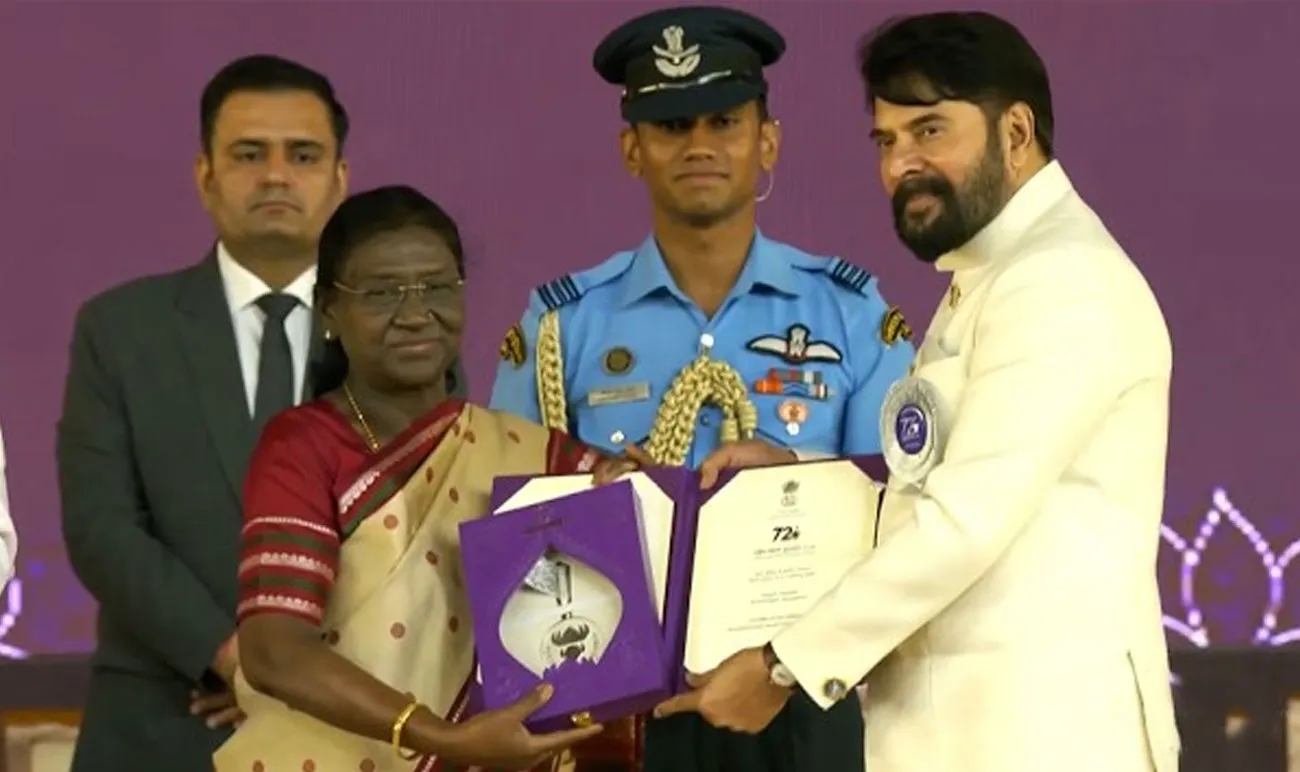
The significance of Mammootty’s National Award extends beyond his personal accomplishment. This recognition occurs during a period when national cultural institutions are frequently scrutinized for potential political influence, rendering major awards vulnerable to questions regarding ideological bias.
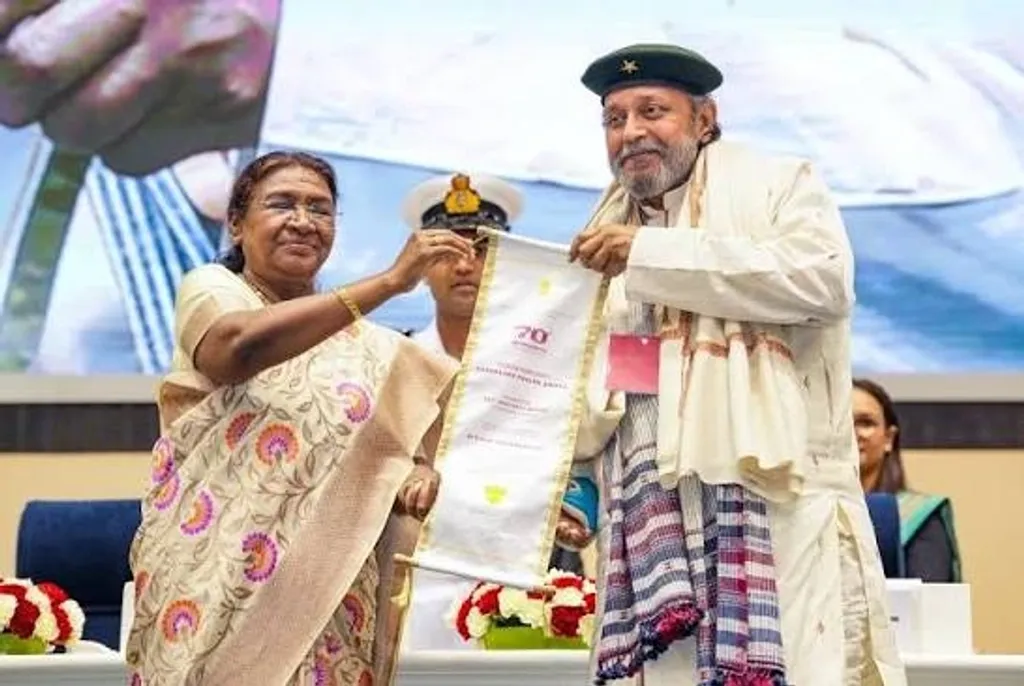
Under the Modi administration, skepticism has increasingly surrounded awards and honours conferred by the central government, including the National Film Awards. While political considerations have historically influenced state honours, the intersection of cultural recognition and electoral strategy appears more pronounced in the current context. Conviction, artistic merit, and creative passion are often perceived as secondary to lobbying, political alignment, and ideological conformity. The conferment of the Padma Vibhushan on Rajinikanth, who has publicly expressed support for the ruling establishment, the Dadasaheb Phalke Award to Mithun Chakraborty, now closely associated with the BJP, and the nomination of Ilaiyaraaja to the Rajya Sabha are frequently cited as indicative of this trend.
Similarly, films such as The Kashmir Files and Article 370, which received political endorsement and tax exemptions in several BJP-ruled states, reinforce the perception that cultural recognition is increasingly aligned with political objectives. Whether these actions aim to expand Hindutva politics in southern India or to strengthen electoral prospects elsewhere, the primary casualties are often deserving artists and independent cinema, which lack political patronage.
Kerala has increasingly been depicted by the Hindu Right as India’s political and cultural 'other.' The state has been labelled as the land of 'Love Jihad,' compared to Somalia regarding infant mortality rates among Scheduled Tribe communities, and repeatedly characterised as a breeding ground for extremism. These narratives construct Kerala as culturally suspect and politically deviant. During my tenure as a teacher in Bengaluru, a colleague sincerely inquired whether Muslims had already outnumbered Hindus in Kerala, illustrating the extent to which such narratives circulate beyond the state. Thus, The Kerala Story did not originate this image in 2023; rather, it amplified a pre-existing political narrative.
Malayalam cinema—both commercial and parallel— along with good Indian cinema, has long remained under-recognised within the national awards ecosystem despite its consistent artistic contributions. Against this backdrop, the recognition of Mammootty, alongside Hindi actor Kartik Aaryan, acquires additional significance. His award interrupts a long-standing account that has often marginalised both Malayalam cinema and Kerala’s cultural identity.
For decades, Mammootty and Mohanlal have held an almost unassailable status within Malayalam cinema. While other actors have faced criticism, these two superstars have largely remained above public reproach. Filippo and Caroline Osella contend that Mohanlal serves as the alter ego of the ordinary Malayali man, whereas Mammootty represents an aspirational figure, admired rather than directly identified with. Throughout much of his career, Mammootty portrayed powerful patriarchs, police officers, and upper-caste elites, embodying authority, discipline, and masculine charisma. Off-screen, he cultivated an image of dignity and restraint through a controlled lifestyle and a carefully managed public persona. Politically, he maintained a delicate balance. While serving as chairman of the CPI(M)-backed Kairali TV, he also sustained cordial relations across political parties. His choice of roles further reinforced this carefully constructed image. Characters such as Meledathu Raghavan Nair, Sethurama Iyer, Nair Saab, and Arackal Madhavanunni projected upper-caste respectability and institutional authority, while Dhruvam (1993), released after the Babri Masjid demolition, cast him as a Hindu patriarch confronting a Muslim antagonist.
The late 2010s marked a significant transformation in Mammootty’s career. Instead of reinforcing his established superstar persona, he began selecting roles that challenged prevailing social values and highlighted his versatility as an actor. Films such as Unda (2019), Puzhu (2022), Kaathal – The Core (2023), Bramayugam (2024), and Kalamkaval (2025) exemplify this shift. The rise of OTT platforms facilitated unconventional storytelling and encouraged established actors to collaborate with emerging filmmakers and experiment with innovative cinematic forms. Mammootty responded to this evolving landscape by intentionally distancing himself from traditional heroic archetypes.
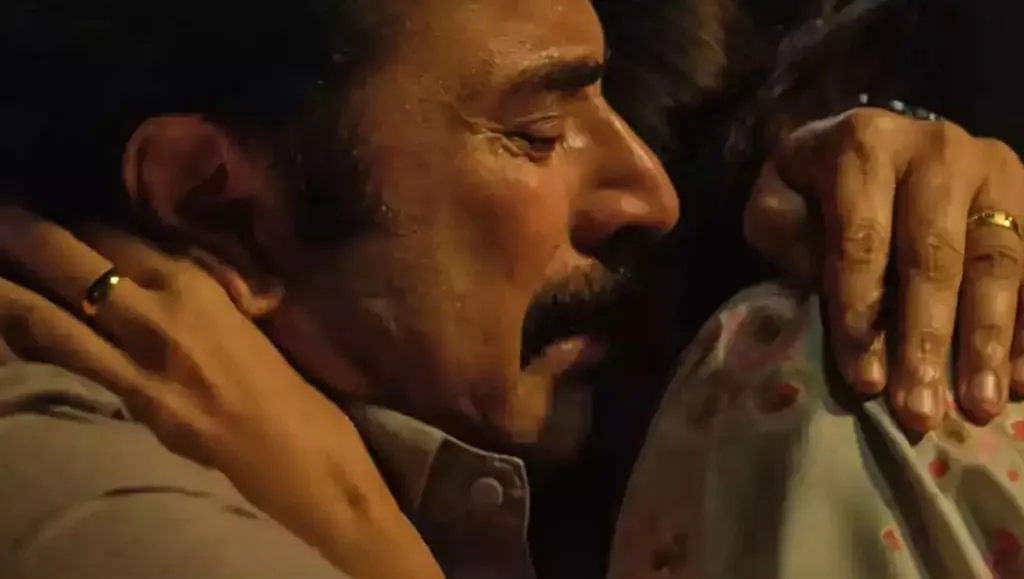
These films also addressed issues that mainstream Malayalam cinema had often neglected. Unda depicted a vulnerable police officer while subtly exposing caste hierarchies within state institutions. Puzhu, directed by Ratheena P. T., featured Mammootty as a deeply casteist upper-caste patriarch whose prejudice undermines familial relationships. Kaathal – The Core was groundbreaking in casting a mainstream superstar as a closeted gay man, a performance that received widespread national acclaim. Collectively, these films interrogated caste privilege, hegemonic masculinity, and heteronormative norms in ways seldom explored by Malayalam superstars.
During this period, Mammootty also became the target of sustained online abuse. Segments of Sangh-affiliated and casteist social media networks increasingly labelled him 'jihadi' and 'Sudapi,' seeking to reduce his artistic choices to his religious identity. Derogatory terms such as 'Mulla Mammootty,' boycott campaigns, manipulated images, fabricated quotations, and coordinated trolling aimed to portray him primarily as a 'Muslim actor' rather than as an artist. Notably, the religious identity he had long navigated with care in both his public image and cinematic roles became the focal point for attacks precisely when his films began to challenge caste and social conservatism.
Mammootty’s National Award is significant not as evidence of the neutrality of national cultural institutions, but because it acknowledges—perhaps inadvertently—a body of work that interrogates caste hierarchy, hegemonic masculinity, and heteronormativity at a time when these themes often conflict with dominant nationalist cultural discourse. In this respect, the award highlights the limitations of ideological control over cultural recognition.
The true narrative of Kerala is not one of extremism or cultural deviance, but of a society capable of producing artists who reinvent themselves in response to evolving social realities. Movements such as Kiss of Love, the resurgence of Ambedkarite politics, anti-caste activism, and the increasing assertion of queer rights have transformed Kerala’s public sphere, inevitably influencing its cinema. As OTT platforms have expanded the reach of regional films, Malayalam cinema has increasingly embraced experimentation, inclusivity, and political complexity. Mammootty’s recent career exemplifies this transformation. Ultimately, only a society willing to engage in self-reflection can foster new voices, stories, and forms of cultural recognition.