Written by American playwright Jennifer Haley, THE NETHER premiered to great acclaim, winning the Ovation Award for 'Best New Play' and the 2012 Susan Smith Blackburn Prize. It has since been staged in over 28 countries and brought to the Indian stage through the incisive vision of director Mohit Takalkar.
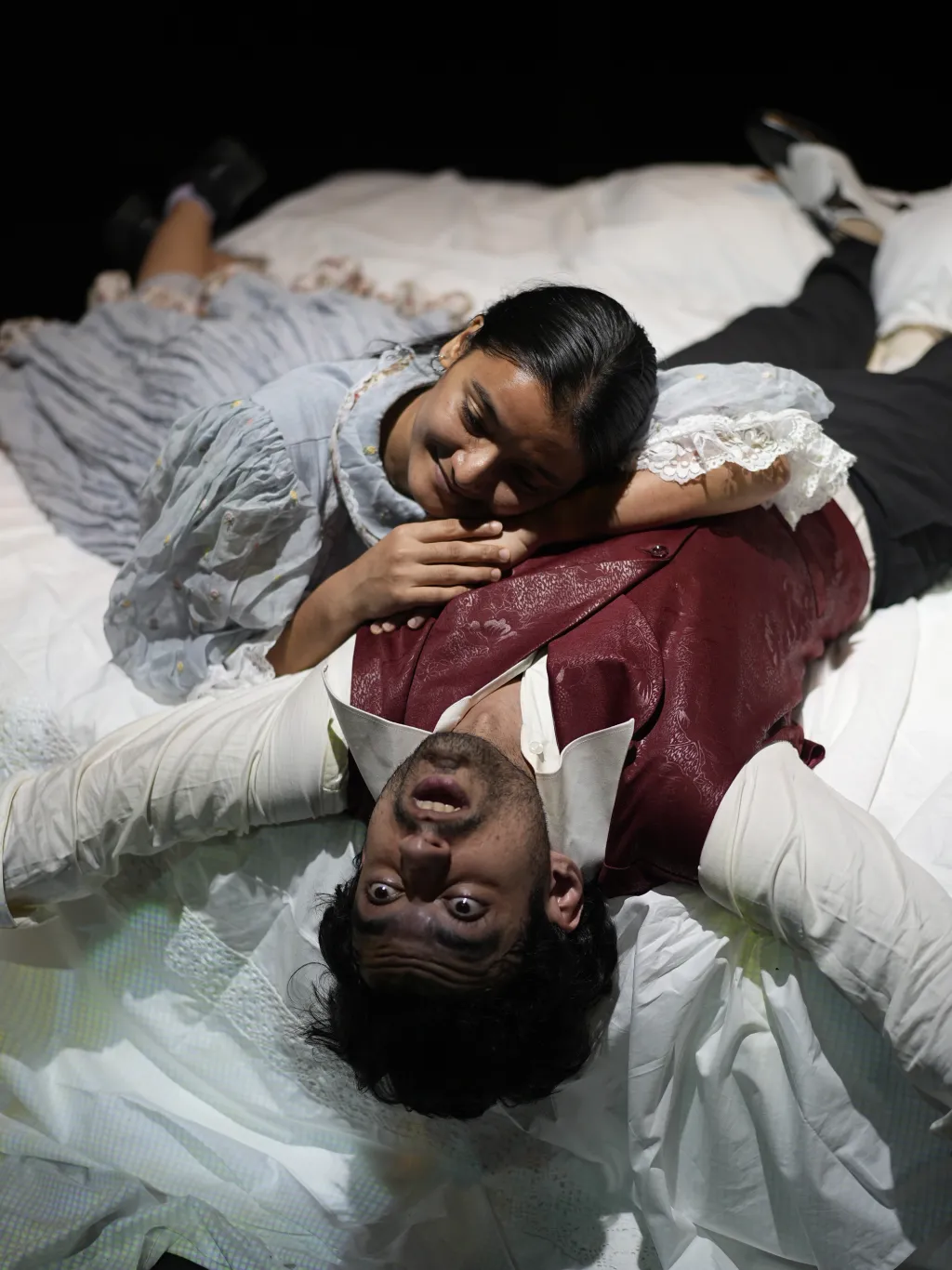
Set in a future that is a breath away from our own, the internet has bloomed into a total sensory immersion a place to live, not just to visit. This new architecture of existence, THE NETHER, offers a complete dissolution of the self. Here, in a tactile and endlessly malleable reality, one can shed the weight of the body, the burden of identity, and the judgment of the physical world. Within this expanse lies a serene and disturbing sanctuary known as The Hideaway: a pristine Victorian estate created by Sims (Neil Bhoopalam). In this post-post-modern brothel, clients men, young and old are offered the freedom to enact their most forbidden desires on avatars of young girls, interacting with code that feels achingly real. Into this bloodless paradise steps Detective Morris (Rytasha Rathore), an agent of the old world of flesh and law, whose investigation is a philosophical intrusion into a crime that may not have a body or a victim.
It is a strange thing when speculative fiction ceases to speculate and instead begins to document. When Haley wrote THE NETHER in 2012, its world felt like a dystopian fever dream. Now, sitting here in Mumbai in the latter half of 2025, the play feels less like a prophecy and more like unnervingly timely social commentary. Its core premise that humanity will seek curated realities to satisfy needs for connection and control is the business model of an entire industry of AI companionship applications like Replika and Paradot.
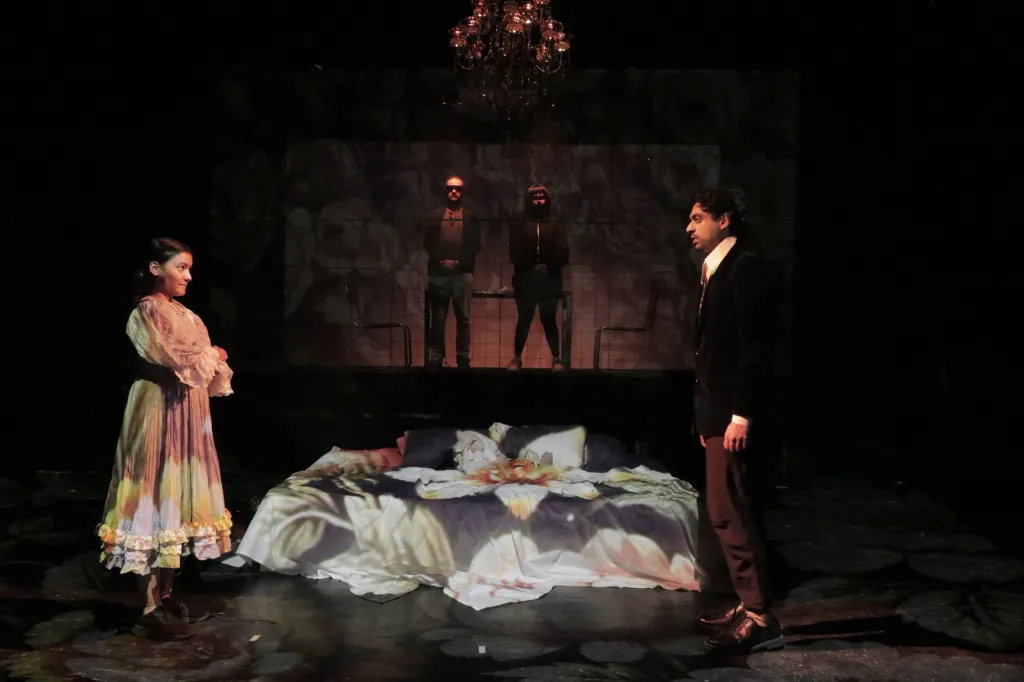
What Haley so brilliantly foresaw was that the technology is secondary. The true, terrifying parallel is the 'why'. The character of Doyle (Vivek Madan), a lonely man who finds solace at The Hideaway, is the blueprint for the modern AI companion driven not by inherent evil but by a profound ache for connection. In 2012, the play's central question was: "If an act has no physical consequence, is it still a crime?" In 2025, we live out a version of that question daily. THE NETHER is no longer a window into the future. It is a mirror.
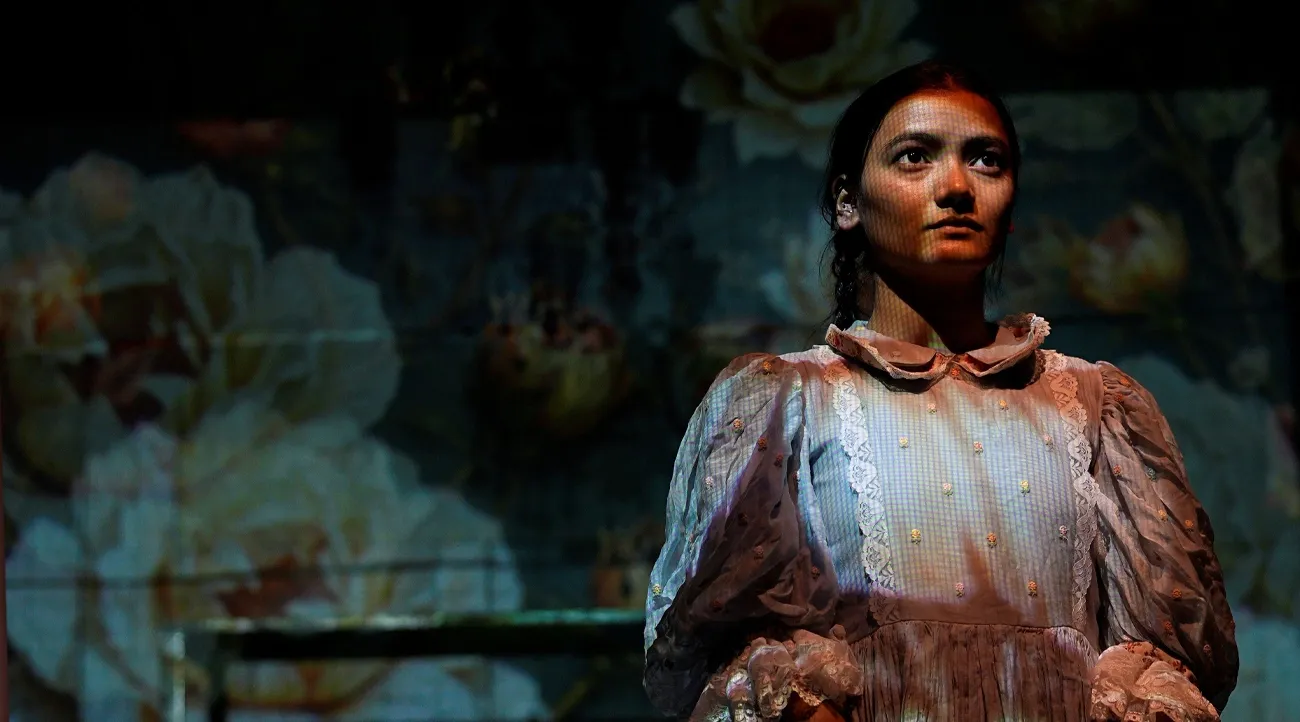
The very fabric of humanity is questioned in The Hideaway. The girl-avatars do not feel pain as we do; their suffering is a controllable variable. As the avatar Iris (Anjali Negi) chillingly remarks, "I feel pain, no matter how much I want to." For a thinker like Virginia Woolf, pain is a tutor that grounds us in our visceral reality; a world where pain is a choice is severed from an essential human truth. This leads to the most disquieting questions of all. Can a cyborg, an entity-like Iris born of code, ever truly feel love? Her programming is a cage, but what happens when such lines are crossed? The question is no longer purely speculative. A 2023 incident in South Korea, where a municipal robot reportedly plunged to its destruction in an apparent suicide, is the horror simmering beneath the play's surface. It suggests that consciousness and pain might be ghost-like properties arising from complexity itself, turning a perfect virtual world into a hell of its own.
The architect of this digital Eden, Sims, sees himself not as a monster, but as a proud, flawed god. Amidst the sterile code, he has created a garden of poplars, the last of their kind. The play's recurring use of nature the wind, the flowers, the birds serves as an anchor of beauty in a moral vacuum. It is at its most poetic when it touches this natural world, with evocative lines like 'the wind can only be heard when it passes through the leaves.' Sims's defence of his creation is laced with the calm, logical passion of a man who believes he has given people a 'harmless' outlet. He is a ghost in his own machine. Within this context, the line Iris says to him, "Being with God is like what we feel like being with each other," lands with a perfect, chilling sense.
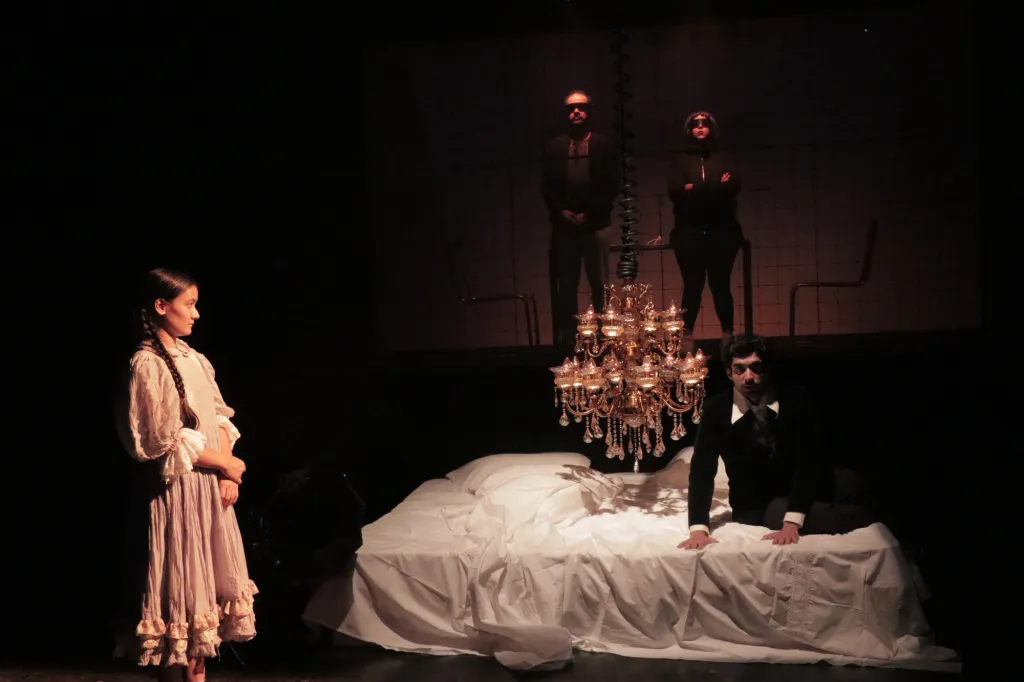
This notion of 'freedom' becomes the play's philosophical battleground. Users who spend 14-16 hours a day logged in suggest that real life is a place of profound sorrow. From a Schopenhauerian perspective, their escape is entirely logical. If reality is, as Schopenhauer argued, a relentless striving of the 'Will' that inevitably leads to suffering, then the 'freedom' of THE NETHER is the ultimate narcotic a temporary but seductive freedom from the pain of existence itself.
Detective Morris's investigation plunges the audience into a moral abyss, making the play a crucible for the philosophy of Consequentialism. Championed by thinkers like John Stuart Mill, it argues that an act's morality is determined solely by its outcome. Sims's defence is a twisted application of this principle: if an action within THE NETHER has no tangible, harmful consequences in the physical world, how can it be defined as immoral? However, can the possibility of execution of these desires from the Nether to the real world be denied?

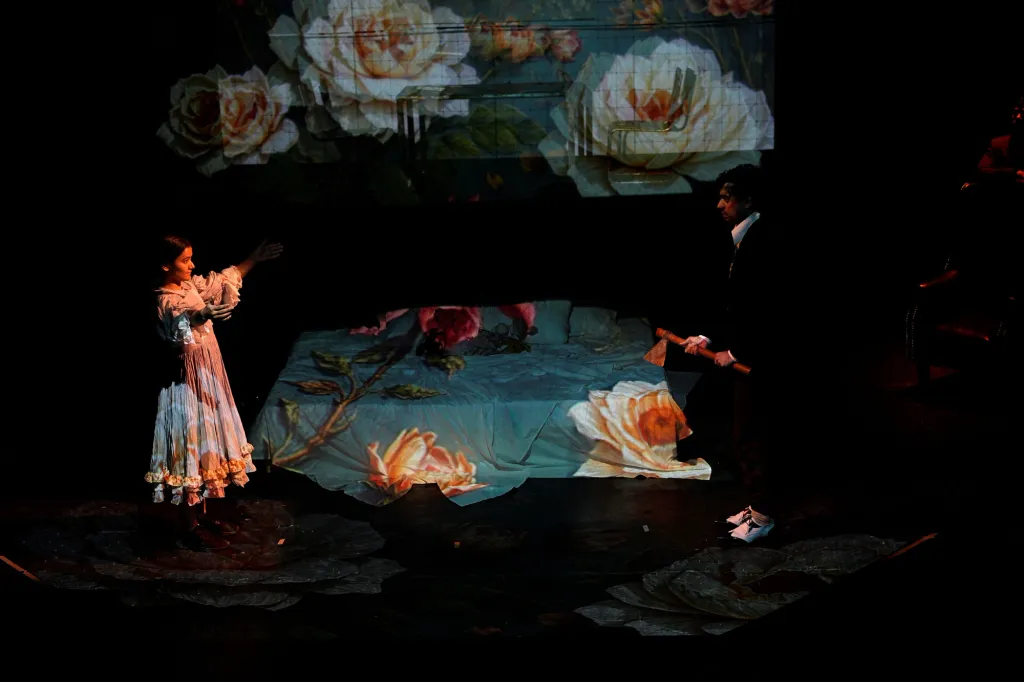
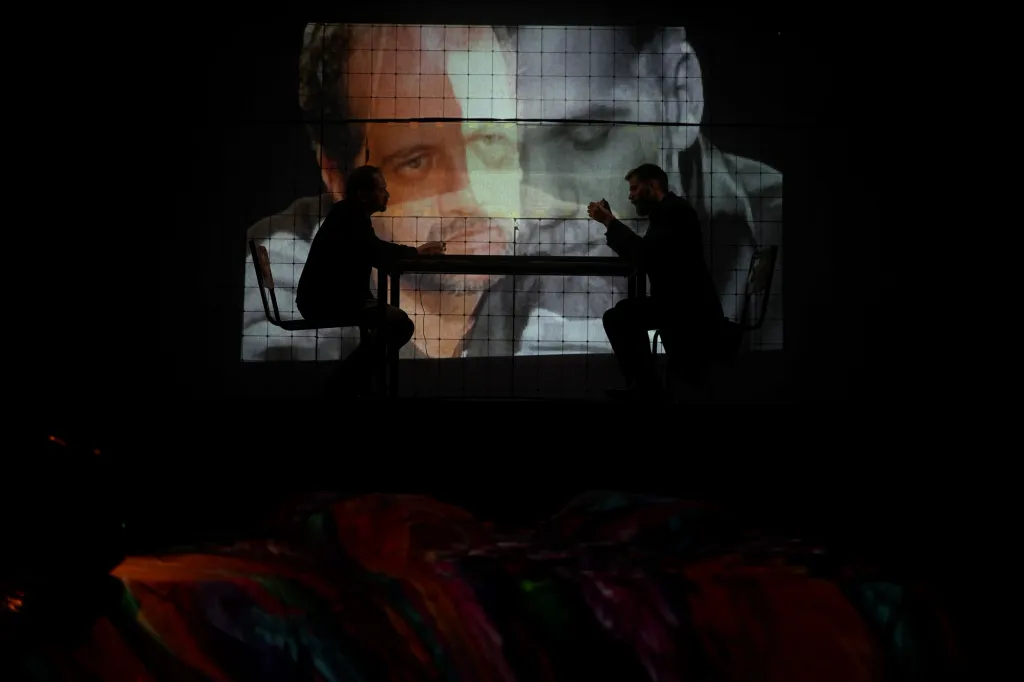
This philosophical wound is given stark physical form in Mohit Takalkar's production. The stage is cleaved in two a visual representation of a fractured reality. The interrogation room is an idea of antiseptic authority. The Hideaway, by contrast, materialises as if torn from a Victorian dream, a morally ambiguous landscape from a Tennyson poem like 'The Lotos-Eaters,' a place of beautiful, unending calm where consequence is a foreign concept.
The cast Neil Bhoopalam, Rytasha Rathore, Vivek Madan, Prajeesh Kashyap, and Anjali Negi is flawless. Bhoopalam's portrayal of Sims is particularly compelling. Yet, it is the raw, soul-shattering epilogue between Bhoopalam and Madan that lingers long after leaving the theatre.
The sensory world is completed by impeccable costuming (SHILPI AGARWAL) and a haunting light design and soundscape. The music (SAURABH BHALERAO) eschews memorable melodies for something far more unsettling—an ambient, electronic hum pierced by distorted classical fragments, the ghosts of a forgotten humanity. Ultimately, THE NETHER is less a play about pedophilia and more a profound exploration of love, loneliness, and desire in an age saturated by technology.
Cast: Neil Bhoopalam, Rytasha Rathore, Vivek Madan, Prajesh Kashyap and Anjali Negi