
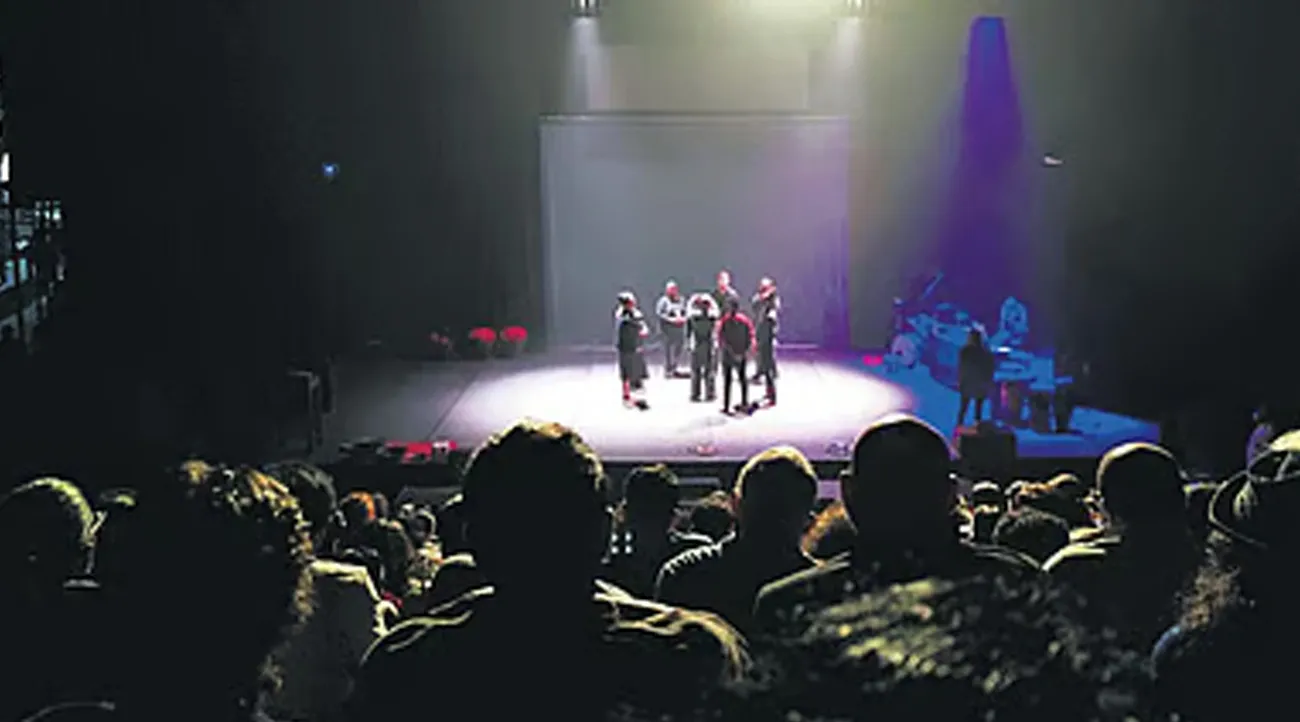
The International Theatre Festival of Kerala (ITFOK) has long stood as a lighthouse in the Indian cultural landscape. In a country where high art often retreats into gated auditoriums and elite circles, Thrissur offers something radically different: a festival that breathes with the people. Yet, as the 2026 edition concludes, it is essential to evaluate its strengths and weaknesses to inform future improvements and maintain its cultural relevance.
A Culture of Radical Humanity
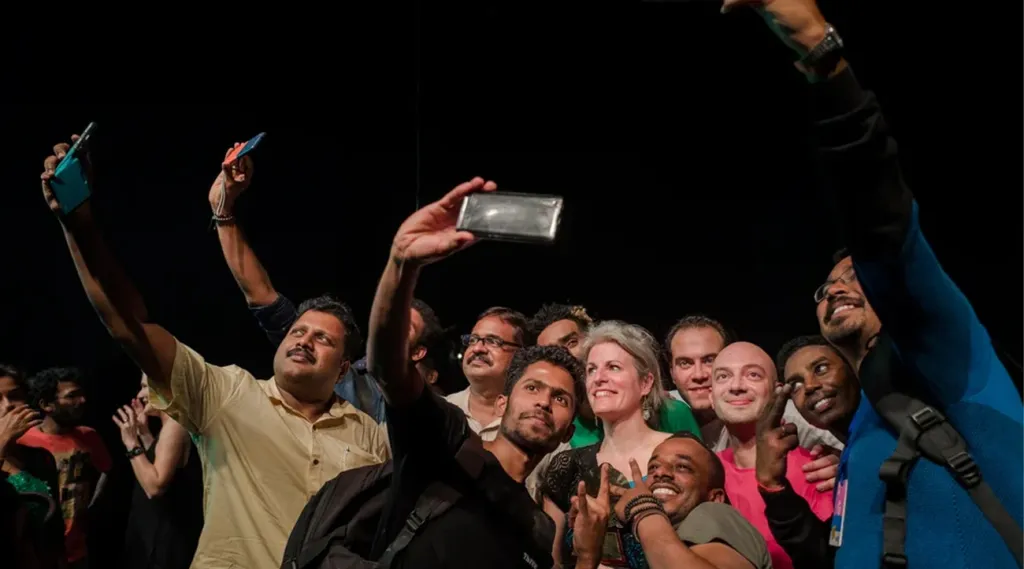
What makes ITFOK unique is not merely the scale of its programming no other Indian festival manages to knit together international, national, and regional works so densely over eight days but the active engagement of its audience. There is a particular magic in the Thrissur air when the online tickets go live; within a couple of hours, they are gone. This immediate response highlights the festival's deep connection with its community, which is vital to its identity.
These are not the rowdy lines of a cinema hall; they are civilised, almost poetic, demonstrations of human empathy. Observe the queue when the sun is at its peak: the line breaks where the shade ends and resumes where the shadow begins. No one fights for the "sunlit" spot; they wait in the shade, instinctively honouring the other's physical well-being. It is a "human way of thinking" that transforms a wait for a ticket into a communal act of respect.
This groundedness extends to the palate. In Thrissur, the theatre experience is humble. You can buy a pathiri, a sweet appam, or a pazham puri for a mere 12 rupees, washed down with a tea of the same price. Unlike other festivals where a single meal costs more than the ticket itself, ITFOK remains accessible. There is no hierarchy here; the artist and the labourer intermingle over black tea, creating a space where "culture" is not a commodity, but a shared breath.
Curatorial Slippages and the "Video Craft" Trap
However, when we pivot from the atmosphere to the stage, the 2026 curation demands a harder look. While the international selection showed a marked improvement over the previous year, the national and Malayalam regional segments felt weary. We must ask: Is ITFOK becoming a venue for "independent average plays" simply because they feature known cinema actors to draw a crowd? The Malayali audience is sophisticated; they do not merely seek stars they strive for stories. Some of the most "celebrated" regional productions this year were arguably the most stagnant.
There is a vast scope for improvement in how we determine what is "stage-worthy" for an international audience. We must move past the satisfaction of "doing good" and embrace the friction of "doing better."
A significant part of this failure stems from the "Video Craft" trap. When a jury selects a live, breathing art form based solely on a recorded video, they are engaging in an oxymoron. What glitters in the digital edit often fails to translate into the three-dimensional heat of the stage. Perhaps it is time for the selection committee to reach out and explore alternative ways to verify "liveness" before granting a spot that could have gone to a more deserving, underrepresented voice.
The Failure of Space and Scale
This year's programming attempted a bold experiment with scale that largely failed due to a lack of spatial sensitivity. Theatre is an intimate contract between the actor's breath and the audience's ear. Productions like Far Post and Mohit Takalkar's The Nether both excellent, delicate works are designed for the sanctuary of a Black Box. To transplant them into a 1000-seater proscenium is to ensure their failure. The energy dissipates before it reaches the back row. Similarly, a production like Romeo and Juliet, which relies entirely on raw energy without sets, was swallowed by a space too vast for its minimalist soul.
Pierre Bourdieu and the Shadow of Cultural Capital
Perhaps the most pressing critique involves the festival's theme: "Voices in the Silence." A festival rooted in leftist ideals should be the first to interrogate Pierre Bourdieu's concept of Cultural Capital. This year, the national selection was almost exclusively dominated by "privileged" directors who already possess the social capital to navigate the art world. If ITFOK is to be a space for the "unrepresented truly," why were the voices of those without this capital so noticeably absent? When "established" names overwhelm the roster, the silence of the truly marginalised becomes even more profound.
A Critical Audit of the Stage
To understand where the festival thrived and where it faltered, one must look at the specificities of the 2026 stage:
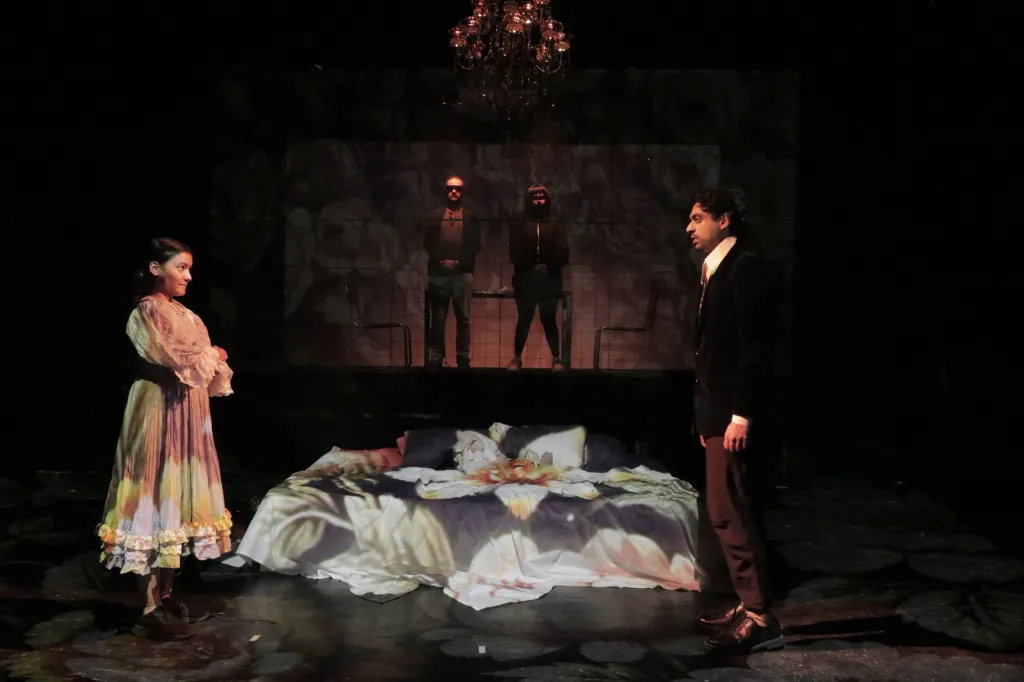
• The International Triumph: Spain's Lucía Joyce: A Small Drama in Motion (Karlik Danza Teatro) was a masterclass in the "art of feeling." It was a poetic reclamation of a life stolen by the shadows of James Joyce, using a visceral rejection of the "clinical chair" to restore Lucía's agency.
• A Brilliant Entry: From Palestine, Oranges and Stone was a deeply resonant and brilliant contribution to the international category.
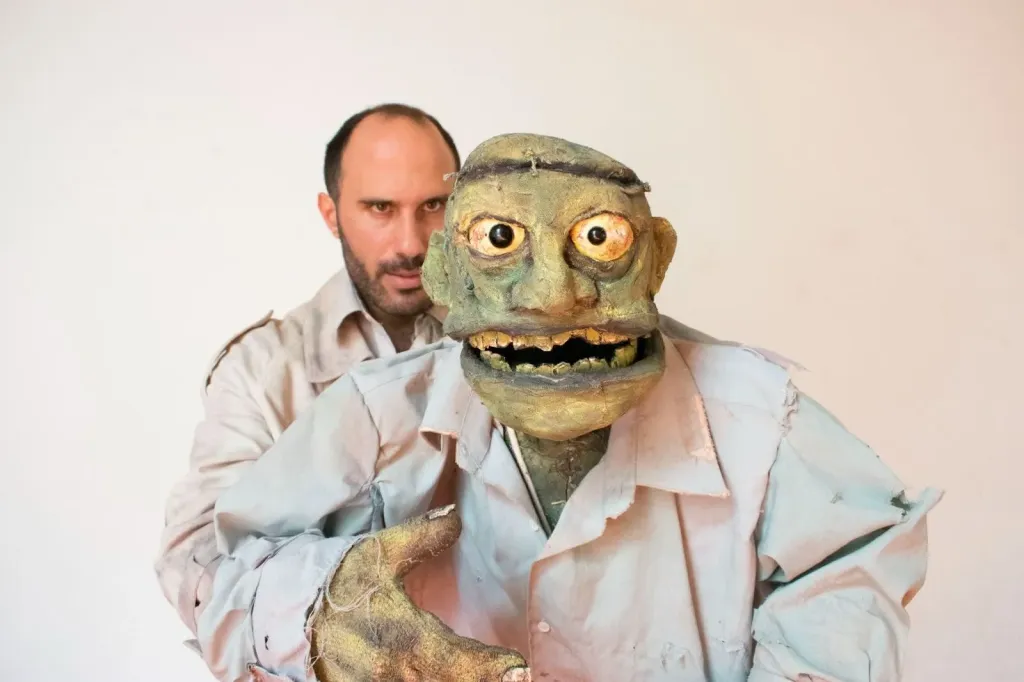
• Experimental Labours: The Frankenstein Project from Argentina served as a remarkable experiment with puppetry. Actor Luciano Mansur is clearly a hardworking practitioner who puts his soul into the play; one only wishes he had more directorial guidance to elevate the work to its true potential.
This year's programming attempted a bold experiment with scale that largely failed due to a lack of spatial sensitivity.
• The Soul of the Sultan: In the National category, Under the Mangosteen Tree (Perch, Chennai) successfully exhumed the spirit of Vaikom Muhammad Basheer, though it could have benefited from a tighter edit.
• The Sensory Intervention: WOW! (Debris Company) It is a successful risk and became a polarising lightning rod—a 50-minute wake-up call regarding the psychic cost of the Anthropocene.
• The Documentary Scream: Brazil's A Scream in the Darkdelivered a surgical incision into the history of state-sponsored silence. Carina Casuscelli acted as a lightning rod for collective trauma, proving documentary theatre can be both clinically precise and terrifyingly relevant. Renu Ramnath's translation work here was a technical triumph, efficiently bridging the linguistic gap.
• The Dreamer’s Defense: "Nanmayil John Quixote"(directed by Aliyar Ali) was a bold, localized reimagining of Cervantes. By grounding the Spanish classic in the soil of Kerala, replacing the Knight's sword with a temple oracle's blade. Ali created a radical defence of the imagination. It was an intelligent critique of organised religion and a haunting tribute to the "red era" of the seventies, proving that the dreamer holds the only knowledge worth having.
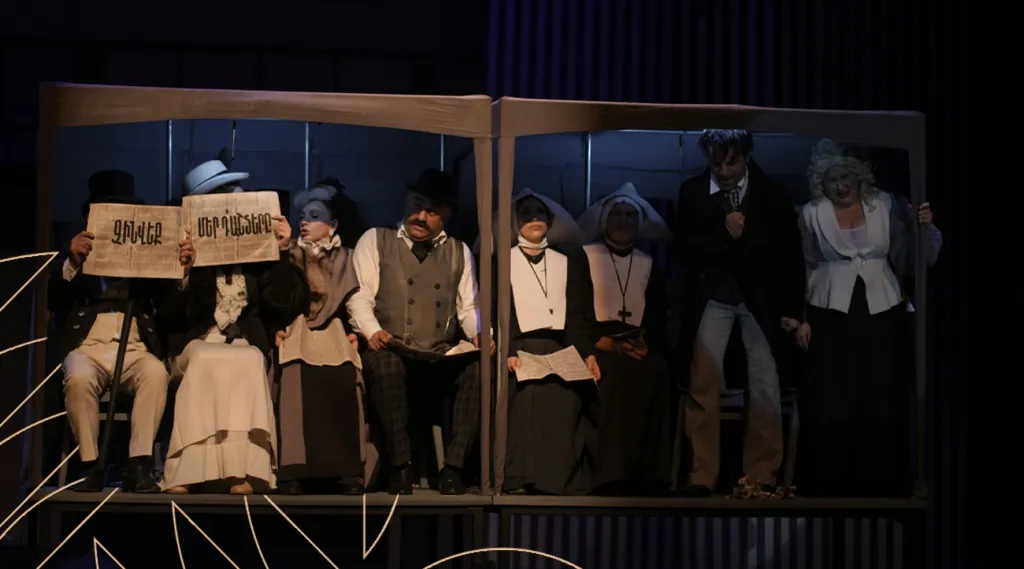
• Cultural Misalignments: The Japanese production Hamlet Toilet failed to resonate within this specific cultural context, while the Armenian spectacle, while worthy of the Actor Murali Theatre, felt "too French", a missed opportunity to experience Armenian specificities rather than another iteration of European aesthetics.
• The Curatorial Question: Something Like Truth felt dated, offering nothing new to the contemporary theatrical discourse. Mall Practice and the Show was a bizarre entry. While attempting to tackle the digital violation of women, it fell into the very trap it named: the objectification of the female body through "pretty" Kathak tropes. It raised the stinging question: if a news article can move us equally, do we truly need this form of theatre?
• The College Type Productions: "Kohoo - Anthology of Rails." Despite its ambitious title, it was neither an anthology nor "documentary theatre" in any rigorous sense. It was a collection of train stories executed with the depth of an average college play, a startling inclusion for an international platform. Similarly, "Bye Bye Bye Pass" proved to be a meandering experience that lacked a clear dramatic compass, eventually getting lost in its own lack of direction. When average productions are given centre stage, they rob more deserving, unrepresented voices of their moment in the sun.
Financial Fragility and the Pro Bono Possibility
It is no secret that the state's cultural funds are under increasing pressure each year. However, a lean budget need not result in a lean artistic vision. This year, the festival felt the sting of these constraints, most notably when Mehronbacked out due to insufficient funding.
There is a robust landscape of passionate theatre groups, particularly on the national stage, who view ITFOK as a vital pilgrimage. Many such teams would be more than willing to bring their experimental projects on a pro bono basis or for a significantly reduced cost, simply for the opportunity to engage with the Thrissur audience. If the festival opened a transparent dialogue about its financial hurdles, it would find a community ready to fill those slots with works of high artistic merit, fueled by passion rather than profit.
The Curatorial Void: Beyond the "College Play" Standard
While the festival succeeds in its atmosphere, the curation of the 2026 edition revealed a desperate need for a more diverse and rigorous selection committee. A festival of this magnitude cannot rely on a narrow lens; it requires a collective of Practitioners, Actors, Directors, Critics, Academics, Designers, Dancers, and most crucially, Writers. Without the writer's eye, the festival often falls into the trap of "empty postmodernism." There is no harm in the postmodern form, but we must not forget what makes literature, literature. Many of this year's selections lacked the structural integrity of good writing, leaving productions feeling unanchored.
The Beacon of the South: Toward a More Rigorous Future
Kerala stands as an undisputed leader in the Indian cultural and civic landscape. From the smooth efficiency of its roads to the futuristic vision of the Water Metro, the state reflects the fruits of a robust, left-leaning democracy that prioritises the public good. This same spirit is what makes its Literary Festivals and Cinema the best in the country. They are spaces where the intellect is not an elitist accessory but a communal right. ITFOK is a crown jewel of this tradition, yet for a jewel to remain a beacon, it must be relentlessly polished.
ITFOK should not rest on its laurels as "the best in India." It must strive to cross its own benchmarks. The state of Kerala is ahead of the curve in almost every metric of human development; it is only fitting that its premier theatre festival reflects that same excellence in its artistic selection.
There is a vast scope for improvement in how we determine what is "stage-worthy" for an international audience. We must move past the satisfaction of "doing good" and embrace the friction of "doing better." By balancing experimental postmodernism with the weight of profound literature, and by diversifying the curatorial voice, Kerala can ensure that ITFOK remains not just a regional pride, but a global standard for what theatre can achieve when it truly speaks from and for the silence.