Directed by Jozef Vlk
Cast: Stanislava Vlčeková and Daniel Raček
Language: Non-Verbal and English Voice Over
Production: Debris Company, Slovakia
There is a specific kind of silence that follows a performance like WOW!. It is not the respectful hush of a satisfied audience, but rather the heavy, slightly bewildered quiet of a crowd that has been asked to breathe underwater for fifty minutes. At the 16th International Theatre Festival of Kerala (ITFoK) 2026, Jozef Vlk’s production for the Slovakian Debris Company became a polarising lightning rod. To the casual observer or the literal-minded critic, it was perhaps an enigma—a series of kinetic spasms and sonic washes without a traditional anchor. But to those willing to abandon the safety of the "plot" for the turbulence of the "pulse," it is a significant piece of contemporary urgency.
Why must the stage always explain itself? Why must every twitch of a muscle or shift in lumbar lighting be a sentence in a grammar we already know? We live in an era of "liquidity," where meaning dissolves as quickly as it is formed. WOW! It does not just speak about this state; it inhabits it. The performance does not begin so much as it encroaches, seeping into the consciousness of the space it inhabits.
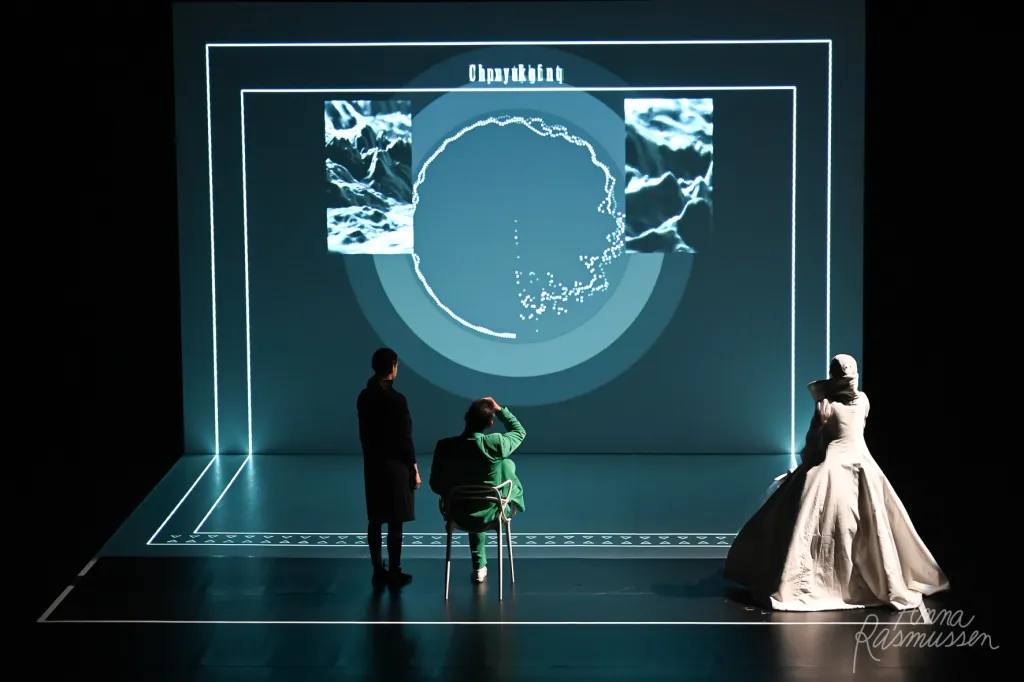
The stage design by Ján Ptačin creates a space that feels less like a theatre and more like a laboratory at the edge of the world. Here, the "Blank Map of the World" is not a physical prop but a psychological state. The choreography by Stanislava Vlčeková who also performs alongside the formidable Daniel Raček is a gruelling testament to the physicality of human history.
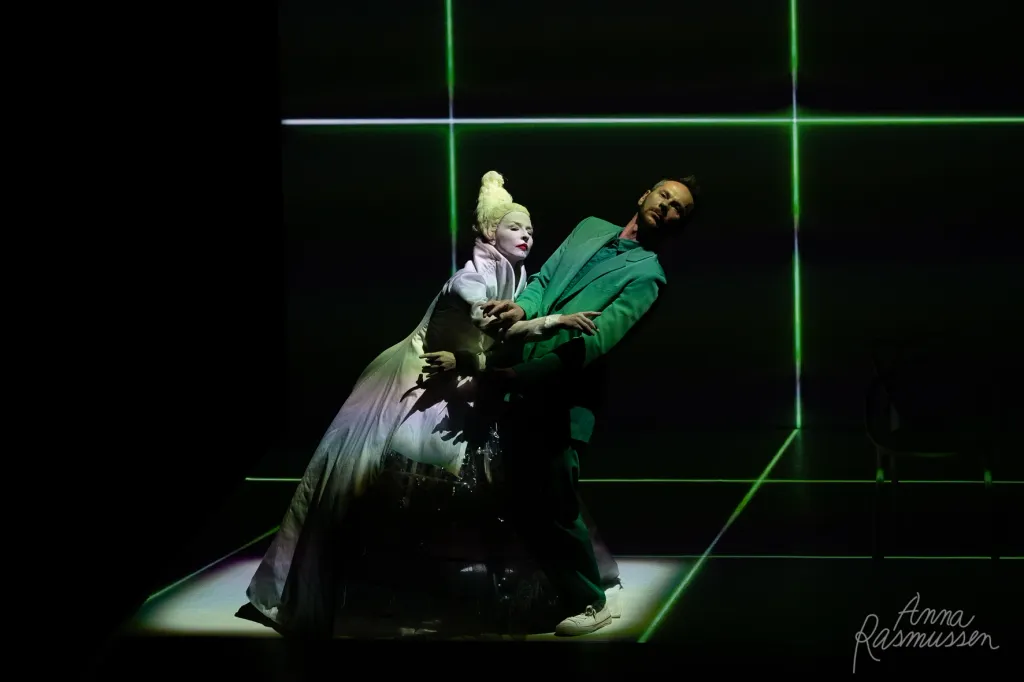
One of the most striking structural choices is the total absence of traditional entrances or exits. The performers do not "arrive" from the wings; they are simply there, trapped within the clinical confines of the stage from the outset. Any minor changes in costumes the shedding of a layer or the subtle adjustment of a silhouette are performed openly on stage. This transparency strips away the artifice of theatre, forcing the audience to witness the raw labour of transformation in real-time.
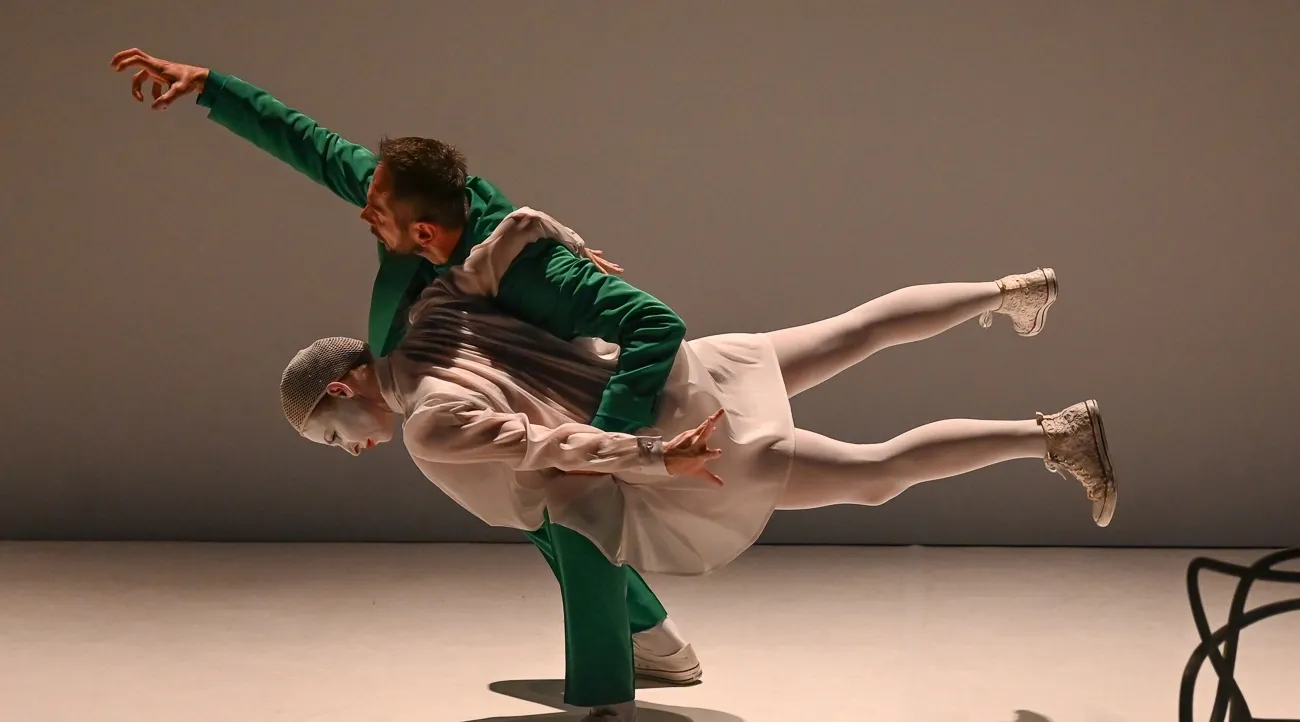
In the opening sequences, the movement is primal, echoing the "meaningless creatures" we were seventy thousand years ago in the African savannah. There is a raw, animalistic honesty in the way Vlčeková and Raček occupy the floor. This isn't "pretty" dance; it is Tanztheater (Dance Theatre) in its purest form, where the body is used as an instrument of labour. The physicality of the male actor, Daniel Raček, is particularly arresting. His body serves as a topographical map of the Anthropocene taut, muscular, and perpetually strained. We see both dancers simulate the damming of rivers and the raising of cities not through pantomime but through sheer physical tension. Their muscles ripple and quiver under the strain of an invisible weight the weight of "progress." As the piece progresses, this organic movement becomes mechanical, then frantic, then finally, exhausted. The transition mirrors our own leap from the steam engine to the spaceship. The dancers' bodies become sites of colonisation; they are twitchy, hyper-stimulated, and yet profoundly lonely.
Many find WOW! elusive because they seek a narrative thread to hang their hats on and find only a frayed rope. But the piece operates on a level that precedes language, utilising what Eugen Gindl’s text hints at: the "state of the soul in need."
The text itself is not merely spoken; it is an atmospheric, ethereal layer. The voice-over is mesmerising and haunting, delivered with a poetic cadence that feels like a transmission from a dying satellite. The words do not dictate meaning; they float above the action like a ghost, lyrical yet sharp. When we watch the video art by Alex Zelina wash over the performers, or feel the subterranean vibrations of Jozef Vlk’s soundscape, we aren't being asked to think about consumerism. We are being asked to feel the nausea of it.
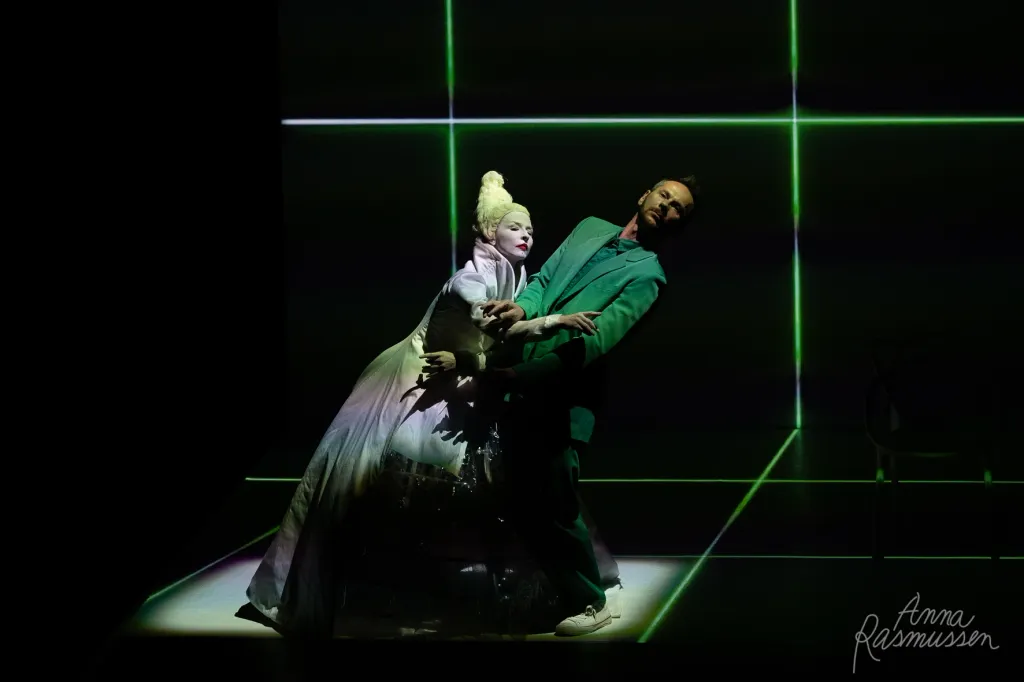
The aesthetic here is "magically-ironic." It presents the "shopping mall of concrete and plastic" with a shimmering, terrifying beauty. There is a sequence in which the lighting shifts to a cold, clinical green, turning the performers into ghosts of the 21st century. In that moment, the "liquidity" of our values our shifting definitions of love, hate, gender, and self is rendered visible.

To appreciate this, one must develop the "lenses of an aesthete." This doesn't mean being a snob; it means being a perceiver. It means understanding that a specific shade of grey or a repeated, stuttering gesture can communicate the depletion of planetary resources more effectively than a ten-minute monologue.
It is necessary, in defending WOW!, to draw a line in the sand. International festivals are often populated by productions that claim the mantle of "High Art" through sheer opacity. We have all sat through boring plays, not because they are complex, but because they are hollow performances that use "abstraction" as a shield for a lack of vision. WOW! is the antithesis of this pretence. Its complexity is not a mask; it is a mirror.
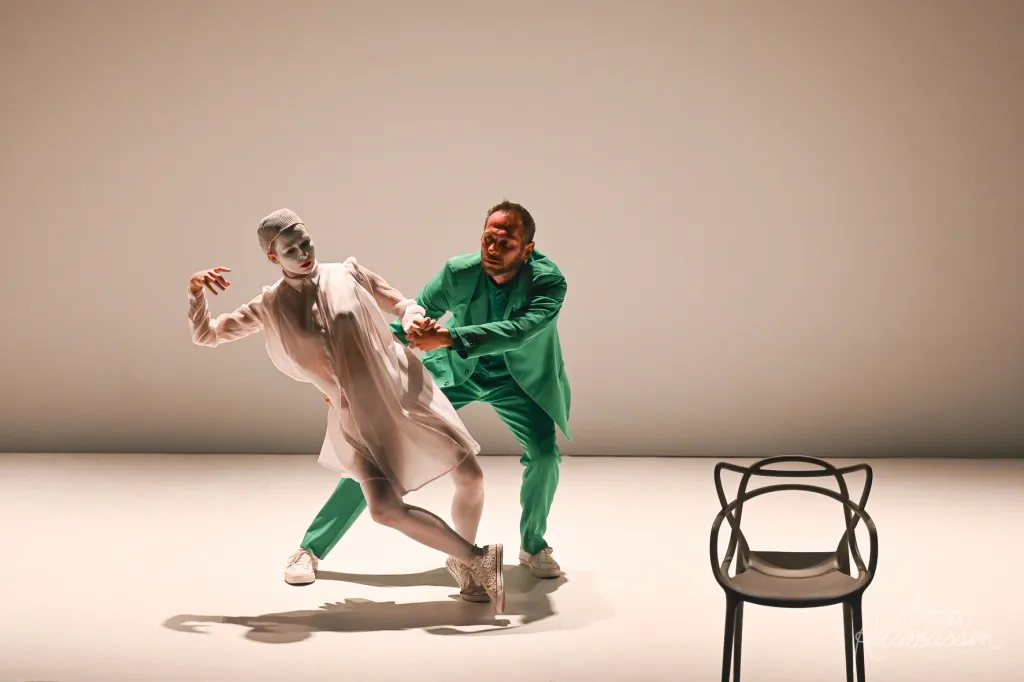
The Debris Company has spent fifteen years refining a non-verbal vocabulary to speak about the unspeakable state of the human condition. While other plays at ITFoK might have relied on heavy-handed political messaging or social issues, WOW stood naked. It offered no easy answers. It didn't tell us how to save the wetlands; it showed us the psychic cost of losing them. The "disharmony of values" was not just a theme it was the rhythm of the performance.
WOW! is the "catastrophic prophecy" made flesh. The dancers reach for each other, but their hands slip. They are connected by "planetary communication" (as suggested by the frantic, glitching video art), but remain fundamentally isolated. It is a searing critique of the "global village" in which everyone is talking, but no one is heard.
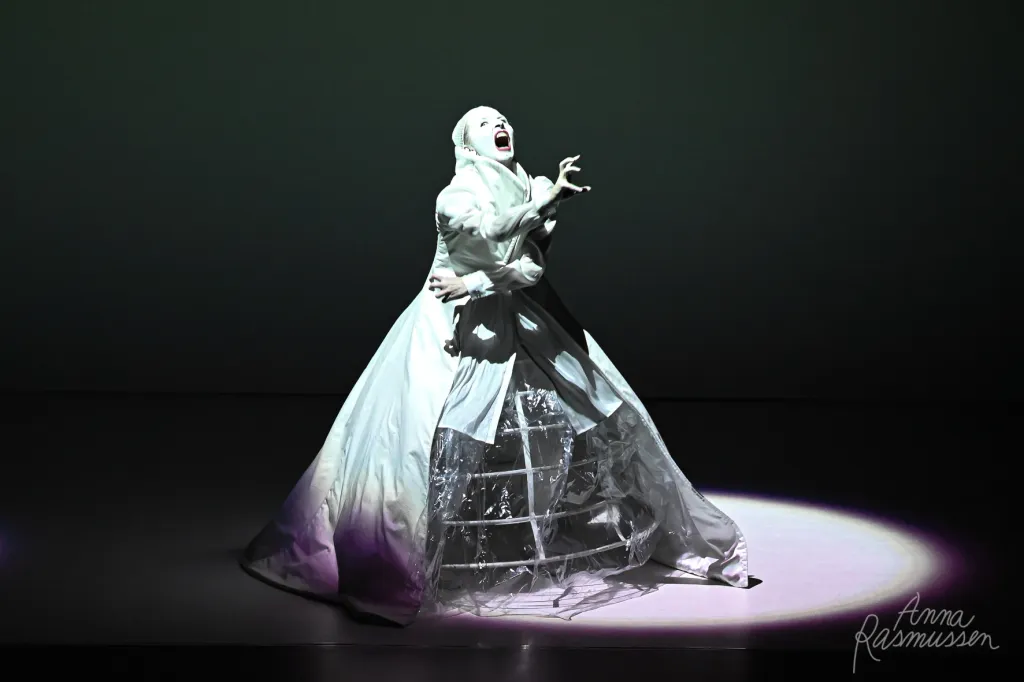
Art’s highest calling is not to comfort the disturbed, but to disturb the comfortable. WOW! is a 50-minute wake-up call that refuses to use an alarm clock. Instead, it pulls the covers off and lets the cold air of the 21st century hit your skin. The "magically-ironic" tone ensures that we aren't just depressed by the vision; we are mesmerised by it.
In the end, WOW! is about the "history of the dead" and the "restless waters" upon which our ship swims. To those who walked out of the Thoppil Bhasi Black Box feeling confused: look again. WOW! is a sensory intervention. It is a reminder that, while we have replaced canoes with spaceships, the human heart is still that "meaningless creature" from 70,000 years ago, looking for a place to belong. Debris Company has given us a work of profound integrity a raw, vibrating installation of human anxiety and hope. It is a "WOW!" whispered in the face of the abyss.